
Buying a heat pump for a Christchurch home
We help Christchurch homeowners pick the heat pump that suits the room, the house and how they live. Work through these steps in order and the list of models gets a lot shorter.
Prefer to talk? Call 03 242 1023
Step 1: Decide what job it’s doing
Start with the room and the reason. Is it the main living area or a bedroom? Is it mostly for winter heat? Or do you want summer cooling too? That decides which number on the label matters most.
If you’ll mostly heat, size on the 7°C heating output. If you’ll mostly cool, size on the 35°C cooling output. Do your winter nights get to 2°C or lower? On frosty nights across Christchurch and Selwyn, they do. Then also check the 2°C heating output is the same as the 7°C one, or higher.

Step 2: Fix the heat loss you can
A heat pump replaces the heat a room loses. The less it loses, the smaller the unit can be. And the cheaper it is to run. So before you put in a heat pump, add ceiling and underfloor insulation where you can, weather stripping on doors and windows, and stopping draughts.
Planning to insulate next year? Tell us when you get a quote. It can change the size of unit that makes sense.
Get a free quote. Installs, servicing and repairs on all major brands.
Step 3: Pick which heat pump type suits the house
It comes down to how many rooms one outdoor unit serves.
- Single split. One outdoor unit, one indoor unit, one room or open plan area. It’s the most common setup in Kiwi homes.
- Multi split. One outdoor unit running two or more indoor units in different rooms.
- Ducted. One central unit in the ceiling or under the floor, feeding vents in each room.
Then pick the indoor unit: high wall, floor console or ceiling. A floor unit can suit an older person. It gives warmth at floor level, and the filters are easy to get at. A high wall unit leaves you freer to arrange furniture. We compare each style under types of heat pumps. Decide between ducted vs split systems first. It’s the bigger choice.
Step 4: What size heat pump do I need?
This is the step to get right. In a Christchurch winter a heat pump puts out less than its rated output. So pick the unit for the room’s heat loss on a cold day. Too small, and it runs flat out. It defrosts often and leaves the room cool. Too big, and it keeps switching on and off. It blows draughts and costs more to buy.
The method is in heat pump sizing. The inputs for the official calculator are under single room size calculator.
Step 5: Read the energy label
New heat pumps carry the Zoned Energy Rating Label. Here’s what each part of it tells you.
| Part of the label | What it tells you |
|---|---|
| Output boxes at the top | Heating output in kW at 7°C and 2°C outside, cooling at 35°C |
| Red and blue stars | Heating and cooling efficiency for each climate zone |
| Cold zone row | The row for New Zealand. More stars means more efficient |
| kWh per year | Estimated power use in that zone. Lower is better |
| House icon | Noise in decibels, inside and outside the house |
The main point is this. Compare units of the same kW size. Stars only mean something against models of a similar size. Noise on the label is optional here, so not every label shows it. For the rest of the label, see energy rated heat pumps.
Step 6: Check the practical details
- Where the outdoor unit can go. It needs open air round it. It should be clear of the neighbour’s bedroom windows. The defrost water has to drain away somewhere. Christchurch’s noise limits at the boundary decide how close it can go.
- The outdoor noise figure. Check it if the only spot is close to a fence or a bedroom.
- Controls. With Wi-Fi control you can warm the house before you get home. Check it’s built in, or you can add an adaptor.
- Coastal sites. In Sumner, Redcliffs or New Brighton, get corrosion protection for the outdoor cabinet and coils.
- Filter access. You’ll clean them often. Make sure they’re easy to reach.
Step 7: Choose the installer as carefully as the unit
A well chosen unit can still run badly. It might be in the wrong place. The pipework might be poor. The electrical work might be skipped. Lots of heat pumps that run badly come down to where the units were put. Before you pick who fits it, ask the questions in choosing a heat pump installer.
Buying a heat pump for a Christchurch home
The right answer changes with the house you live in.
- Lounge at one end, bedrooms down the hall. That’s most Linwood homes. A lounge unit won’t push heat down the hall with the doors shut. Plan a small bedroom unit or a multi-room system from the start.
- Two storey townhouses. In Upper Riccarton, a narrow stairwell carries very little warm air upstairs. Budget for a small unit upstairs.
- Newer subdivision homes. In Burwood, they hold their heat well. A unit sized right ticks over gently. One that’s too big costs more and switches on and off.
- Hot nor’west days. On open rural land like McLeans Island, a heat pump can cool the house on hot nor’west days. Check the cooling output as well as the heating.
A quick checklist for buying a heat pump
Take this with you when you compare quotes.
- The room, its size and what it’s for
- Insulation and glazing, and any upgrades planned
- Single split, multi split or ducted
- High wall, floor console or ceiling unit
- Heating output at 2°C, not just the rated figure
- Stars and kWh in the Cold zone row, compared at the same kW size
- Where the outdoor unit goes, and its noise figure
- A written quote with the model number and where both units go
Help choosing a heat pump for your house
We can quote on Mitsubishi Electric, Daikin, Fujitsu, Toshiba or Rinnai. So you get a choice across five brands, not one. We look at your rooms, insulation and windows, and how you use the house. The quote is free. To book a visit, call 03 242 1023 or send us your details.
Questions about buying a heat pump
What heat pump do I need for my lounge?
It depends on the room's size, insulation and glazing. How much window it has. How cold it gets outside. In Christchurch, pick the unit for its output on a frosty morning. Not its headline rating. See how we work that out under heat pump sizing.
Which heat pump brand should I buy?
Compare models of the same size from different brands, using their energy labels. Then weigh up noise, controls and local service. Our brands comparison covers the main brands we fit.
Should I insulate before buying a heat pump?
If you can. Cut heat loss first with ceiling and underfloor insulation, weather stripping and draught stopping. A warmer house often needs a smaller unit.
Can I buy a heat pump and have it installed separately?
You can. But get the installer to check the size and spot before you buy. A good install can't fix a unit that's too small for the room. Or one with nowhere sensible for the outdoor unit.
More help with buying a heat pump
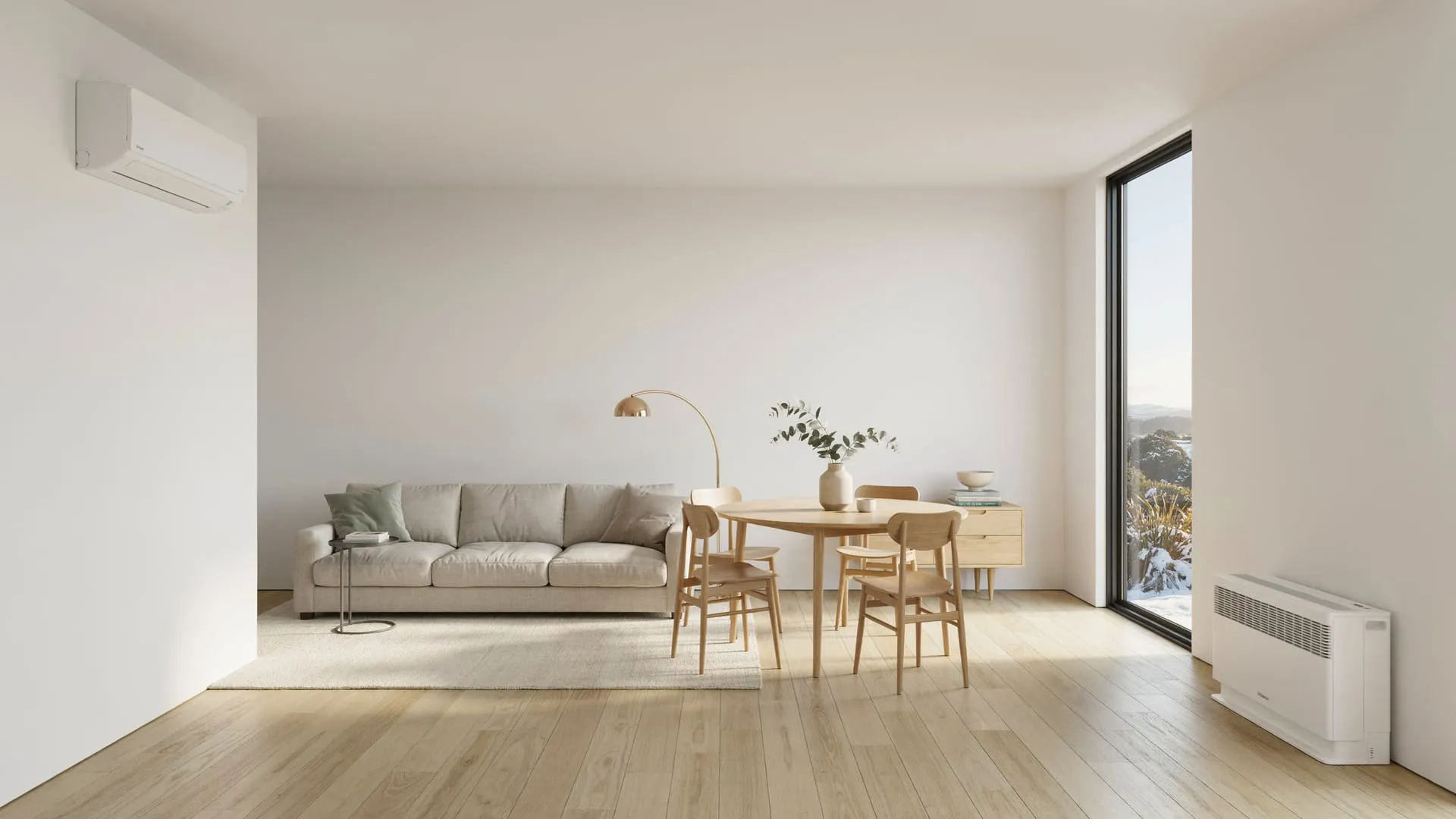
Types of heat pumps
Wall and floor and ducted units side by side.
Read the types of heat pumps guide →
Heat pump size calculator
The inputs that decide how many kW a room needs.
Read the heat pump size calculator guide →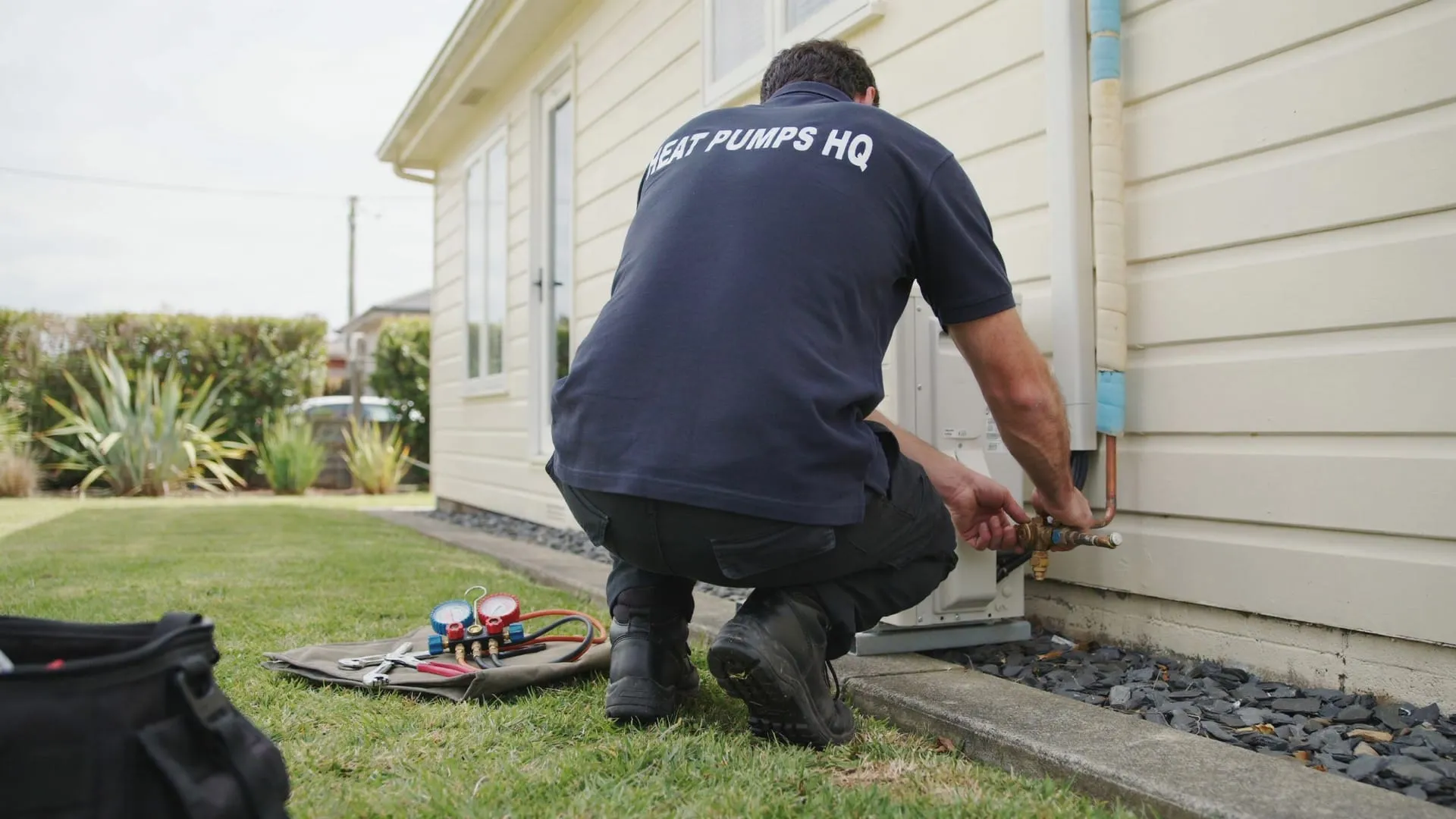
Choosing an installer
What to ask before you sign a quote.
Read the choosing an installer guide →Get a free heat pump quote
Free quotes, no obligation. We call or email you back the same working day. Monday to Friday, 8am to 5pm.
Call 03 242 1023Request a call back