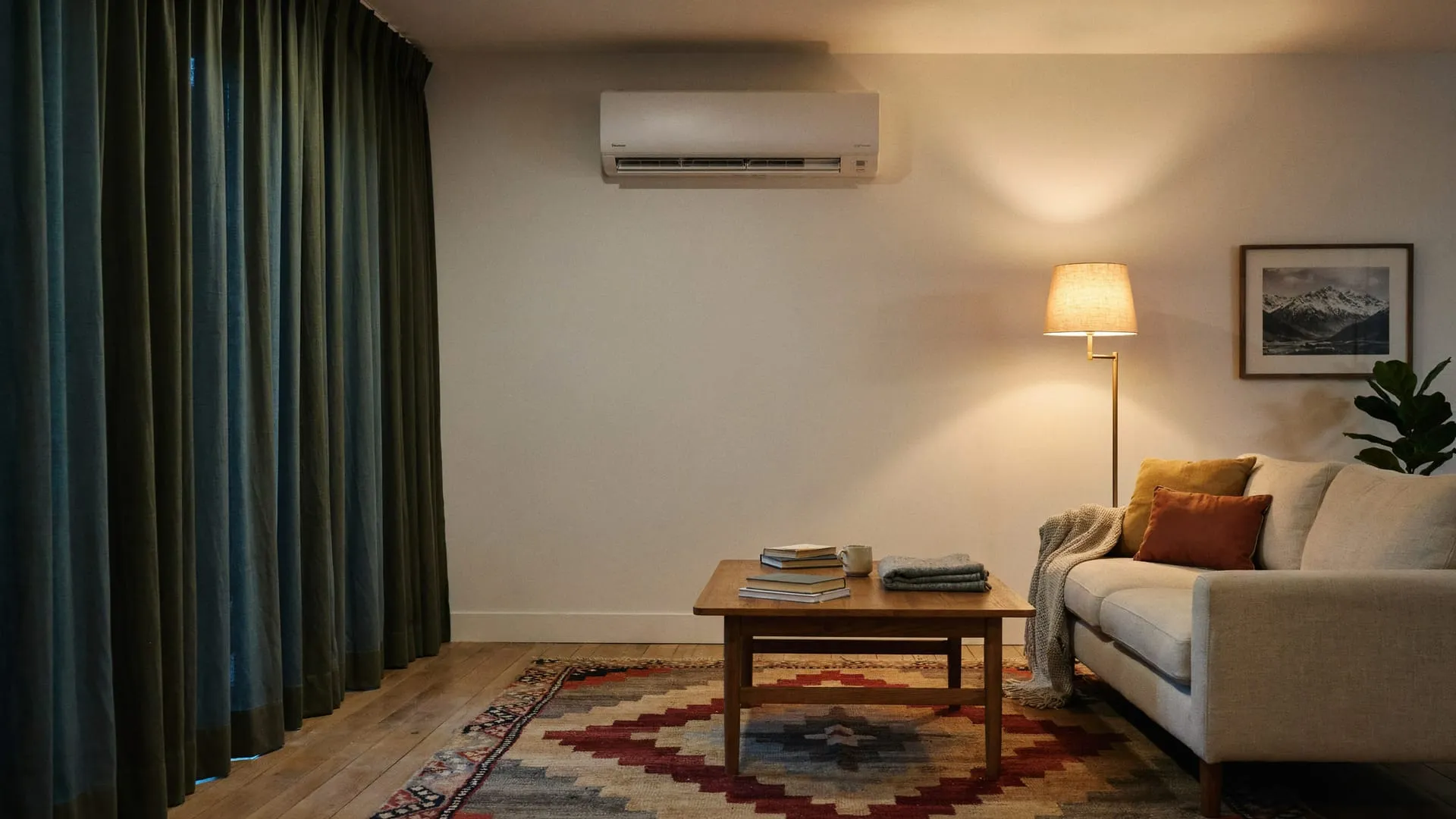
What makes an energy efficient heat pump
We size and fit heat pumps to run on as little power as possible. Efficiency comes down to the unit, its size, how it's fitted and how you run it.
Prefer to talk? Call 03 242 1023
Why a heat pump is more energy efficient than a heater
A heat pump doesn’t make heat. It moves it from the outside air into your house. That’s why it puts out more heat than the power it uses. A fan heater or panel heater turns power straight into heat, one for one. A heat pump spends its power running a compressor and fans, and they do the moving.
The energy label shows how big the gap is. On the Zoned Energy Rating Label, a one star heat pump has a heating seasonal performance factor of 2.5 to 3. A three star unit sits between 4.5 and 5. Put simply, a low rated heat pump still gives about two and a half to three times the heat of a plain heater, for the same power. A well rated one does better again.

1. The unit and its inverter
Efficiency starts with the unit. The compressor matters, and so do the coil size and the fans. So does how well it runs at part load, and that’s the inverter’s job. A modern inverter heat pump speeds up and slows down to match what the room needs. It doesn’t run flat out and then stop.
To compare models, use the heating stars in the Cold zone on the energy label. All of New Zealand sits in that zone. Stars rank a unit against others of a similar capacity. So put a 6 kW unit up against other 6 kW units. We go through every part of the label in how to read the energy rating label.
Get a free quote. Installs, servicing and repairs on all major brands.
2. The size of the heat pump
A heat pump that’s the right size runs gently most of the time. That’s how inverter units are meant to work. One that’s too small runs flat out on cold mornings and still can’t keep up. One that’s too big hits temperature fast, then runs in short bursts.
We size every install from your rooms, insulation and windows, and how you use the house.
3. How it is installed
A good unit can lose efficiency through a poor install.
- Indoor unit: high on a wall, where it can throw air across the room. Not behind a beam or in a corner, where warm air loops straight back to its own sensor.
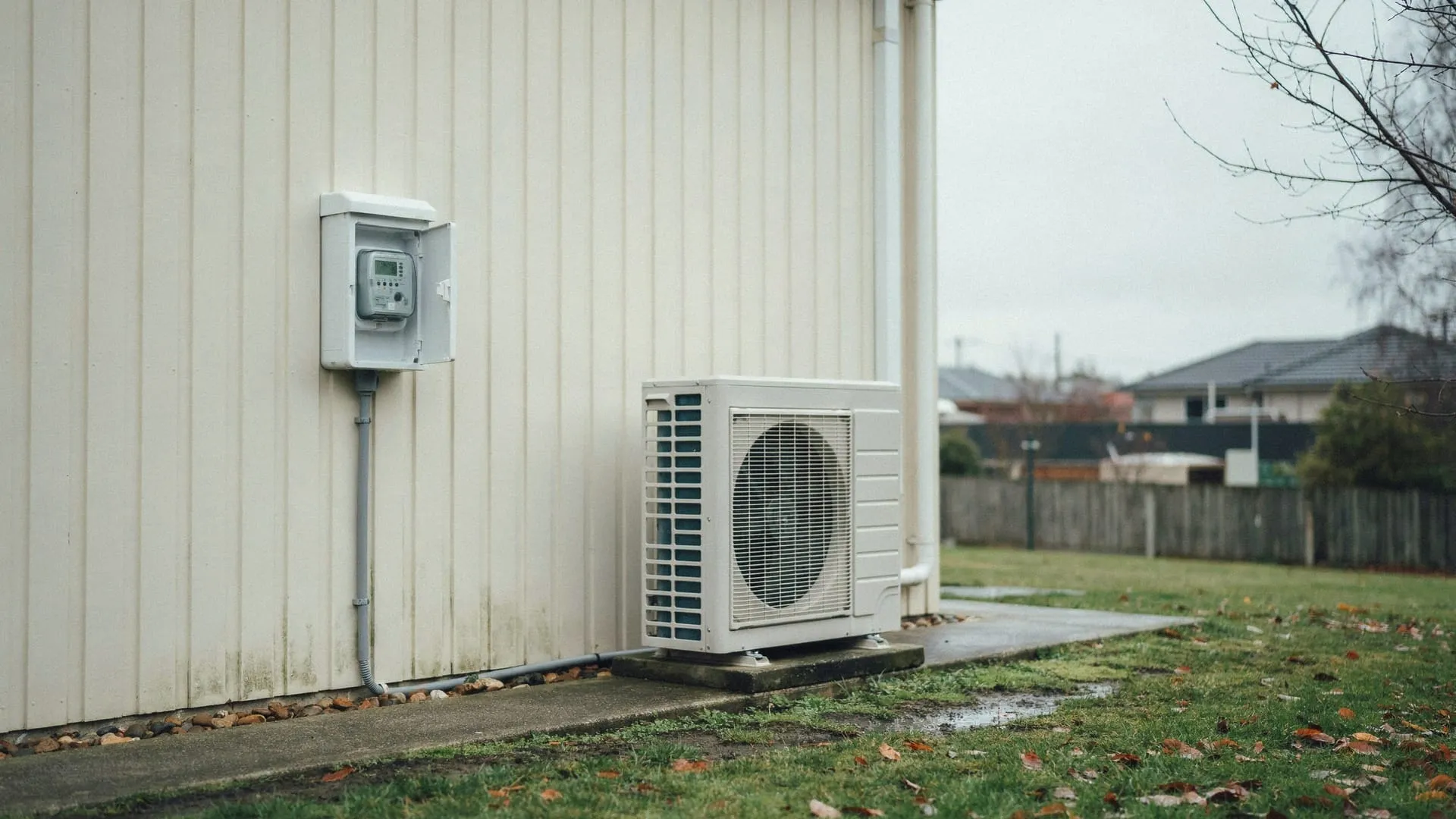
- Outdoor unit: in open air and up off the ground. It needs room at the back and sides, and nothing in front of the fan. Box it in and it breathes its own cold air.
- Pipes: as short and tidy as the house allows. Insulated, and inside the maker’s limits.
- Commissioning: we test it on heat and on cool once it’s running. That way any problem shows up on day one.
4. Settings that keep your heating energy efficient
How you set the heat pump makes a real difference. It changes how well it heats, and what you pay:
- Set temperature: pick one and leave it. Turning it up to 30°C won’t warm the room any faster.
- Mode: use heat, not auto, in winter. Auto can switch to cooling on a sunny afternoon.
- Fan: leave it on auto. The unit matches the airflow to the room.
- Doors and curtains: close them. Heat the room, not the hall, and hold the warmth in after dark.
- Timer: have it come on before you get home or get up. Don’t leave it running in an empty house, or blast a cold one.
- Filters: clean them every few weeks in winter. Blocked filters cut airflow, so the unit works harder for the same heat.
How the house affects heat pump energy efficiency
With no ceiling insulation, your heat pump is heating the roof space. Insulation helps. So do draught stopping, thermal curtains and sealing gaps round doors and windows. They all cut how much heat the room needs. Then the heat pump can be smaller and run less. Planning insulation work? Do it before we size a heat pump, not after.
Energy efficient heat pumps for Christchurch conditions
Local weather and housing change what an efficient setup looks like.
- Frosty open ground. Lincoln is flat and open, and still winter nights bring hard frosts. A unit sized for an average day struggles on a cold morning. So we size for the weather you actually get, and keep the outdoor unit up off the ground and out of shady corners where frost hangs around.
- Wind and big windows. In Kennedys Bush, wind across the hillside and big view windows pull heat out fast. We size from the glass, which way it faces and how exposed the site is, so the unit doesn’t run flat out on the coldest days.
- Salt by the sea. In Redcliffs, salt corrodes the outdoor unit’s coil fins over time, and that cuts how well it moves heat. Rinse the coil gently with a hose now and then, never a water blaster, and keep up the yearly service.
- Big homes used in parts. In Spencerville, most families don’t need the guest wing or the rumpus room heated every day. With zoning, you only heat where you’re living.
Keeping it efficient over the years
A heat pump loses efficiency slowly as it gets dirty. Dust builds up on the indoor coil and fan. The outdoor coil gets grubby. Sometimes the gas slowly leaks out. Each of these means the unit runs longer for the same heat. A yearly heat pump service gets it back to where it should be.
Got an old heat pump? Here’s how to tell if a new unit would pay off.
Get a quote for an energy efficient heat pump
Want an efficient heat pump sized for your home? Ring 03 242 1023, or ask us for a free quote.
Questions about heat pump energy efficiency
Which is the most energy efficient heat pump?
There isn't one answer. Efficiency is rated against heat pumps of a similar capacity. So compare the Cold zone heating stars on the energy label, for units the size your room needs. A high rated unit that's too big or too small won't run at its best.
Are heat pumps more efficient than other electric heaters?
Yes. A plain electric heater turns each unit of power into the same amount of heat. A heat pump moves heat in from outside. So you get more heat out than the power it uses. Even a one star model has a seasonal performance factor of 2.5 to 3.
What temperature should I set my heat pump to?
Set it to the temperature you want in the room, and leave it there. Turning it right up won't heat the room any faster. It just runs longer and overshoots. Every extra degree costs more power.
Does running a heat pump all day use more power than switching it on and off?
It depends on your house and how long you're out. In a well insulated home, a steady setting can use less than heating a cold house from scratch. In a draughty house that's empty all day, a timer is usually better. Set it to come on before you get home.
More on energy efficient heating
Get a free heat pump quote
Free quotes, no obligation. We call or email you back the same working day. Monday to Friday, 8am to 5pm.
Call 03 242 1023Request a call back