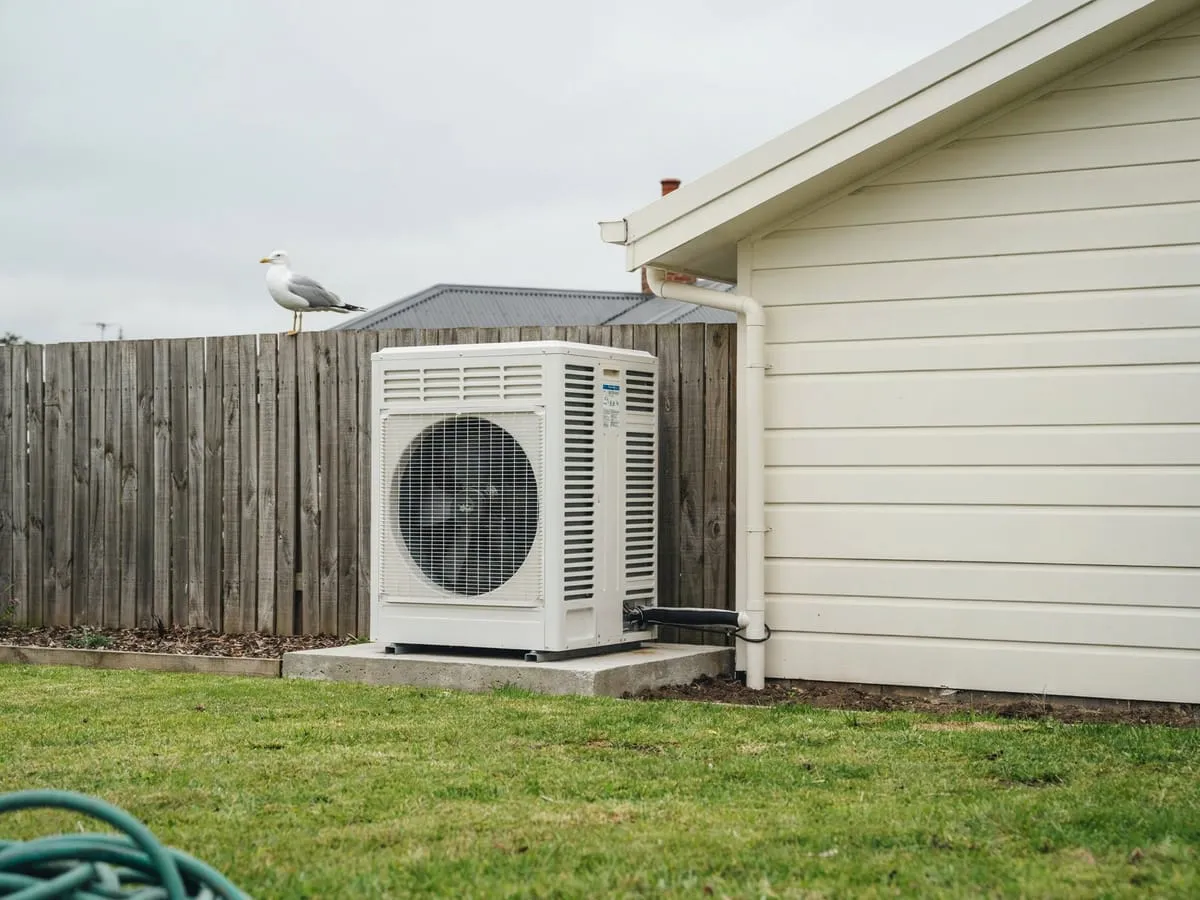
Heat pump boundary rules and consent in Christchurch
We place outdoor units to meet Christchurch's noise limits. There's no set boundary distance: what counts is the noise at your neighbour's place, and here are the limits.
Prefer to talk? Call 03 242 1023
The short answer on heat pump boundary rules
Christchurch controls heat pumps through noise, not distance. Anything that makes noise has to meet the zone noise limits at the site receiving it. A heat pump outdoor unit is no different. There’s no rule that says it must be a set number of metres from the fence.
So placing the outdoor unit is a call about sound. How loud is the unit? How close is it to the neighbour’s bedroom windows? And what’s around it?
Heat pump noise rules in residential zones
These limits apply in residential zones outside the Central City. They’re measured at the site receiving the noise. They change with the time of day:
| Time | Limit |
|---|---|
| 7am to 10pm | 50 dB LAeq |
| 10pm to 7am | 40 dB LAeq and 65 dB LAmax |
Plan for the night limit. Heat pumps work hardest on cold nights and early mornings. That’s exactly when the 40 dB limit applies. The Central City and commercial zones have different limits.
Get a free quote. Installs, servicing and repairs on all major brands.
Selwyn and Waimakariri are different
Live in Rolleston, Lincoln, Prebbleton or elsewhere in Selwyn? The Selwyn District Plan applies, not Christchurch’s. In Selwyn’s residential zones the limits are measured at or inside the boundary of the neighbour’s property:
| Time | Limit |
|---|---|
| 7am to 10pm | 50 dB LAeq and 70 dB LAmax |
| 10pm to 7am | 40 dB LAeq and 70 dB LAmax |
The night average is the same 40 dB as Christchurch. The difference is the peak: Selwyn allows short peaks up to 70 dB at night, where Christchurch allows 65 dB, and Selwyn also caps peaks during the day. Either way, a unit at ground level on a solid pad with rubber mounts, away from the neighbour’s bedrooms, carries less noise next door than one high on a wall.
Kaiapoi and Rangiora come under Waimakariri District Council, which has its own rules on noisy heat pumps. The idea is the same everywhere. Noise is measured at the neighbour’s property.
Where to put the outdoor unit near a boundary
Put it where it stays quiet at the neighbour’s place.
- Away from their bedrooms. Put the unit by your own garage, laundry or a blank wall. Don’t face it at their bedroom windows.
- Out of corners. Tucked into a corner, the unit bounces sound back out. Open wall is quieter.
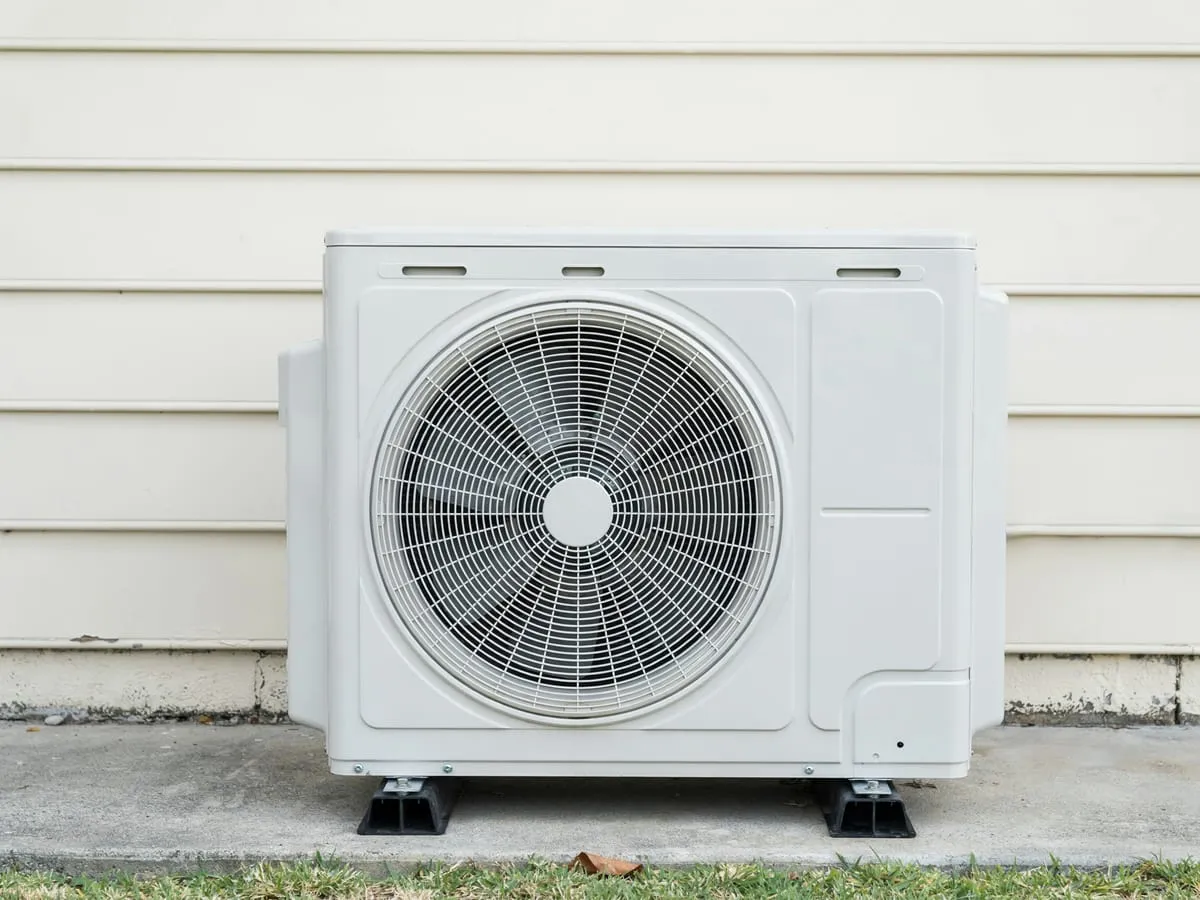
- On anti-vibration feet or brackets. Rubber feet stop the hum getting into the house and the ground.
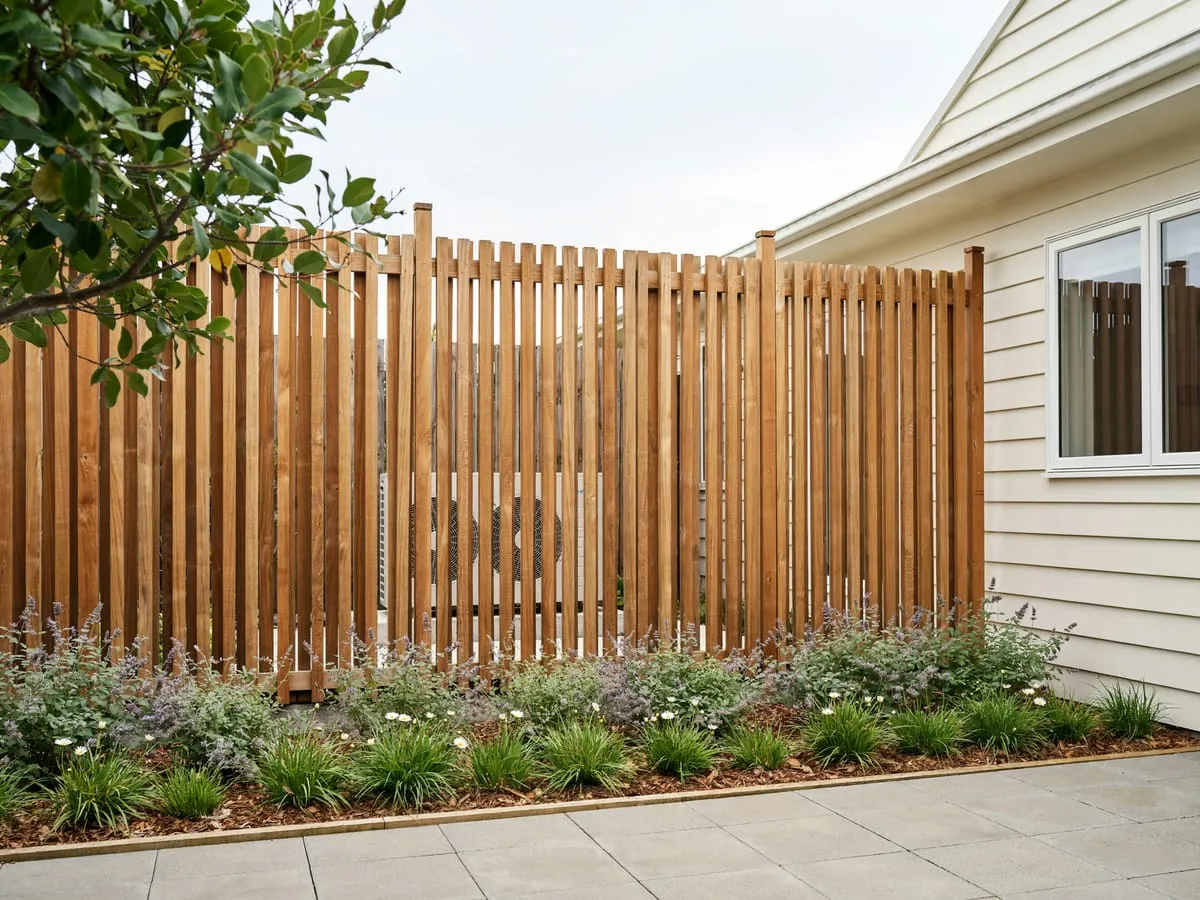
- Screened, not boxed in. A slatted timber screen helps the look and takes off a bit of sound. But the unit needs open space round it to breathe. A tight box makes it work harder and louder.
- The right size. A unit that’s too small runs flat out every night. The right size just ticks over. Read about heat pump sizing.
Heat pump boundary rules in Christchurch suburbs
The rules don’t change across the city. How hard they are to meet depends on your section.
- Small sections in the inner suburbs. In Addington, houses sit close together, and the only spot may be a narrow side passage along the neighbour’s fence. We check what’s on the other side of the fence first. When space is tight, we compare how loud each outdoor model is.
- Townhouses. In Edgeware, side paths are narrow and the next unit’s bedroom may be a metre or two away. We place the outdoor unit with that bedroom in mind.
- Central City apartments. In the Central City, there are separate noise limits, apart from the suburbs. Bedrooms are close together, and your body corporate may have rules about where an outdoor unit can go.
- Hillside sections. On the terraced slopes of Westmorland, noise travels. An outdoor unit beside the garage or on a lower terrace still has to stay quiet at the neighbour’s place.
- Selwyn villages. Tai Tapu comes under the Selwyn District Plan. On a lifestyle block the nearest neighbour may be a fair way off, but in the village the sections are closer together.
When a heat pump needs consent
Meet the noise limits and it’s a permitted activity. No resource consent needed. Nearly every home install fits here.
Consent only comes up when a unit can’t meet the limits. Think of a big unit jammed hard against a neighbour’s bedroom wall. The usual answer is to move or change the unit, not apply for consent.
A standard split system in a home normally goes in without building consent. A licensed electrical worker still has to do the connection.
When a neighbour complains
Christchurch City Council looks into it. If its measurements show the heat pump’s over the limit, it can issue an abatement notice. That means the noise has to come down.
Had a complaint? The fixes are usually simple.
- New anti-vibration feet. They stop the hum carrying through the ground and into the house.
- A service to clean the fan and coil. A dirty unit works harder, and louder.
- A quiet or night mode setting. It runs the unit more quietly through the night, when the 40 dB limit applies.
- Moving the outdoor unit a few metres. Away from their bedroom windows, or out of a corner, can be enough.
We can look at your install and tell you what will make the difference. Call 03 242 1023.
Need this checked on your property? We fit, service and repair heat pumps across Christchurch. Free quote → · What size do I need? →
Heat pump boundary rule questions
How far from the boundary does a heat pump need to be in Christchurch?
Christchurch has no fixed distance. It has noise limits, measured at the neighbour's site. A unit right by the fence is fine if it's quiet enough. A unit further away can break the limits if it's loud.
What are the noise limits for a heat pump in a residential area?
For residential zones outside the Central City, the limits are 50 dB LAeq from 7am to 10pm. From 10pm to 7am they're 40 dB LAeq and 65 dB LAmax. They're measured at the site receiving the noise.
Do I need resource consent to install a heat pump?
Not if the unit meets the noise limits. A well placed modern unit normally does. Consent only comes into it when an install can't meet the permitted standards.
Does a heat pump need building consent?
A standard split system in a home normally goes in without building consent. A licensed electrical worker still has to do the electrical connection.
What if a neighbour complains?
The council can measure the noise. If it's over the limit, they can issue an abatement notice that says it has to be fixed. The usual fixes are moving the unit, fitting anti-vibration feet or a screen, or running a lower fan speed overnight.
More on heat pump noise and compliance
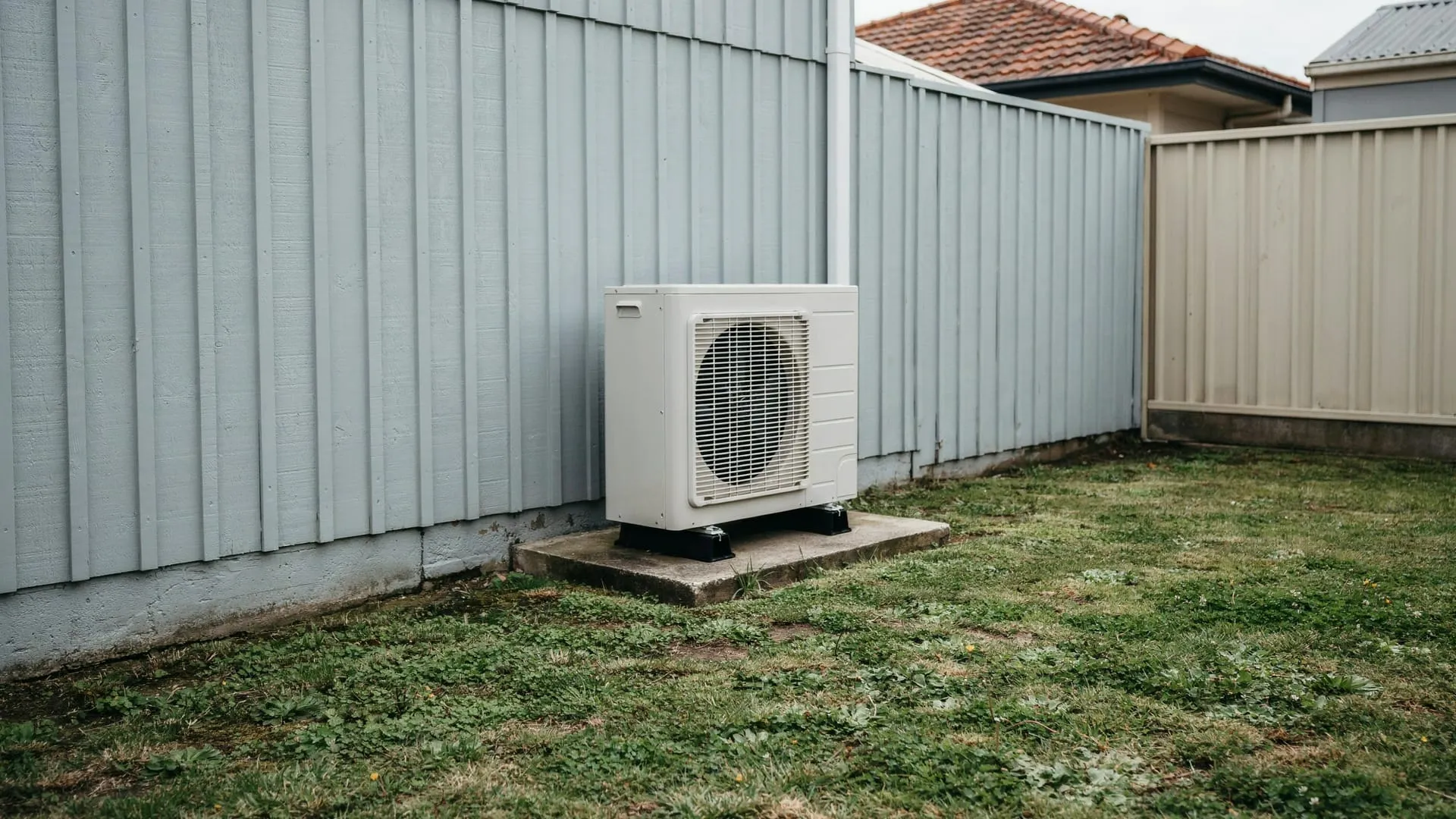
Heat pump noise problems
What causes a noisy unit and how to quieten it.
Read the heat pump noise problems guide →
Compliance and building codes
The rules that apply to any heat pump install.
Read the compliance and building codes guide →
Heat pump installation
How we plan and install a new system.
See heat pump installation →Get a free heat pump quote
Free quotes, no obligation. We call or email you back the same working day. Monday to Friday, 8am to 5pm.
Call 03 242 1023Request a call back