How does a heat pump work?
We fit and repair heat pumps across Christchurch. A heat pump moves heat that's already in the outside air into your room, and runs the same process backwards to cool.
Prefer to talk? Call 03 242 1023
What is a heat pump?
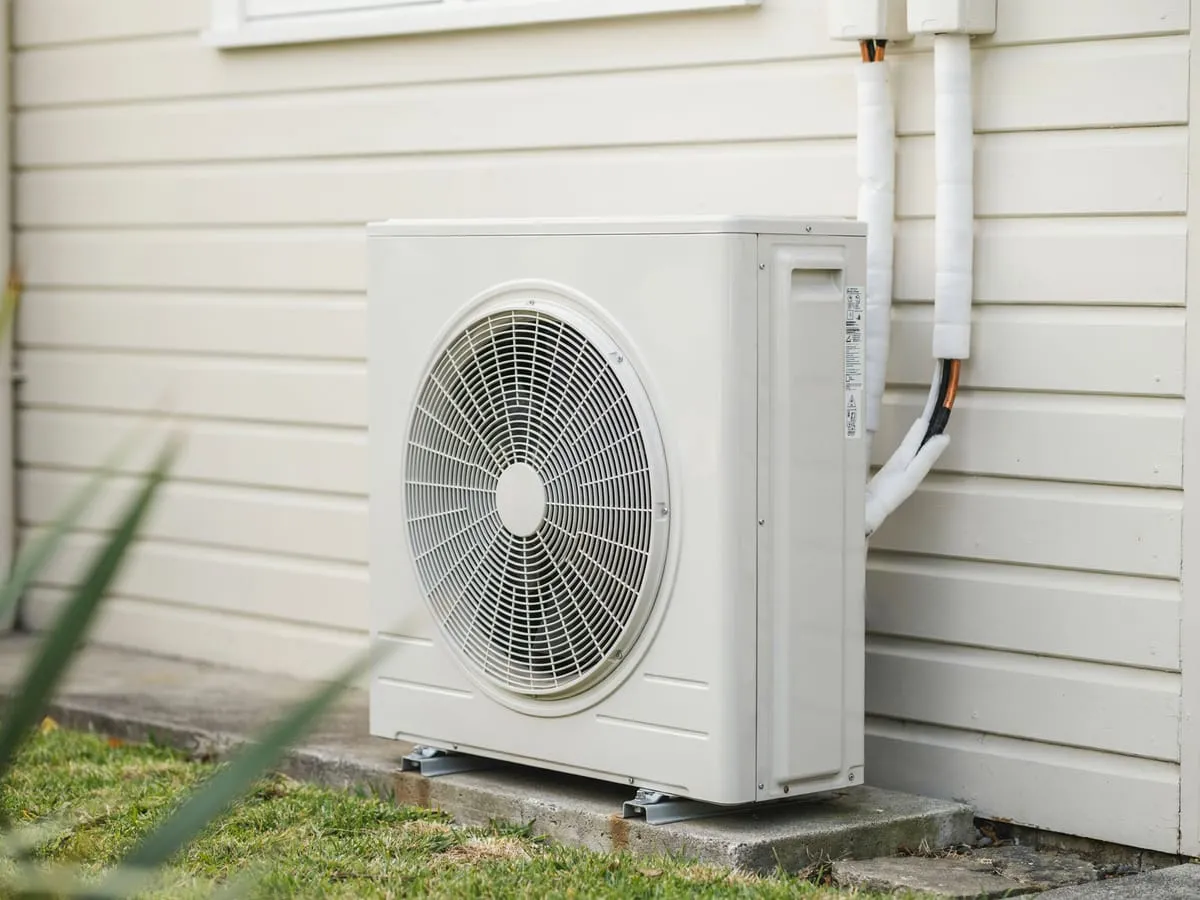
Most Christchurch homes have an air-to-air, reverse-cycle split system. Outside there’s a unit with a fan, a coil and a compressor. Inside there’s a unit with its own coil and fan. Two insulated copper pipes join them. They carry a refrigerant that goes round and round in a sealed loop.
The idea is simple. The system uses a fairly small amount of power to take heat from one place, usually the outside air, and deliver it somewhere else. Run it the other way and the same gear cools the house.
Think of a fridge pointed the other way. A fridge pulls heat out of the food and dumps it into your kitchen through the coil at the back. A heat pump pulls heat out of the garden and dumps it into your lounge.
How does a heat pump work, step by step
On heat, the refrigerant goes through five stages, over and over.
- Outdoor coil (evaporator). Cold, low-pressure liquid refrigerant flows through the outdoor coil. The fan pulls outside air over it. The refrigerant is colder than the air. So it soaks up heat and boils into a gas.
- Compressor. The compressor squeezes that gas into a much smaller space. Squeezing a gas makes it hot. It leaves the compressor as a hot, high-pressure gas.
- Indoor coil (condenser). The hot gas runs through the pipes to the indoor unit. The indoor fan blows room air over the coil. The refrigerant gives up its heat and turns back into a liquid. Warm air comes out of the unit.
- Expansion (metering) device. The liquid squeezes through a narrow gap. Its pressure drops suddenly. So does its temperature, to well below the outside air.
- Back outside. The cold liquid goes back to the outdoor coil. It’s ready to pick up more heat.
For cooling, a reversing valve swaps the direction. The indoor coil becomes the cold side and takes heat out of the room. The outdoor coil gets rid of it outside.
Get a free quote. Installs, servicing and repairs on all major brands.
Why it uses less electricity than a heater
A fan heater or oil column heater turns 1 unit of power into 1 unit of heat. A heat pump uses its power to run the compressor and fans. The heat it delivers is that energy plus all the heat it collected from outside.
Here’s an example. Say 1 kWh of power drives the heat pump, and it draws 2 kWh from the outside air. Then up to 3 kWh of heat arrives inside. That ratio is the coefficient of performance (COP). It’s heat out divided by power in. A COP of at least 3 is acceptable. Better products reach 4 or more.
Every heat pump sold in New Zealand has an energy rating label. You can compare models and pick an energy efficient heat pump that costs less to run.
How inverter compressors change the cycle
Older fixed-speed heat pumps were either fully on or fully off. Modern units usually have a variable-speed (inverter) compressor. Fixed-speed units aren’t common any more. An inverter starts gently. It runs hard while the room warms up. Then it slows as the room nears the set temperature, and ticks over to hold it.
That gives a steadier room temperature and better efficiency. It also means less vibration and quieter running. It’s why a heat pump that’s the right size should spend most of its time running steadily at part speed. It shouldn’t keep switching on and off.
How heat pumps work when it’s cold outside
A heat pump’s output and efficiency aren’t fixed. They drop as the gap between the outside air and the room gets bigger. The rated heating output on the label is measured at 7°C outside. On a frosty Christchurch morning, the unit is working with much colder air than that.
The cold works against a heat pump in two ways.
- Less heat out. The colder the air, the less heat the outdoor coil can collect. Some models keep working well below freezing. Others struggle. That’s why the label also shows heating output at 2°C. It’s what sets cold climate heat pumps apart.
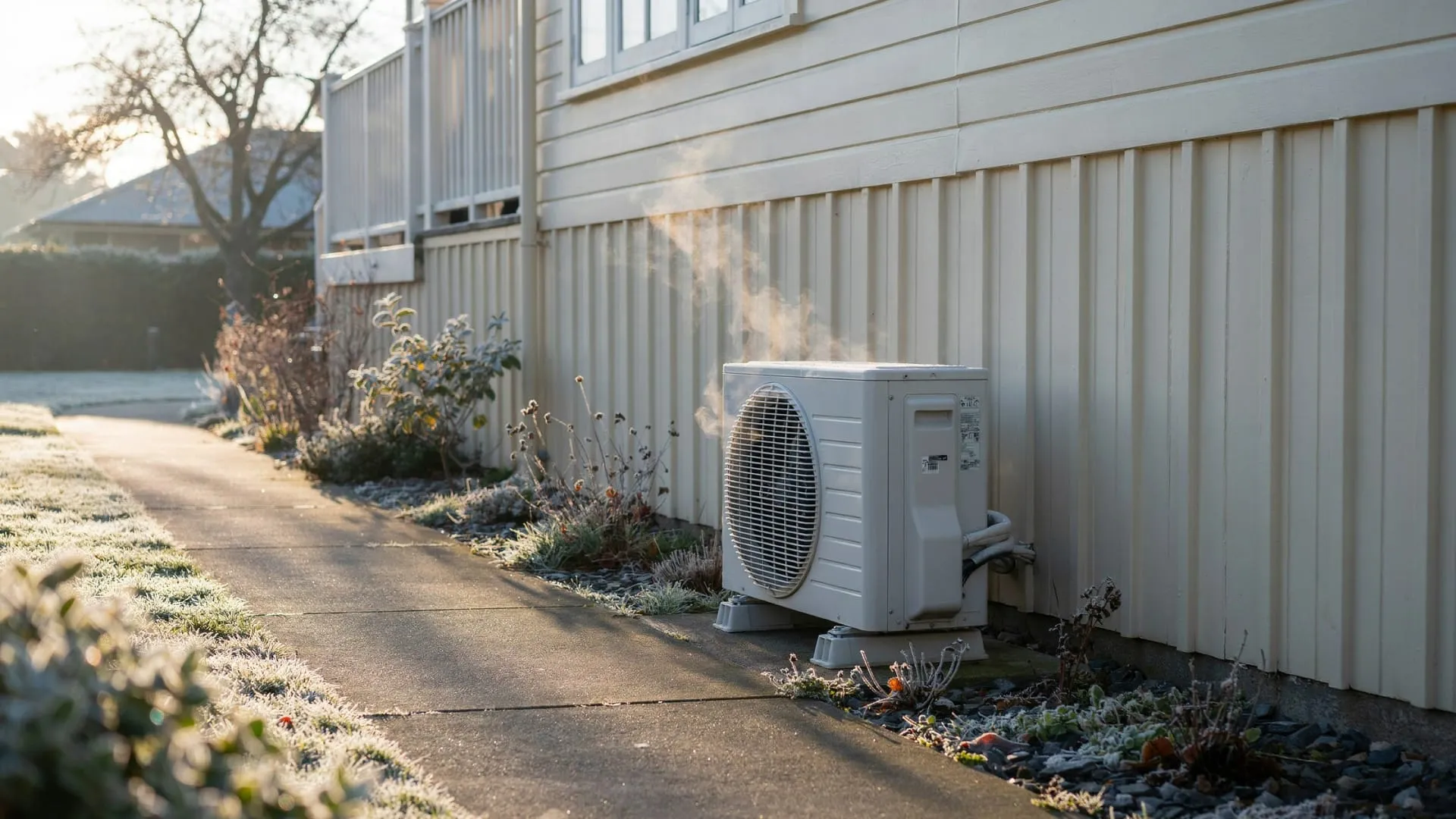
- Defrosting. Below about 7°C, moisture in the air can freeze on the outdoor coil. The unit reverses for a few minutes to melt the ice. No heat comes out while it does. You may see steam rising off the outdoor unit. A heat pump that’s too small has to defrost more often.
That’s the main reason sizing matters so much in Canterbury. The outside design temperature for Christchurch City and Selwyn District is minus 4°C. When sizing a heat pump, pick a unit for its output at that temperature. Not at 7°C.
How heat pumps work in Christchurch weather
The cycle is the same everywhere. Christchurch weather changes how hard each part has to work.
- Frosty plains. In Yaldhurst and Prebbleton, still, clear nights bring hard frosts. The outdoor coil has less heat to collect and has to defrost. We size for a frosty morning and raise the unit so the meltwater drains away.
- Big north windows on the hills. On Mount Pleasant, winter sun can warm a north facing living area by lunchtime. Once the sun drops, the glass gives that heat away fast, and the heat pump has to replace it. We size for the evening, not the sunny afternoon.
- Salt air on the coast. The outdoor coil is where the heat gets collected. In Redcliffs and Moncks Bay, salt off the estuary and the sea settles on its thin fins and shortens their life. A gentle rinse and a yearly service keep it collecting heat.
- Hot summer days. The reversing valve is what lets the same unit cool. On the hill in Cashmere, rooms with big windows can get too hot on a still summer day, and the heat pump that warms them in winter cools them then.
What the indoor and outdoor units actually do
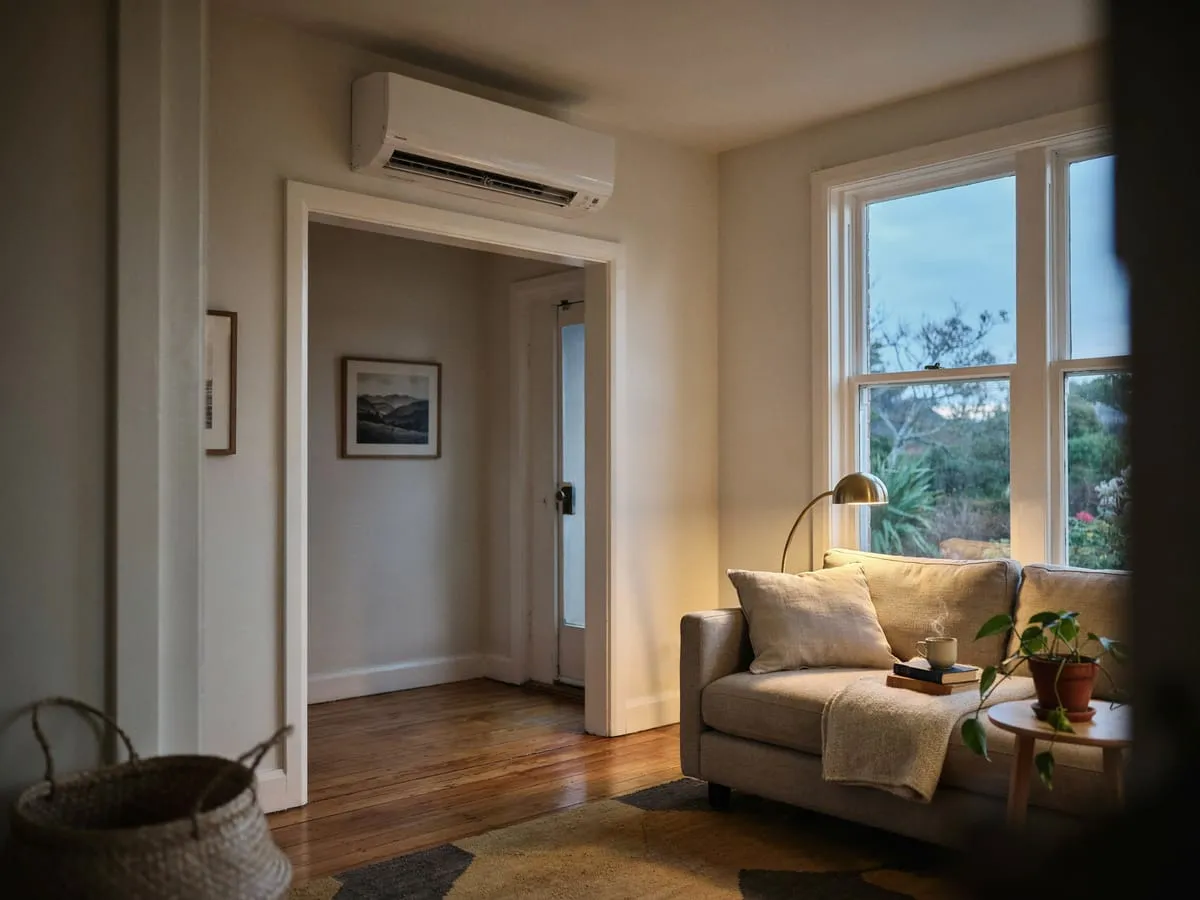
The outdoor unit collects heat. Its compressor raises the refrigerant’s pressure and temperature. The indoor unit lets that heat out into the room. Behind its front panel, filters catch dust before it reaches the coil. A condensate drain carries away the water from cooling and defrost.
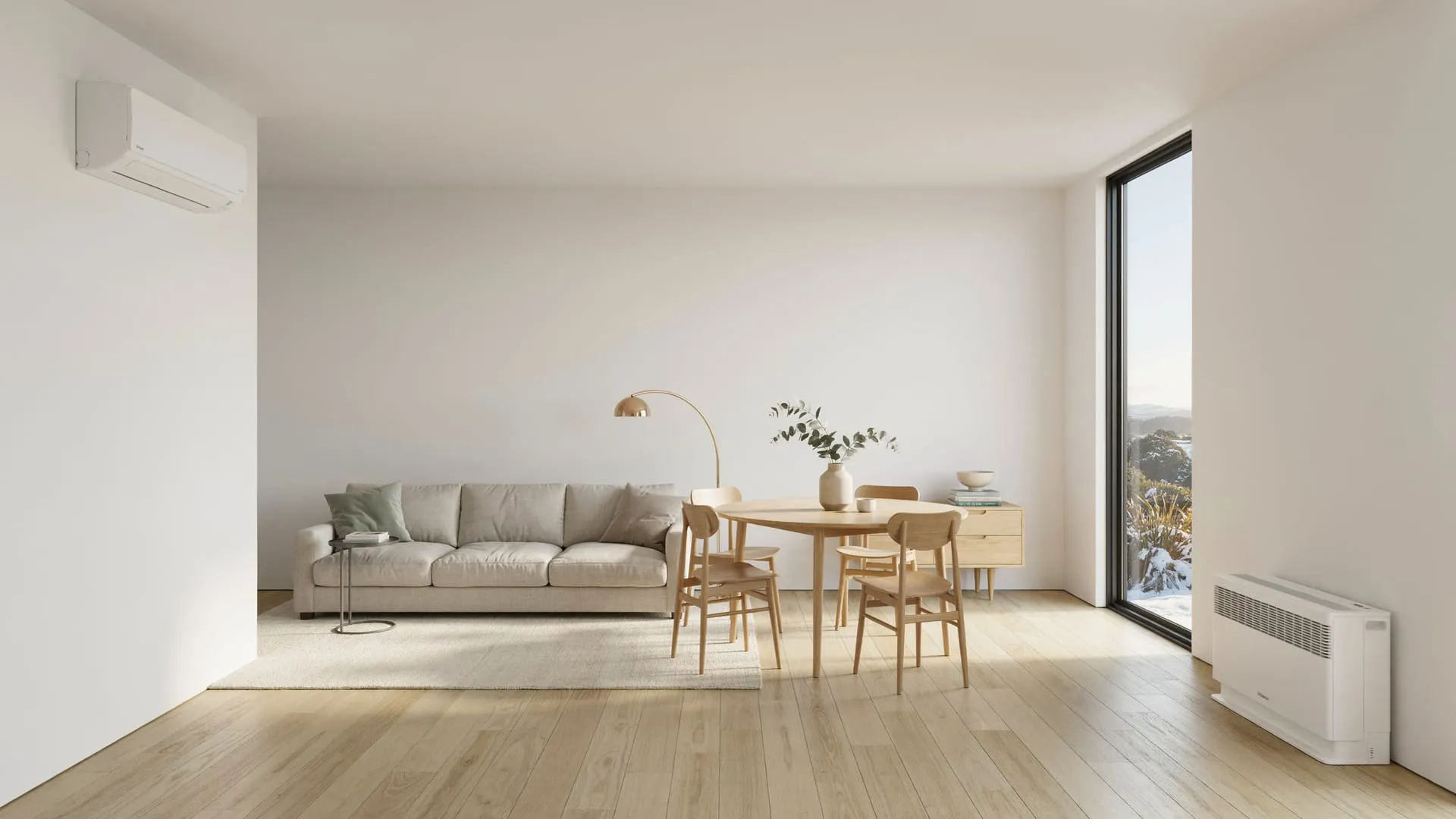
The indoor unit can be a high wall unit, a floor console, a ceiling cassette or a ducted system feeding vents in several rooms. All these types of heat pumps work the same way.
Keeping a heat pump working well
It only works if air can move freely over both coils. Clogged filters cut output and push up power use. So does a dusty indoor coil, or leaves packed round the outdoor unit. Clean the filters as often as once a month when you use it a lot. A yearly service keeps the coils, fans and drains clean.
Planning a new system? Start with buying a heat pump. Or call 03 242 1023 for a free quote. We size each one from your rooms, insulation and windows.
Questions about how heat pumps work
What is a heat pump?
In Kiwi homes it usually means an air-to-air, reverse-cycle split system. There's an outdoor unit and an indoor unit. Copper pipes carrying refrigerant join them. In winter it moves heat from outside to inside. In summer it moves it from inside to outside.
How can a heat pump get heat out of cold air?
Air below freezing still holds heat. The refrigerant in the outdoor coil is colder than the air going over it. So it soaks up that heat. Then the compressor raises it to a temperature that's useful inside.
Why does a heat pump blow cold air or stop heating on frosty mornings?
It's defrosting. Ice forms on the outdoor coil in cold, damp air. The unit runs backwards for a bit to melt it. No heat reaches the room while it does. It usually lasts a few minutes.
Does a heat pump use less power than an electric heater?
For the same heat, yes. A plain electric heater turns each unit of power into one unit of heat. A heat pump adds the heat it collects from outside. A heat pump that delivers at least three times the power it uses is doing an acceptable job.
More reading on how heat pumps work
Types of heat pumps
High wall units and floor consoles and ducted systems compared.
Read the types of heat pumps guide →
Heat pump size guide
How kW ratings work and what size a room needs.
Read the heat pump size guide →
Cold climate heat pumps
How output holds up on frosty Canterbury nights.
Read the cold climate heat pumps guide →Get a free heat pump quote
Free quotes, no obligation. We call or email you back the same working day. Monday to Friday, 8am to 5pm.
Call 03 242 1023Request a call back