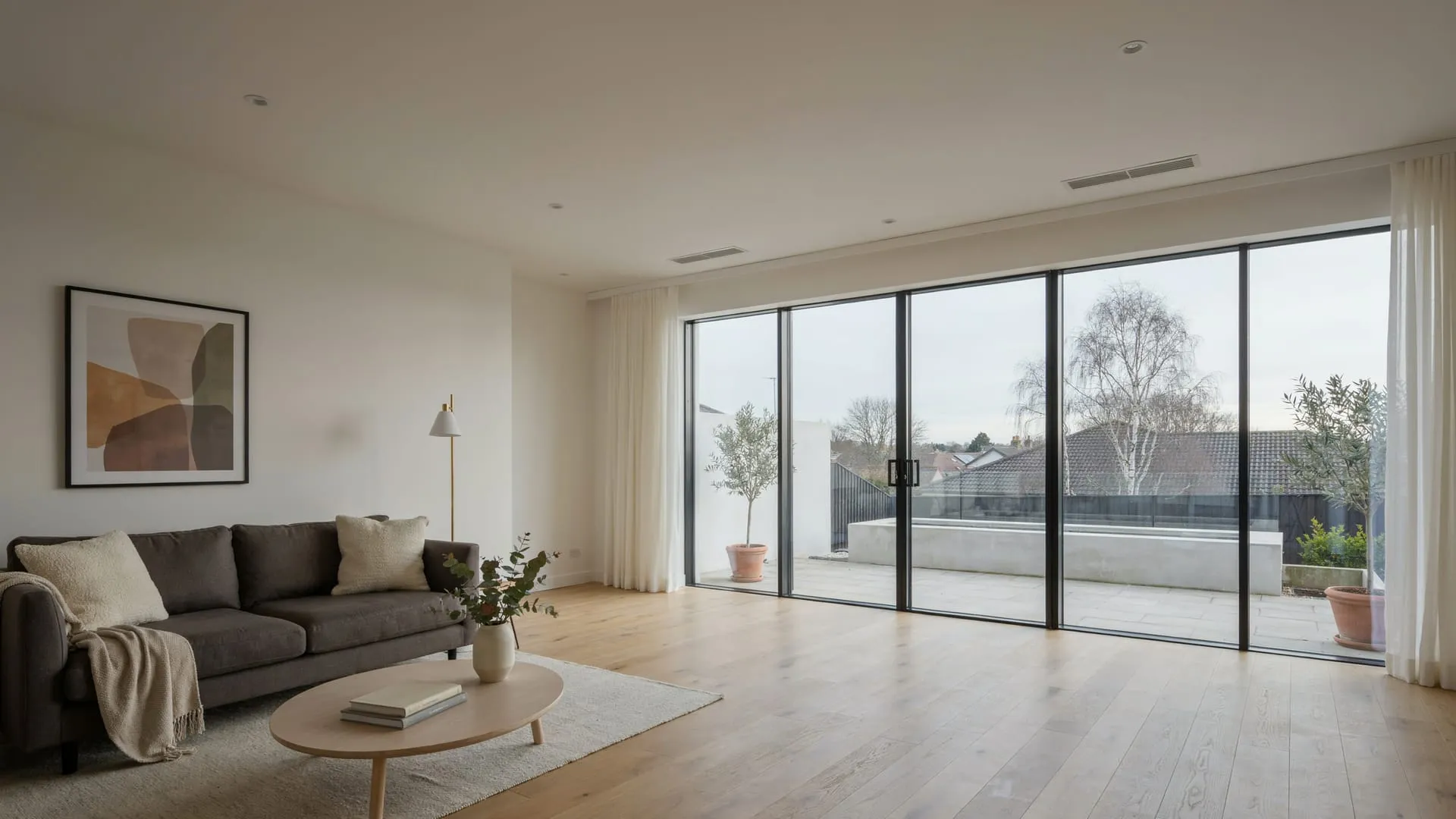
Ducted vs split system heat pumps: which suits your house?
We fit both ducted and split system heat pumps in Christchurch, and we'll tell you which suits your house. It comes down to the layout, your budget and how you use the rooms.
Prefer to talk? Call 03 242 1023
How a ducted or split system works
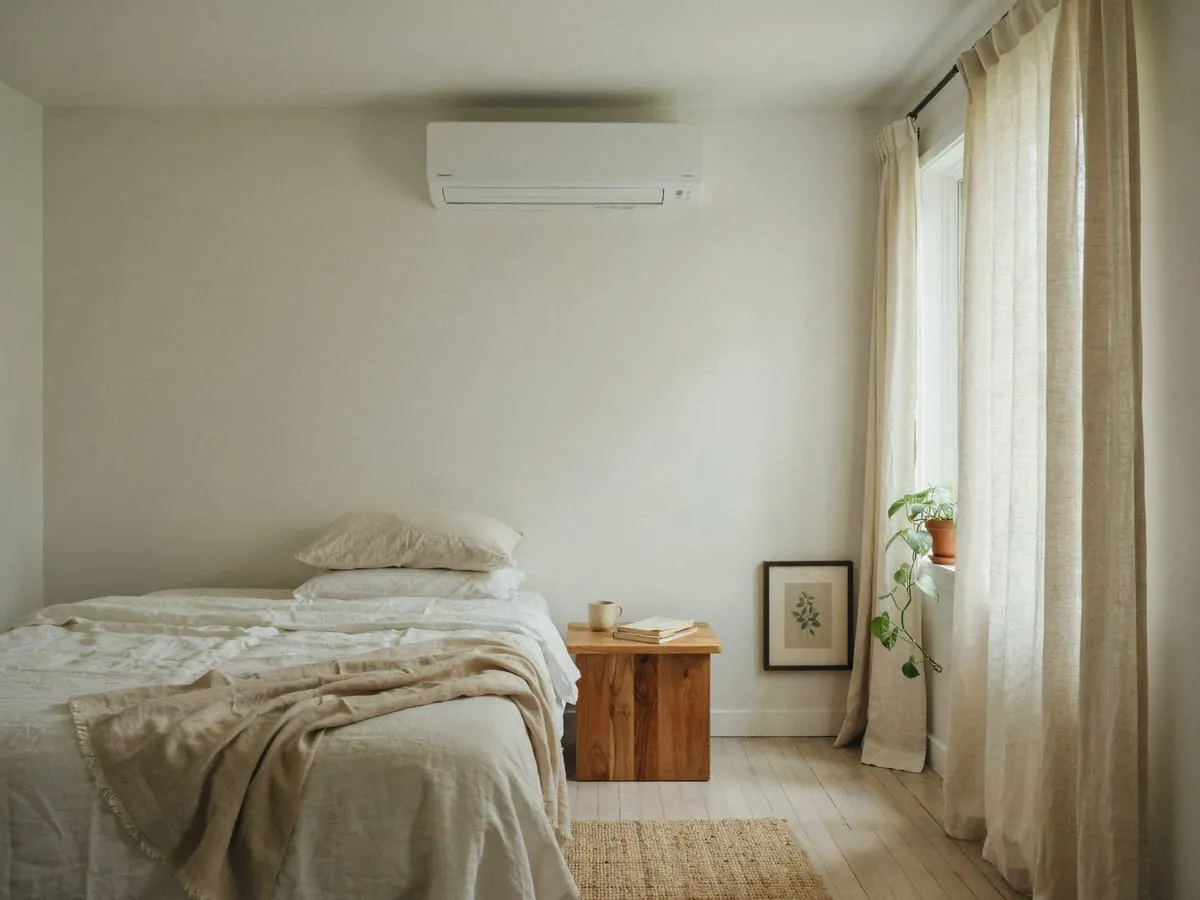
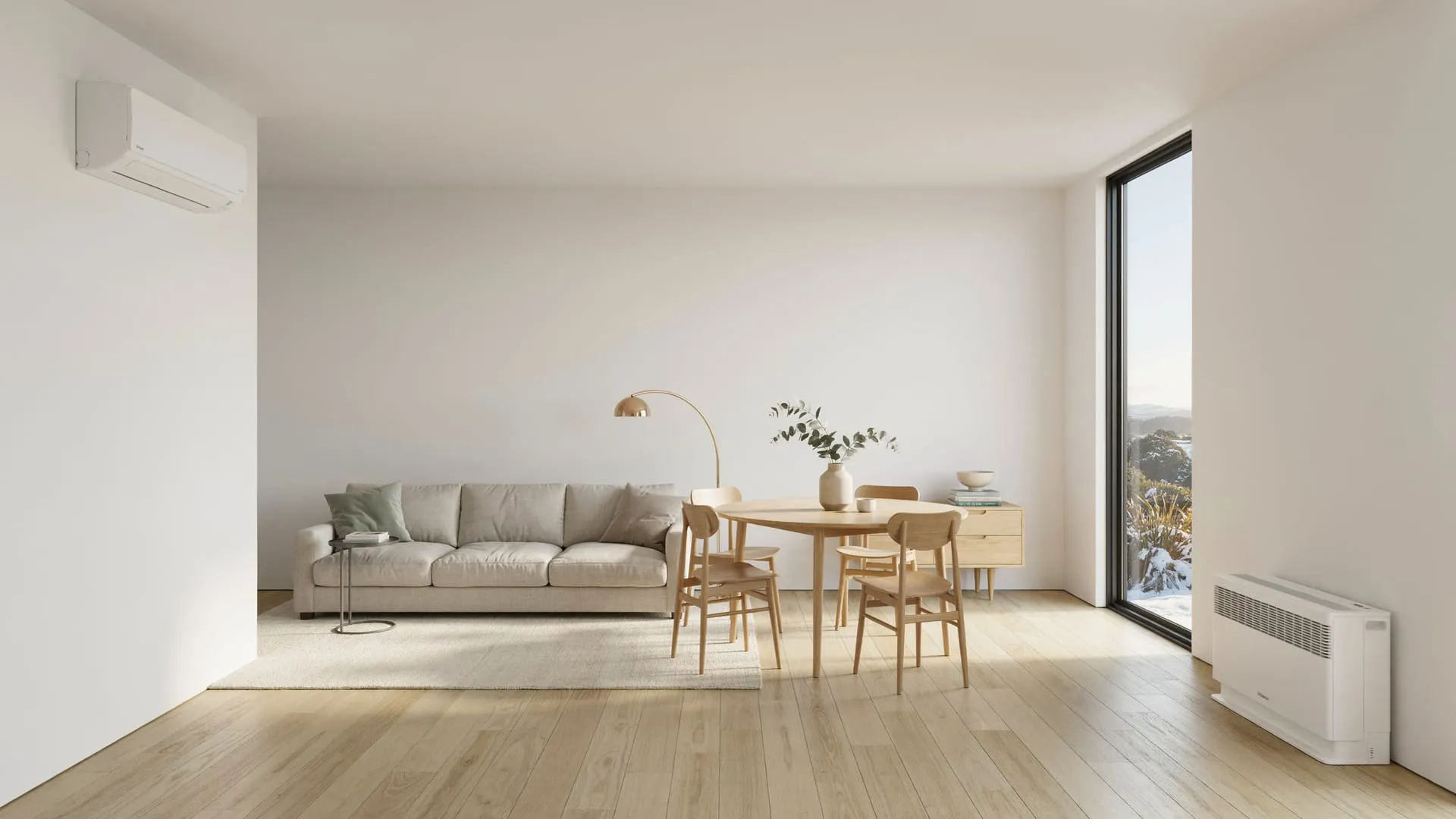
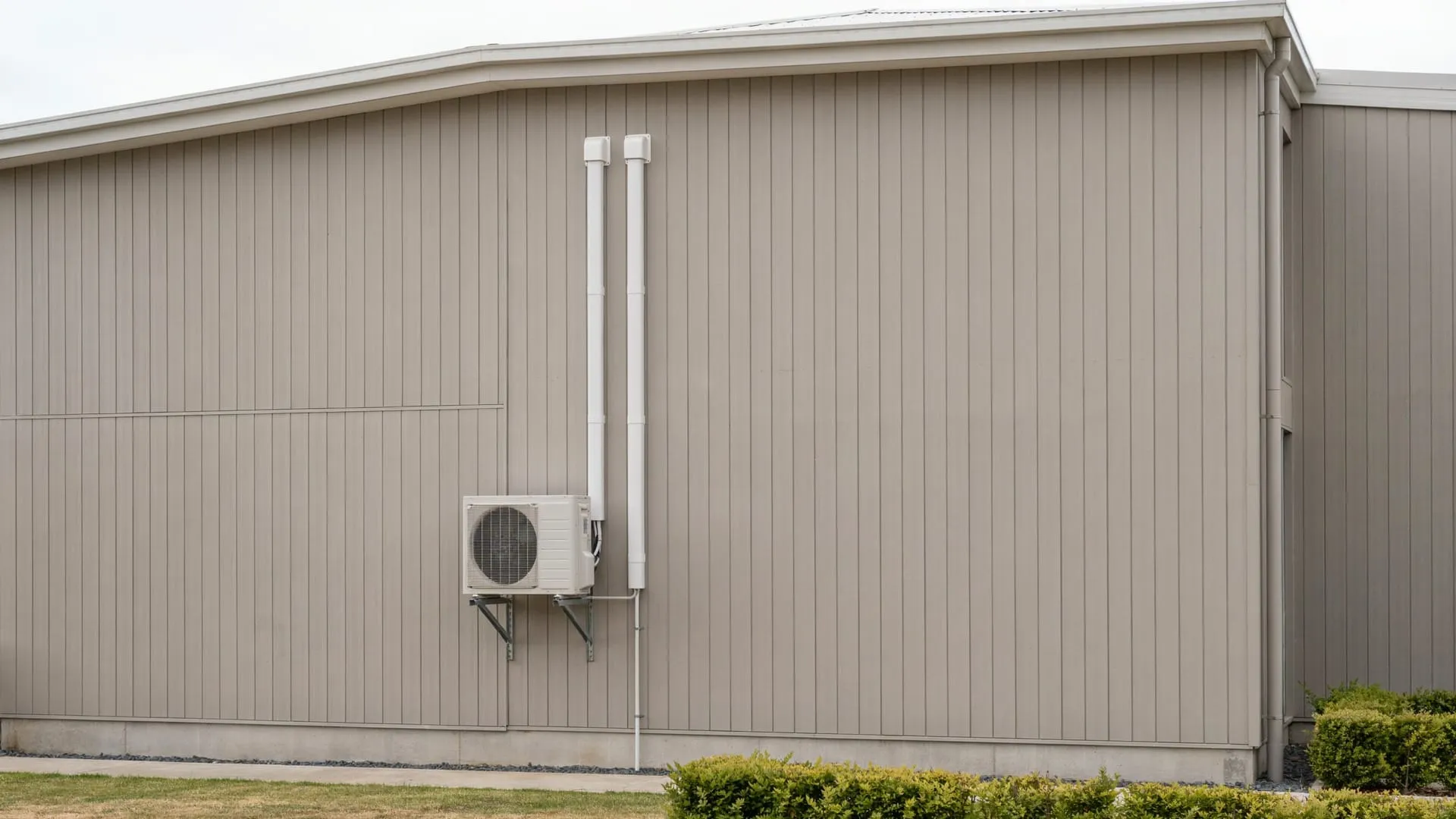
A split system has an indoor unit in the room, piped to an outdoor unit. The indoor unit is usually a high wall unit or a floor console. One split heats one room or one open space. You can have several round the house.
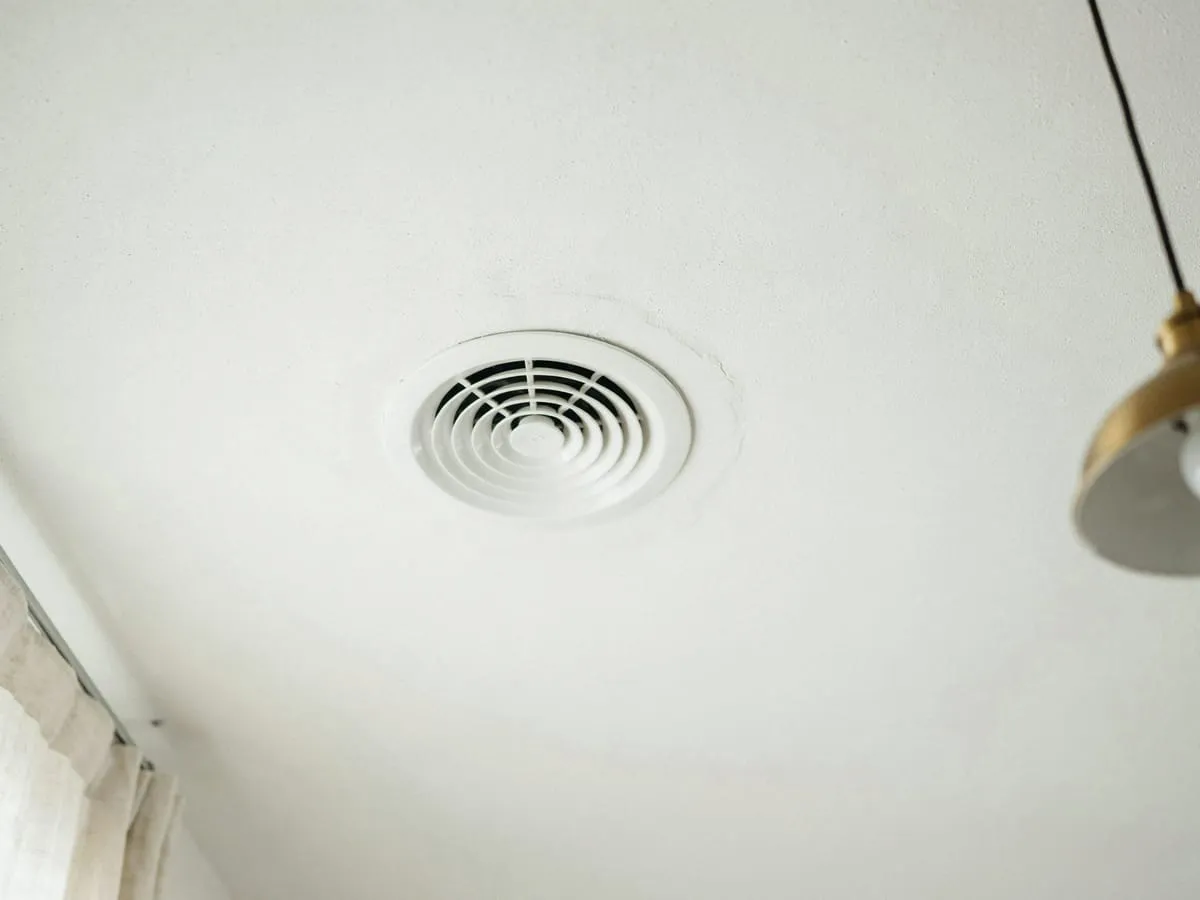
A ducted system has one indoor unit hidden in the roof space or under the floor. It pushes warm air through insulated ducts to a vent in each room. It pulls air back through a return grille. Once it’s in, you only see the controller and the grilles.
In between sits the multi split. That’s one outdoor unit running two or more indoor units in different rooms.
Ducted vs split system side by side
The biggest difference is reach. A split heats the room it’s in. Ducted heats every room with a vent.
| Split system | Ducted system | |
|---|---|---|
| What you see | A unit on the wall or floor | Ceiling or floor grilles and a controller |
| Control | Each unit set on its own | One controller, with zones if fitted |
| Space needed | An outside wall and a spot for the outdoor unit | Roof or underfloor space for the unit and ducts |
| Install work | At the wall and outside, one room at a time | A larger job through ceilings and the roof space |
| Best timing | Any time | New builds and renovations that open ceilings |
| Noise on the label | Indoor and outdoor figures, where shown | Outdoor figure only, where shown |
| If it fails | Other rooms keep their heat | The whole system is affected |
Get a free quote. Installs, servicing and repairs on all major brands.
Ducted vs split systems in Christchurch homes
The kind of house you have often makes the choice for you.
- Villas with high studs. In older homes like those in Edgeware and Papanui, the rooms close off from each other and warm air heads for the high ceiling. A split in each room you use, or a floor console under the window in a high-stud lounge, puts the heat where you sit.
- Renovated villas. In Sydenham, the usual renovation leaves a warm open plan space at the back and the original rooms at the front still cold. One unit can’t heat both, so each part normally gets its own split, often running off one multi split outdoor unit.
- Post-earthquake rebuilds. Rebuilt homes in Bexley and Avondale hold heat well. Where there’s good ceiling space, often planned with services in mind, ducting can go in without opening up much.
- Building or renovating. In a new Prebbleton home, plan the heat pump before the linings go on. Ducts then run through the roof space with no ceiling patching, and you can plan the outdoor unit’s spot round the bedrooms.
When a split system makes more sense
- You mostly want the living area warm. One well sized unit in the lounge may be all the house needs. Maybe a second for the main bedroom.
- The roof space is tight. A low pitch, a skillion roof or a ceiling full of services can make ducting hard or costly.
- The house is older and finished. In a villa, cutting vents and running ducts through lath and plaster ceilings is a big job. A wall unit is far simpler.
- You want to spread the cost. Start with the room that matters most. Add another later.
- You want each room on its own. If one unit has a fault, the rest keep going.
The trade-off? Each system has its own outdoor unit, and rooms without a unit rely on warm air drifting in.
When ducted makes more sense
- You want the whole house warm. Bedrooms, hall and bathroom too, not one warm room and cold corridors.
- You don’t want units on the walls. Ducted leaves walls and floors clear. Nothing to work the furniture round.
- It’s a new build or a big renovation. With the ceilings open, ducts go in with far less mess.
- There’s good roof space. A pitched roof with room for the unit and clear routes to each room.
- You’ll use zoning. A zone controller lets you heat the living areas by day and the bedrooms at night. See heat pump zoning.
Comfort and airflow from ducted vs high wall heat pumps
It comes down to where the warm air comes into the room. A high wall unit blows it across the room from one spot. A floor console lets it out low down. Put either in the wrong place and a big or L-shaped room can end up uneven.
Ducted vents spread the air from several spots, usually in the ceiling. Warm air rises. So where the vents go, and how hard the air blows, decides whether the heat gets down to where you sit. A good ducted design places the vents and the return air path so each room gets an even share.
Running costs of ducted vs split heat pumps
You can only compare them like for like. Heating one lounge with a wall unit uses less power than heating the whole house with ducted. Whole house against whole house is closer. Four or five wall units against one ducted system depends on the models. It depends on how efficient they are when it’s cold, and how you run them. Check the energy labels, and compare the kWh figures and star ratings in the Cold zone row, the zone that applies to New Zealand.
Zoning is one of the main ways to keep ducted running costs down. It stops you heating empty rooms.
Noise from ducted and split systems
With a split, the indoor fan is in the room. Modern units are quiet on low fan. But you’ll hear them at full output on a cold morning. With ducted, the indoor unit is in the roof space. What you hear is air moving at the vents.
Outside, both have a compressor and a fan. Whole-house ducted outdoor units are often bigger. The outdoor noise figure matters if the unit’s near a window, a bedroom or a neighbour. Christchurch noise limits at the boundary apply to both types.
Servicing ducted and split systems
With splits, you clean the filters in each room. Each unit needs a regular service. Ducted usually has a filter at or near the return air grille. Clean it often. The unit in the roof needs access for servicing. Either way, a yearly service keeps it efficient.
Ducted or split system? A quick way to decide
Start with how many rooms you want warm, and what the house allows.
- One or two rooms, older house, tight roof: split system.
- Three or four rooms, not much roof space: multi split or several splits.
- Whole house, new build or good roof space: ducted.
Get both options priced
We fit split, multi split and ducted systems from Mitsubishi Electric, Daikin, Fujitsu, Toshiba and Rinnai. So we can price them side by side for your house. We look at the rooms, the roof space, the insulation and how you live there. Then you get a free quote. Ducted heat pump cost explains what drives a ducted price. Call 03 242 1023 or book a free quote.
Ducted vs split heat pump questions
Is ducted or split system better for a Christchurch home?
Neither is better across the board. Ducted suits a house where you want every room warm and nothing on the walls. You need roof space for the unit and ducts. Split systems suit heating the living area and a few chosen rooms. That's especially true in an older house with not much ceiling space.
Ducted vs high wall heat pump, which is quieter?
Inside, ducted is usually less noticeable. The indoor unit's in the roof space, so you only hear air at the vents. Ducted units only carry an outdoor noise figure on the energy label. Split systems show both.
Can I add a ducted system later if I start with split units?
Yes, but you'd be paying for two systems. If whole-house heat is the long-term plan, price ducted now. Do it before a renovation opens the ceilings.
Do ducted systems heat bedrooms as well as living areas?
Yes, if each bedroom has a vent and the system is sized for every room on it. With zoning, you can heat the bedrooms at night and the living areas by day.
More on choosing ducted or split
Get a free heat pump quote
Free quotes, no obligation. We call or email you back the same working day. Monday to Friday, 8am to 5pm.
Call 03 242 1023Request a call back