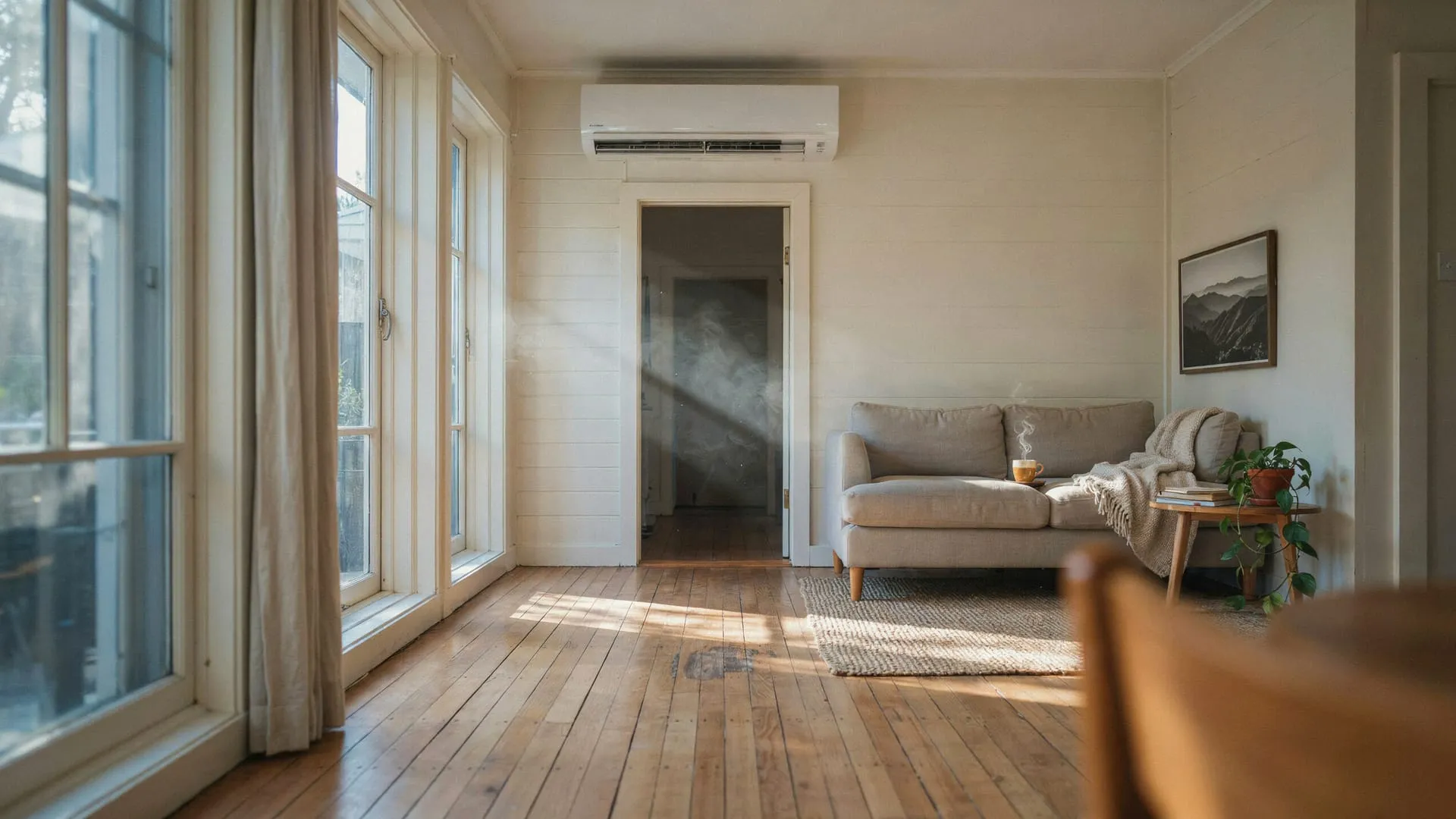
High wall heat pumps in Christchurch
We install high wall heat pumps across Christchurch, in living areas, bedrooms and studios. We pick the wall that lets the unit blow along the longest part of the room, towards where you sit, and keep it clear of curtains and tall furniture. Quotes are free.
Prefer to talk? Call 03 242 1023
What a high wall heat pump is and who it suits
It’s the indoor unit most people picture. A long, slim box mounted high on the wall, joined by pipes to an outdoor unit outside. It pulls air in through the top, heats or cools it, and blows it out across the room.
It suits most modern rooms with standard ceilings, where warm air doesn’t get stuck up high: open plan living areas, bedrooms, studios and home offices. It also suits you if you want good cooling on a hot afternoon, or if you’d rather keep the floor clear for furniture.
Where a high wall unit goes
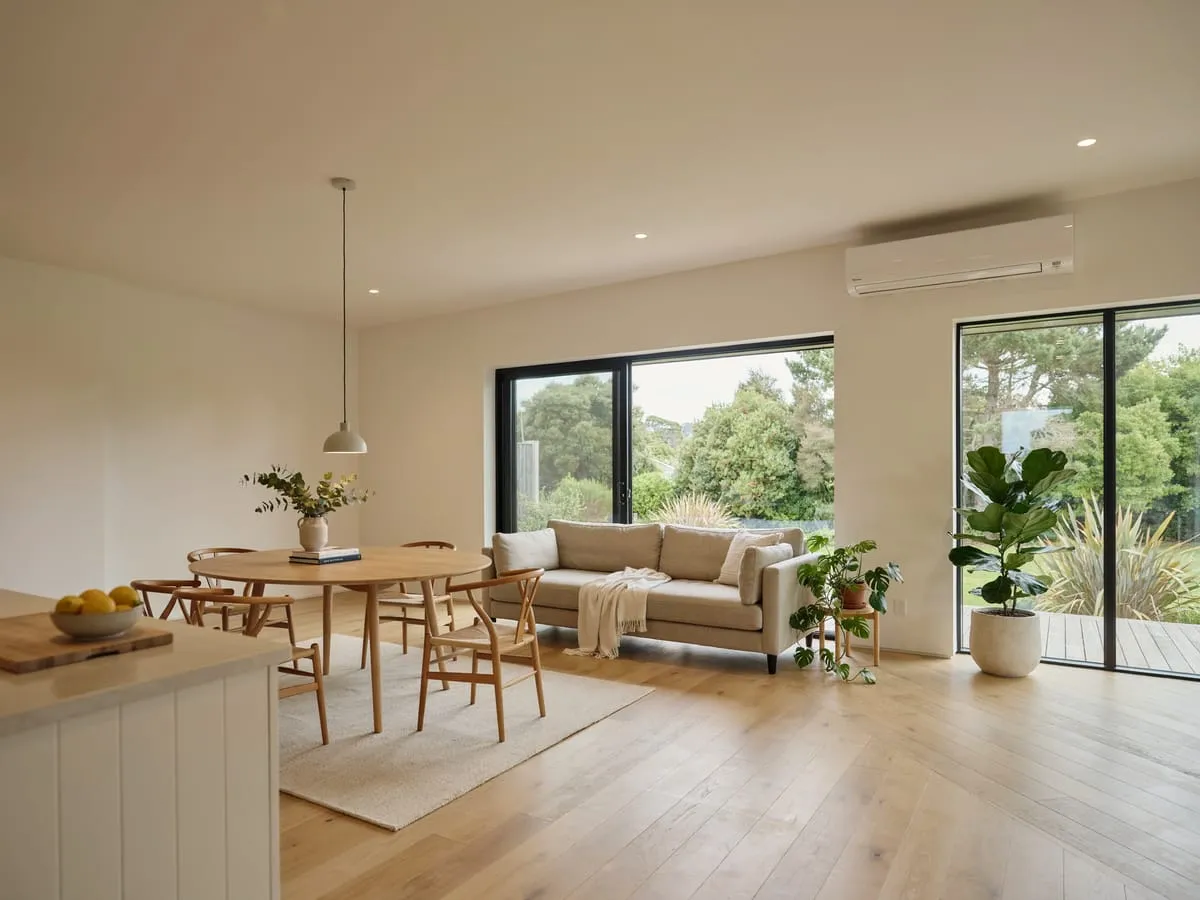
The best wall is usually the one that lets the unit blow along the longest part of the room, towards where you sit. Air needs room to travel and mix before it reaches you.
- Not over the couch or the bed. You’d feel a draught, and the air would hit you before it mixes.
- Not above a window. Cold glass drags the warm air down and away.
- Clear of tall furniture. A bookcase or wardrobe in front of the unit stops the airflow.
- Near an outside wall if possible. A short, straight pipe run is quieter, tidier and costs less.
In a bedroom, we aim the airflow along the room, not at the pillow.
Get a free quote. Installs, servicing and repairs on all major brands.
High wall units in Christchurch homes
Christchurch housing decides a lot about where a wall unit works.
- Open plan new builds. In Wigram, Rolleston and Prebbleton, insulated walls, ceilings and double glazing keep heat loss low. One high wall unit sized right can heat the kitchen, dining and living area on its own.
- Brick homes with standard ceilings. The single storey brick and tile houses in Avonhead suit a high wall unit, because warm air doesn’t get stuck high like it does under a tall villa ceiling. The bungalows in Beckenham have lower ceilings too, so a wall unit heats the lounge well.
- Bedrooms down a hall. In Aidanfield and Linwood, the lounge heat stays at the living end once the doors shut. A small wall unit in the main bedroom is the usual fix.
- Townhouses with courtyards. In Halswell, the indoor unit goes on an outside wall so the pipes run straight through. The outdoor unit sits on a bracket on the courtyard wall, with its fan pointed away from the bedroom windows next door.
- Newer homes on small sections. In Sumner, one high wall unit can usually heat an open plan living area. The harder part is fitting the outdoor unit in a narrow side yard with clear air round it.
High wall or floor console
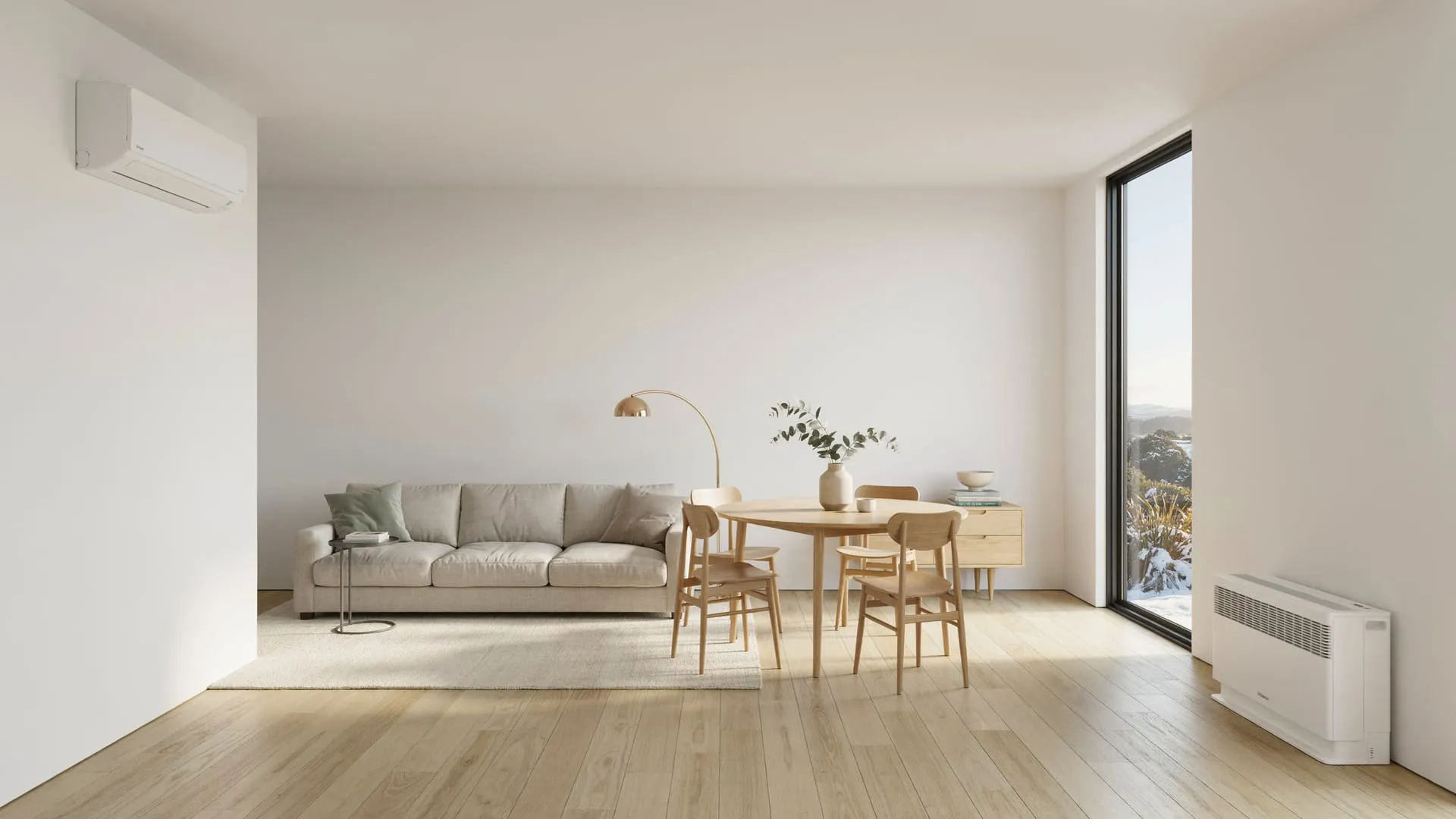
Both heat and cool. They move air differently, and that changes which one suits your room.
- Heating evenness. A console puts warmth out at floor level and lets it rise. A wall unit blows it down from above. In a room with a standard ceiling, both heat evenly. Under a tall stud, the console usually does better.
- Cooling spread. Cool air sinks. From high on the wall, it falls through the whole room. From a console, it tends to pool low.
- Wall space. A wall unit needs a clear stretch high up. A console needs a clear stretch low down, often under a window.
- Windows. Rooms that are mostly glass can leave no good spot up high. That’s where a console under the sill earns its place.
- Furniture. A wall unit keeps the floor free. A console needs open space in front of it, so no couch pushed up close.
- Filter access. Console filters are at knee height. A wall unit’s filters need a step stool.
- Noise at head height. A wall unit runs above you, and a console runs beside you. On a low fan, both are quiet. In a bedroom, a wall unit keeps the fan sound away from the bed.
If the room points to a console, read about floor mounted heat pumps.
What changes the price of a high wall install
The unit is only part of the price. The rest comes down to your house.
- The size of unit. A big or cold room needs more heat output, and a bigger unit costs more.
- Outside or inside wall. On an outside wall the pipes go straight through to the outdoor unit. On an inside wall they have to run through the ceiling or under the floor first.
- How far apart the units are. A longer run means more pipe, insulation and cover on the outside of the house.
- How the outdoor unit is mounted. Feet on flat ground are simplest. A wall bracket, a deck or a steep section takes more time and gear.
- The switchboard. If there’s no room for a new circuit, the board needs work first.
We cover these and other installation cost factors at the quote.
Replacing an old high wall unit
Old wall units often went where they were easiest to fit, not where they heat best. So before we swap like for like, we check two things. Is the unit the right size for the room? Is it on the right wall?
If both are fine, we can often reuse the hole in the wall and sometimes the pipe route. A newer unit may need a different pipe size or its own circuit, and we’ll tell you before you agree to anything. We take the old indoor and outdoor units away. If your current unit is worth fixing, we’ll say so and talk about heat pump repair instead.
To get started, request a free quote. We’ll check the room and the old unit on site, and give you a free quote.
How we choose and fit a high wall heat pump
1
Measure the room
We note the floor area, ceiling height, insulation and glass, and which way the windows face. That sets the size of the unit.
2
Pick the wall
The unit needs to blow across the room to where you sit or sleep. We keep it clear of curtains, tall furniture and the corners that trap air.
3
Plan the pipe route
An outside wall is easiest, with the pipes going straight through. On an inside wall, we plan the run through the roof or under the floor and show you before we start.
4
Place the outdoor unit
Close to the indoor unit where we can, with clear air round it, off frosty ground and away from bedroom windows next door.
5
Fit and test
We mount the bracket level, run the pipes and drain, pressure test, then run it in heating and cooling.
6
Show you the settings
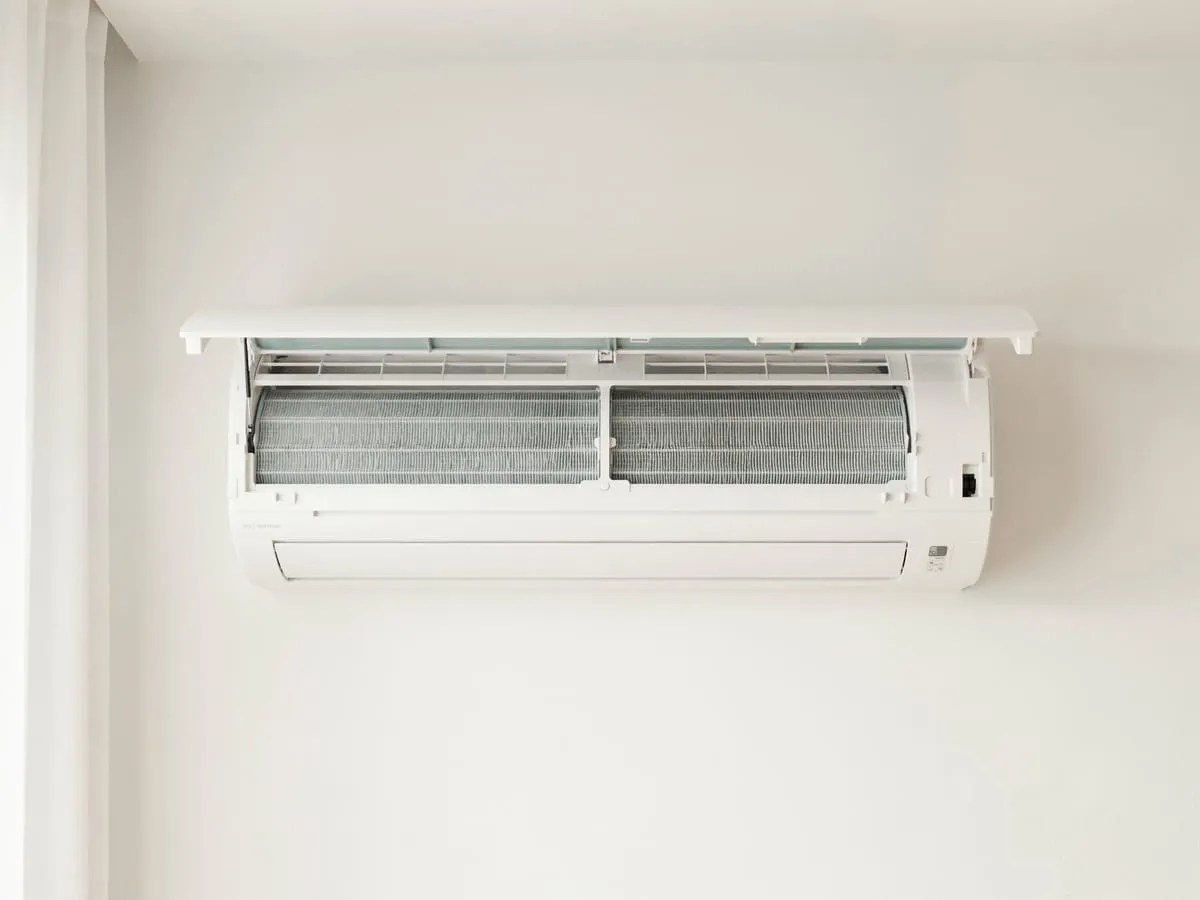
How to aim the louvres, which fan speed suits the room, and how to lift the front cover to clean the filters.
High wall heat pump brands we fit
We install five brands and compare their models for your rooms, then suggest the one that fits, not whatever's in stock.
Service and repair
Other brands
Most other split and ducted heat pumps sold in New Zealand.
Wall mounted heat pumps across Christchurch and Selwyn
We fit wall mounted heat pumps in every Christchurch suburb, in Lyttelton, and in Rolleston, Lincoln, Prebbleton and Tai Tapu.
High wall heat pump questions
Is a high wall heat pump good for heating, or mainly for cooling?
It does both well in most rooms. It throws warm air across the room and the air falls to where you are. In a room with a very tall ceiling, warm air can sit up high, and a floor console may heat more evenly.
Can a wall mounted heat pump go above a window or a door?
Above a door, often yes, if there's enough height. Above a window is a poor spot. Cold glass under the unit pulls the warm air down the window instead of into the room.
How high up the wall does the unit go?
High enough to throw air across the room, with a gap above it to draw air back in. The maker's install guide sets the clearances, and we follow it for the model you choose.
Can you replace my old wall unit in the same spot?
Often. If the old spot heats the room well, we reuse the hole and sometimes the pipe route. If the old unit was put where it was easy to fit, we'll suggest a better wall.
How do I clean the filters on a high wall unit?
Lift the front cover, slide the filters out, rinse them and let them dry. You'll need a step stool. If you'd rather not, our heat pump cleaning covers it.
More on wall hung heat pumps and other types

Get a free heat pump quote
Free quotes, no obligation. We call or email you back the same working day. Monday to Friday, 8am to 5pm.
Call 03 242 1023Request a call back