Best heat pumps for New Zealand homes, and how to judge them
We fit Mitsubishi Electric, Daikin, Fujitsu, Toshiba and Rinnai, and we pick the model for your room, not the badge. Here are the energy label and spec sheet checks that show which fits.
Prefer to talk? Call 03 242 1023
Why the best heat pump depends on the house
The best heat pump is the one that suits your house, rooms and section. It’s not whatever tops a list. Search for the best heat pumps in New Zealand and you’ll get rankings, awards and owner surveys. They tell you how owners feel about a brand.
They can’t tell you if a model will heat your lounge on a frosty Christchurch morning. They can’t tell you if it fits your wall. Nor will they say if it’s quiet enough next to your neighbour’s bedroom.
A heat pump that’s great in one house can be the wrong buy in the next. A premium unit that’s too small can do worse than a mid-range one sized right. So we won’t crown a brand. Instead we use eight checks, drawn from the Zoned Energy Rating Label and good installation practice, that find the right model for your rooms.

The best heat pumps for Christchurch homes
The model that suits one part of Christchurch can be the wrong buy in another.
- Hard frosts on the plains. Out west in Templeton and Russley, clear winter nights bring hard frosts. Give the 2°C heating figure and the maker’s cold weather chart more weight than the stars.
- Salt and wind off the sea. In Moncks Bay and up in Clifton, wind drives salt onto the outdoor coil. Ask for corrosion protection on the outdoor unit. Check the outdoor unit fits on the sheltered side of the house.
- Tight sections. In Addington, houses sit close together, and the outdoor unit often has to go in a narrow side passage by the neighbour’s fence. Outdoor units vary in how loud they are, so compare the outdoor noise figures before the stars.
- High ceilings. In big Fendalton villas and character homes, the volume of the room sets the size, not the floor area. Work out the size first, then compare the brands’ models at that size.
- Builder-fitted units. In Wigram, a heat pump that came with a new house was often picked as part of a package. If it struggles on cold mornings, check its capacity against the room before you blame the brand.
Get a free quote. Installs, servicing and repairs on all major brands.
Check 1: Cold weather output on the best heat pumps
In a Canterbury home, start here. How much heat does the model still put out when it’s cold? The label gives two heating figures. One is at 7°C outside, the other at 2°C.
Frost forms on the outdoor coil below about 5.5°C. Some of the unit’s effort then goes into defrosting. Some models are built better for frost. Others give out a lot less heat at 2°C than at 7°C.
Look for a 2°C figure that matches or beats the 7°C figure. For colder than that, ask for the maker’s performance chart. It should show output at 0°C, minus 5°C and below. The design temperature for Christchurch and Selwyn is minus 4°C. We compare units built for frost under cold climate heat pumps.
Check 2: The right size for the room
No brand can make up for a unit that’s the wrong size. Size comes from how much heat the room loses and the outdoor design temperature. The method is laid out under heat pump sizing. The official tool is explained under heat pump size calculator.
Check 3: Stars in the Cold zone
Read the stars in the Cold zone row. The label has red stars for heating and blue for cooling. It shows them across three climate zones. New Zealand is in the Cold zone.
More stars means a more efficient unit than others of a similar capacity. One star means it’s among the worst of its size. Stars depend on capacity. So compare a 6 kW unit with other 6 kW units, not with a 3.5 kW one.
Check 4: kWh per year
The kWh per year figure sits next to the stars. It’s a guess at the power the unit will use each year for heating and cooling, in each zone.
For a rough running cost, add the heating and cooling figures for your zone. Then multiply by your power price. It’s only a guide, because every household runs its heat pump differently. But it’s a fair way to compare two models of the same size.
Check 5: Indoor and outdoor noise levels
The label shows noise in decibels, by the house icon. The figure inside the house is the indoor unit. The one outside is the outdoor unit. Lower is quieter. The figures are measured at full output on cool, so day to day the unit is often quieter. New Zealand labels don’t have to show noise, and ducted units only show an outdoor figure.
For a sense of scale, a quiet home is about 30 dBA. Normal talking is about 60 dBA. Does the outdoor unit have to go near a fence or a bedroom window? Then give the outdoor figure as much weight as the stars. Our noise problems guide and boundary rules guide cover the rest.
Check 6: Fit for the room and the site
The spec sheet tells you if a model fits the room and the section. The label doesn’t.
- Indoor unit size. Measure it against the wall or floor space you’ve got.
- Airflow. A floor console heats at floor level. A high wall unit suits cooling and keeps floors clear.
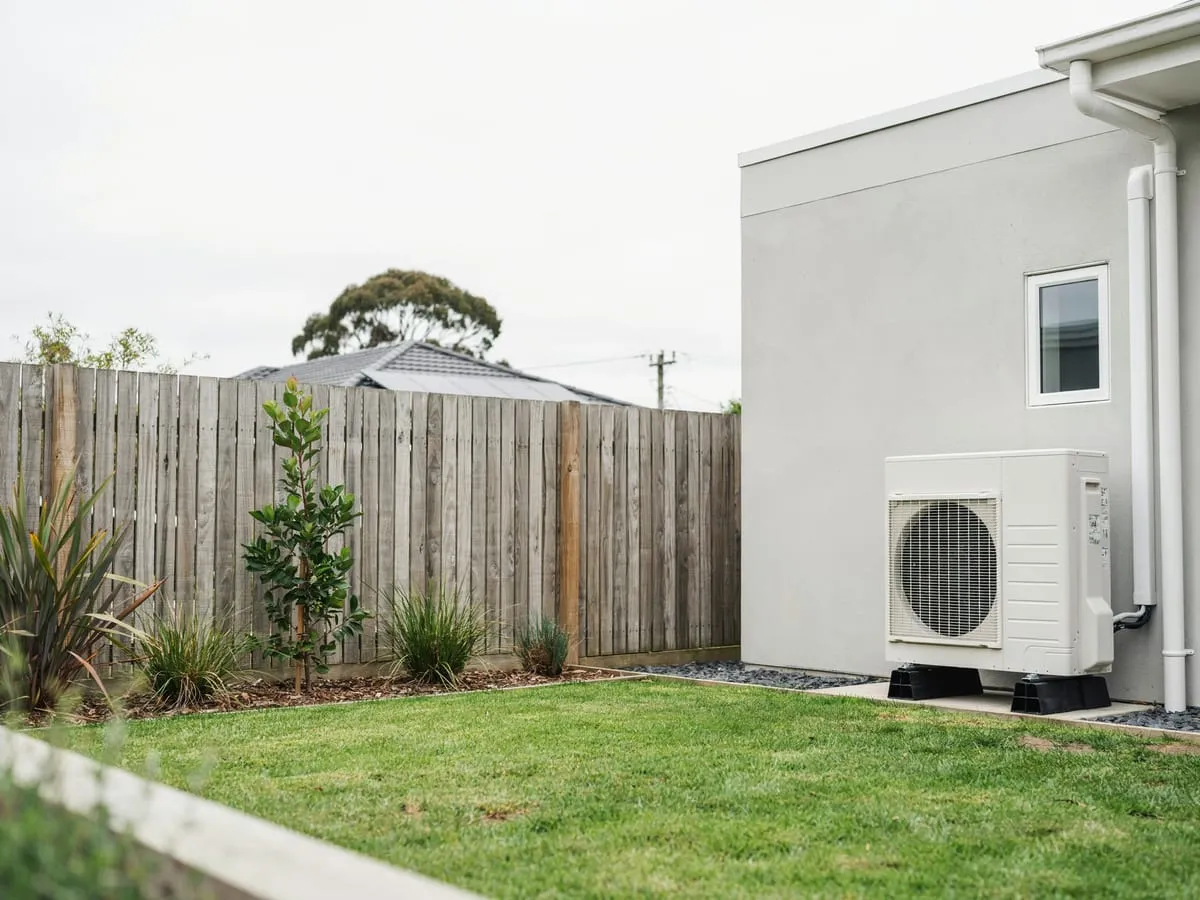
- Outdoor unit. Check its size and the clear space it needs around it.
- Pipe length. Check the maximum, in case the outdoor unit can’t go straight behind.
- Corrosion protection. Outdoor cabinets and coils near the sea need it, so ask for it in Sumner, Redcliffs, New Brighton or Lyttelton.
Check 7: Controls and day-to-day use
Pick controls to suit whoever runs the heat pump each day. Wi-Fi control and timers let you warm the house before you get home. They also let you turn it off once you’ve left. For some households, a clear remote and filters you can reach matter more than an app. Most current models have inverter compressors, and an inverter unit is the right choice in most cases.
Check 8: Support in Christchurch
A heat pump should last many years. Find out what local support you’ll get once it’s in:
- Parts: are they easy to get in Christchurch for that brand?
- Service: who services and fixes it?
- Warranty: how is it handled, and who do you call?
- Install rules: does the installer know what the brand requires?
We fit five brands. We service Panasonic and most others sold here too. So we can compare models without a favourite.
The best heat pump brand still needs a good installer
A badly fitted heat pump will let you down, whatever the brand. Many poor performers are simply in the wrong place. A good model that’s the wrong size, or in the wrong spot, won’t heat the way it should. Our installer checklist covers what to ask.
How we pick the best heat pump for your home
We pick your heat pump on a site visit, with no favourite brand. First we size the room. We look at its measurements, insulation and windows, and how you use it. Then we work out where the outdoor unit can go.
After that, we compare suitable models from all five brands. We weigh their cold-weather output, efficiency and noise. You get our advice in a free quote.
Phone 03 242 1023 or request a quote. To see what each brand sells, read our heat pump brands comparison.
Questions about the best heat pumps in NZ
What is the best heat pump brand in NZ?
No brand is ahead on every model. Mitsubishi Electric, Daikin, Fujitsu and Toshiba all sell full ranges here. Each has models that suit some rooms better than others. Compare models of the same size. Look at heating output at 2°C, Cold zone stars, kWh per year and noise.
What makes a heat pump good for Christchurch winters?
It has to give out plenty of heat when it's cold outside. Where nights drop to 2°C or lower, the 2°C heating figure should match or beat the 7°C figure. After that, it has to be the right size for the room.
How do I find the quietest heat pump?
Check the noise figures on the energy label. They sit inside and outside the house icon. Lower numbers are quieter. Noise is optional on New Zealand labels. If it isn't shown, ask for the spec sheet.
Are more stars always better?
Only between units of about the same capacity. Stars compare a model with others of a similar size. So you can't rank a small unit against a big one on stars.
More on choosing the best heat pump brand
Heat pump brands comparison
What each of the four brands sells in New Zealand.
Read the heat pump brands comparison guide →
Cold climate heat pumps
Models that hold output below freezing.
Read the cold climate heat pumps guide →
Energy rated heat pumps
How the energy rating label works.
Read the energy rated heat pumps guide →Get a free heat pump quote
Free quotes, no obligation. We call or email you back the same working day. Monday to Friday, 8am to 5pm.
Call 03 242 1023Request a call back