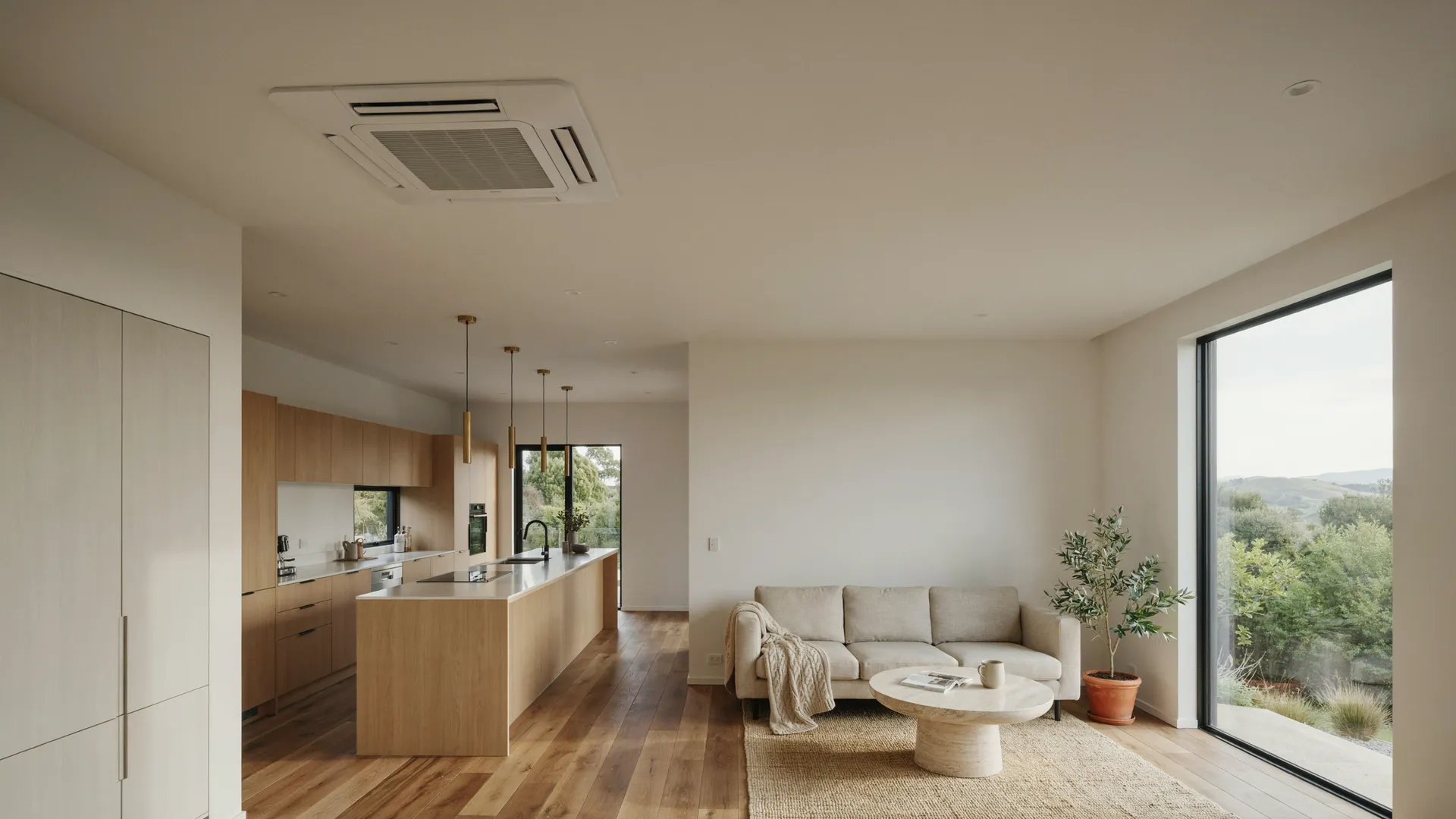
Ceiling cassette heat pumps in Christchurch
We install ceiling cassette heat pumps across Christchurch, set into the ceiling with a grille that blows air out in several directions. We check there's room above the ceiling for the unit, the pipes and the drain before anything is ordered, and quotes are free.
Prefer to talk? Call 03 242 1023
What a ceiling cassette heat pump is and who it suits
A ceiling cassette heat pump is an indoor unit set into the ceiling. Only the grille shows, flush with the ceiling line. It draws air up through the centre of the grille, heats or cools it, and blows it out through louvres on several sides. It joins to an outdoor unit by pipes and a drain run through the ceiling space.
It suits rooms where there’s no clear wall for a unit, and rooms where you don’t want a box on the wall. It also suits large open plan spaces, because the air comes out in several directions from one point rather than from one wall.
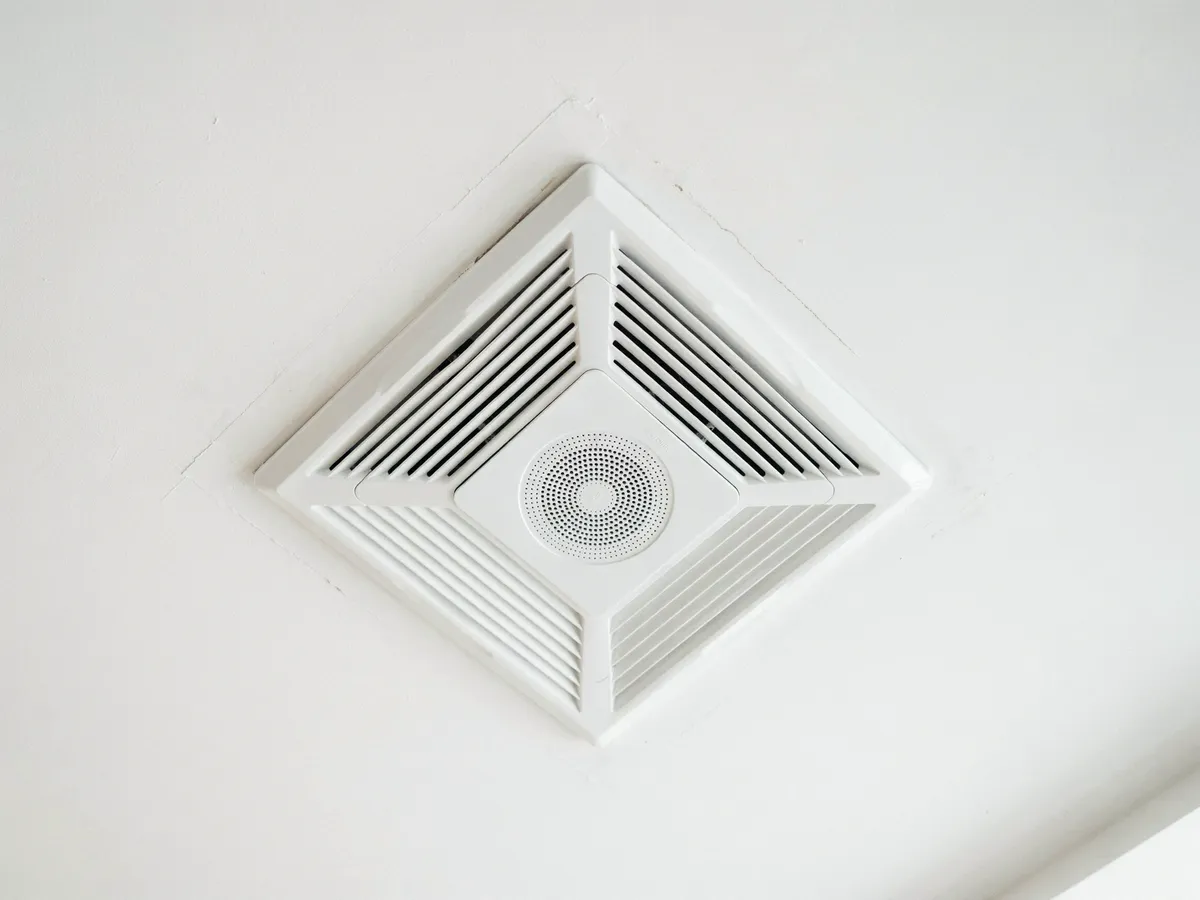
Where a cassette goes in the room
The usual spot is the centre of the room or as close to it as the ceiling allows. From there the air reaches every side.
- Clear of beams and joists. The cassette needs a clear opening in the ceiling lining and space between the framing above it.
- Away from downlights. Lights close to the grille get hot air blown at them, and the cassette needs its own clearance.
- Clear of the curtains. Long drapes below the grille catch the air and send it back up.
- Not over a bed or a desk. Air blowing straight down on you is uncomfortable. In a bedroom, keep the cassette over the open floor.
- A short pipe route. The pipes and drain run through the ceiling to an outside wall, so the closer the outdoor unit, the simpler the run.
In an open plan kitchen and living area, we aim to put it over the open floor between the two, so both get the air.
Get a free quote. Installs, servicing and repairs on all major brands.
Cassettes in Christchurch homes
Ceiling cassettes suit some Christchurch homes better than others, mostly because of what’s above the ceiling.
- New builds and renovations. In Aidanfield and Wigram, newer homes often have roof space above the ceiling and open plan living, which is the easiest combination for a cassette.
- Homes with roof space. In St Albans and Harewood, houses with a pitched roof often have usable space above the ceiling for the unit and the pipes.
- Open plan living. In Rolleston and Prebbleton, newer family homes with kitchen, dining and living in one space suit a single cassette in the middle.
- Where wall space is taken. In Fendalton and Ilam, rooms with big windows, doors and built-in furniture can leave no clear wall up high. A cassette takes none.
- Harder cases. Homes with a concrete slab ceiling, or a low ceiling space, usually can’t take a cassette. We check before quoting and tell you straight.
Ceiling cassette heat pump or high wall unit
Both heat and cool. The difference is where the unit sits and where the air goes.
- Wall space. A cassette needs none. A wall unit needs a clear stretch of wall up high.
- Air spread. A cassette blows air out in several directions from the centre of the room. A wall unit blows from one wall and has to push across the room.
- Ceiling space. A cassette needs room above the ceiling for the unit, the pipes and the drain. A wall unit needs none.
- Installation. A wall unit is quicker to fit. A cassette takes longer because of the ceiling work.
- Furniture. A cassette leaves the walls free for furniture, art and shelves. A wall unit takes the top of one wall.
- Filter access. A cassette’s filters come out through the grille, so you reach up or use a step. A wall unit’s filters lift out at head height.
For a room with clear wall space up high and a standard ceiling, read about high wall heat pumps. For a room with a high stud and low wall space, a floor mounted heat pump may suit better. And where you want one unit to heat several separate rooms through ceiling vents, read about ducted heat pumps.
What it needs above the ceiling
This is the part that decides whether a cassette will work in your home. We check it before anything is ordered.
- Depth. The cassette body sits above the ceiling lining, so the ceiling space has to be deep enough for the unit and its frame.
- Pipe route. The refrigerant pipes run from the cassette through the ceiling space to an outside wall and down to the outdoor unit.
- Condensate drain. The water the unit pulls out of the air has to run away. Where the ceiling space allows a fall to outside, gravity does it. Where it doesn’t, we fit a small pump in the ceiling space.
- Access. We need to get into the ceiling space to fit the unit and to service it later. A ceiling hatch close by helps.
- Framing. The ceiling framing may need trimming or adding to for the opening. We plan that as part of the job.
In a single storey home with a pitched roof, there’s usually enough room. In a two storey home, the ceiling space under the upper floor is tighter, and we check it carefully.
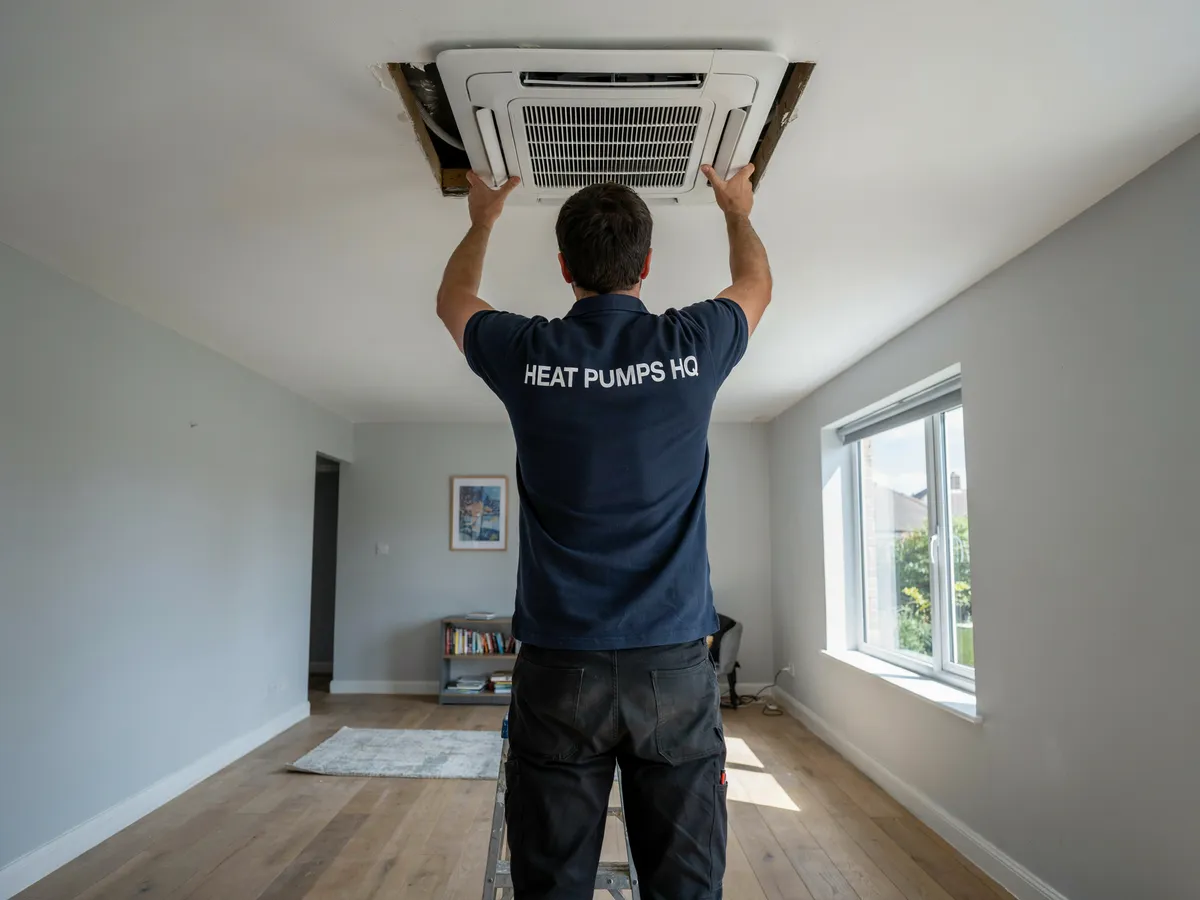
What changes the price of a cassette install
The cassette is only part of the price. The rest comes down to the ceiling and the route to the outdoor unit.
- The size of unit. A large open plan room needs more heat output, and a bigger cassette costs more.
- The ceiling space. A deep, open ceiling space is quick to work in. A tight one, or one with little access, takes longer.
- The drain. A gravity drain is simpler. A condensate pump adds a part and a little wiring.
- The pipe run. The further the outdoor unit from the cassette, the more pipe and cover.
- The switchboard. If there’s no room for a new circuit, the board needs work first.
We look at each of these, and the other installation cost factors, when we visit, and they’re all in the quote.
Replacing an old cassette
An older cassette that’s failing can usually be swapped in the same ceiling opening, if the new unit fits the space and the old pipe route. We still check the size against the room, because a room that’s since had insulation or double glazing added may need a smaller unit than before.
We look at whether the new cassette can use the old pipes and drain, and whether the ceiling space still has room for it. If the old unit is worth fixing, we’ll say so and point you to heat pump repair.
To get started, request a free quote. We’ll look at the room and the ceiling space, and give you a free quote.
How we check and fit a ceiling cassette heat pump
1
Look at the room
We measure the floor area and the stud height, check the insulation and glass, and size the unit from the volume of air the room holds.
2
Check the ceiling space
We look above the ceiling for the depth the cassette needs, the pipe and drain route, and a fall for the condensate.
3
Find the spot
Usually the centre of an open plan room, so the air reaches all four sides, clear of beams, joists and downlights.
4
Plan the pipes and drain
The pipes and drain run through the ceiling to the outdoor unit. Where the drain can't fall, we fit a condensate pump.
5
Place the outdoor unit
On feet, a pad or a bracket, clear of frost and away from your bedrooms and the neighbour's.
6
Fit and test
We set the cassette into the ceiling, connect the pipes and drain, pressure test, then run it in heating and cooling.
7
Show you the settings
Which louvres to set for heating and cooling, which fan speed suits the room, and how to drop the grille to clean the filters.
Ceiling cassette heat pump brands we fit
We install five brands and compare their models for your rooms, then suggest the one that fits, not whatever's in stock.
Service and repair
Other brands
Most other split and ducted heat pumps sold in New Zealand.
Ceiling cassette heat pumps across Christchurch and Selwyn
We fit ceiling cassette heat pumps in every Christchurch suburb, in Lyttelton, and in Rolleston, Lincoln, Prebbleton and Tai Tapu.
Ceiling cassette heat pump questions
Can a ceiling cassette go in my ceiling?
It depends on what's above it. The cassette needs a set depth of ceiling space for the unit, and room for the pipes and the drain to run to the outdoor unit. A standard timber ceiling with roof space above often has enough. A concrete slab ceiling usually doesn't, and we'll tell you before you go further.
Does a ceiling cassette need a drain pump?
Not always. The condensate has to run downhill to outside, so where the ceiling space allows a fall, gravity does the job. Where it doesn't, we fit a small pump in the ceiling space to lift the water away. It runs quietly and we check it on every service.
Is a ceiling cassette quieter than a wall unit?
It's set back into the ceiling, so the working parts are above the room, and the air comes out through the grille. On a low fan it's quiet. On a high fan you'll hear moving air, the same as any indoor unit.
Can a ceiling cassette heat a whole open plan room?
Yes, that's what it's built for. Set in the centre of the room, it blows air out in several directions, so the kitchen, dining and living areas get an even spread. For separate rooms, a ducted system or more than one indoor unit suits better.
Can you replace my old ceiling cassette?
Yes. We check the size against the room first, then whether the new cassette fits the ceiling space and the old pipe route. We take the old unit away and quote the whole job together.
More on the ceiling heat pump and other types
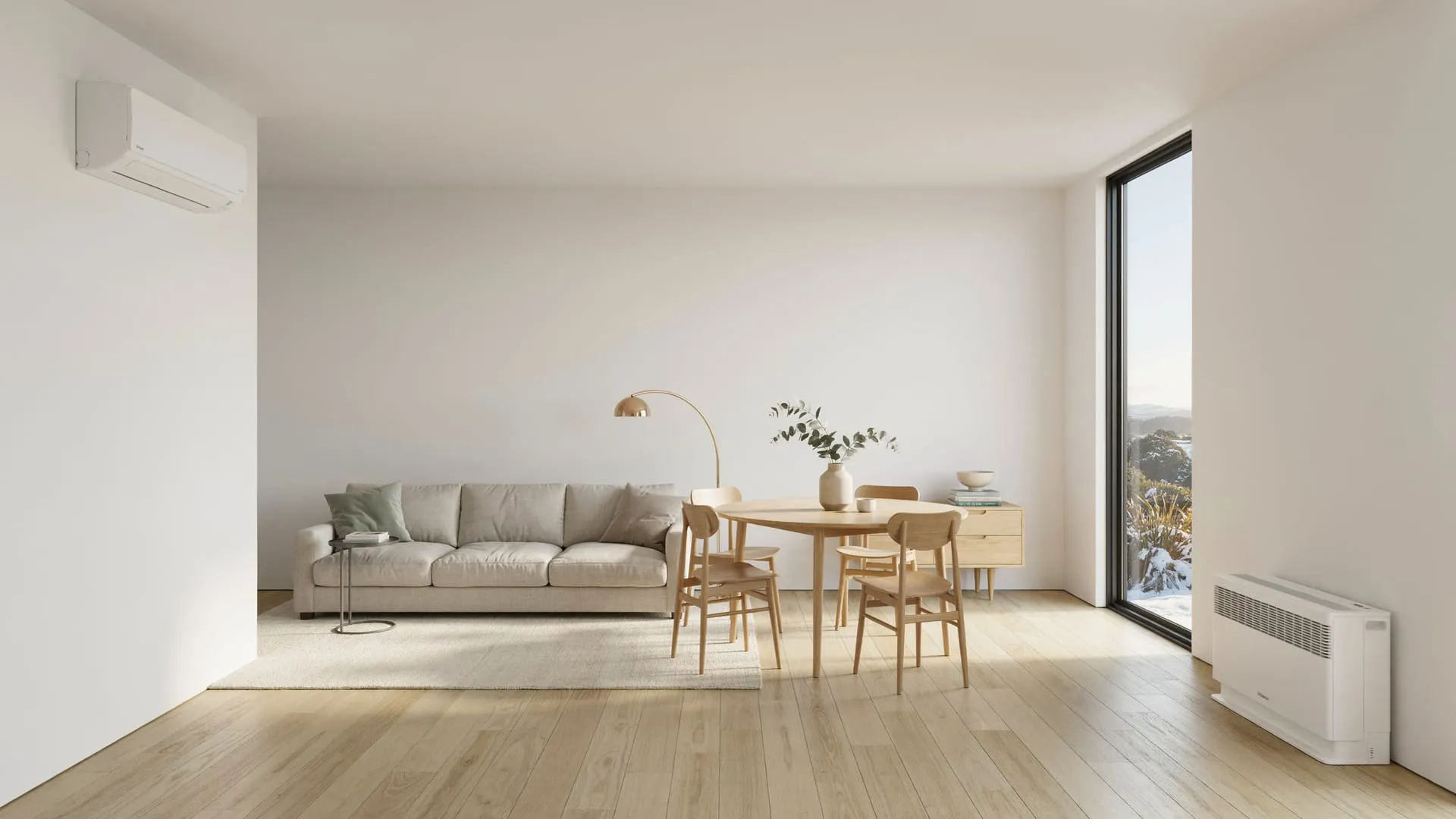
Types of heat pumps
High wall, floor, ceiling and ducted units compared.
Read the types of heat pumps guide →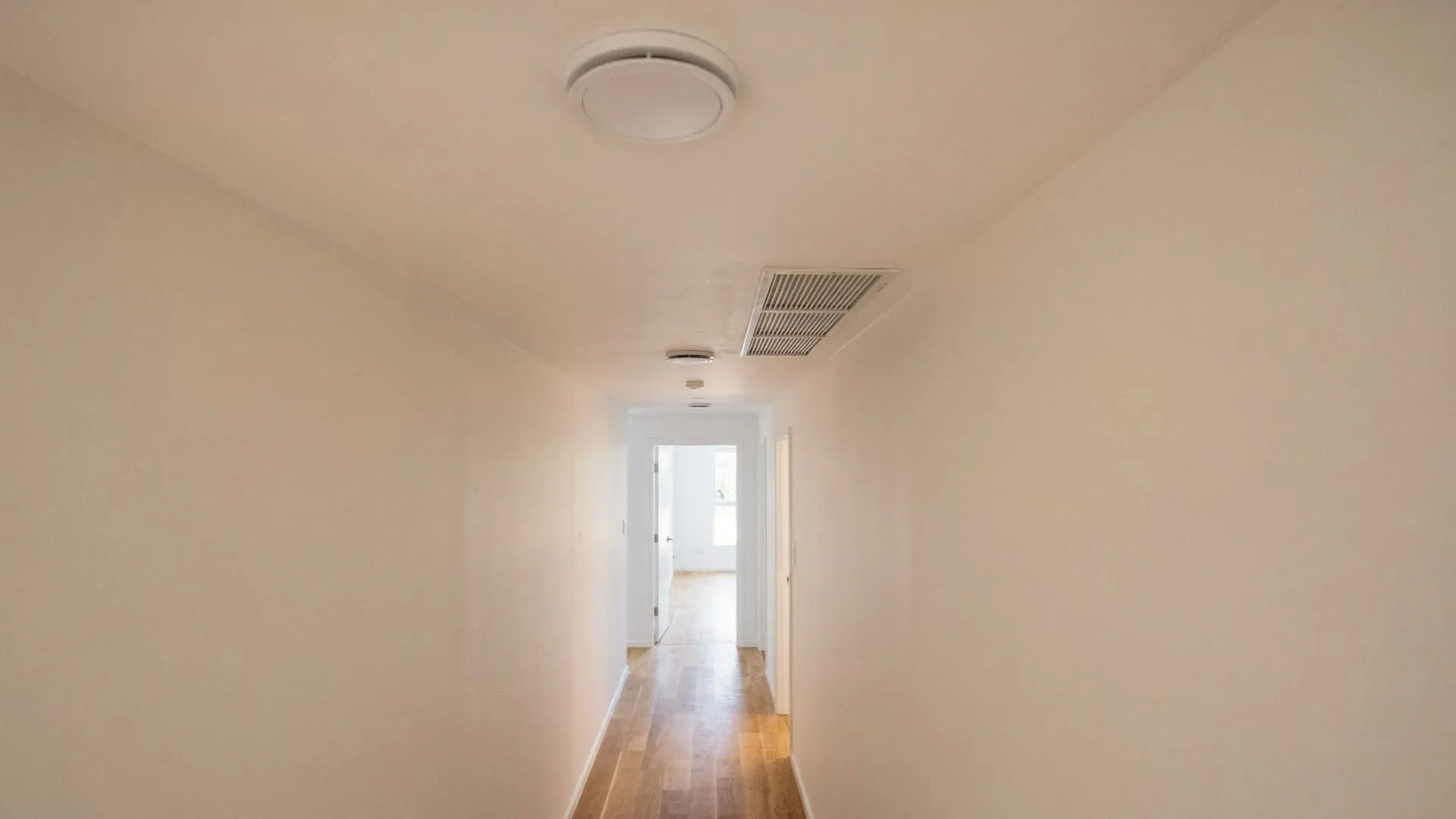
Ducted heat pumps
Hidden in the ceiling and heating several rooms from one unit.
See ducted heat pumps →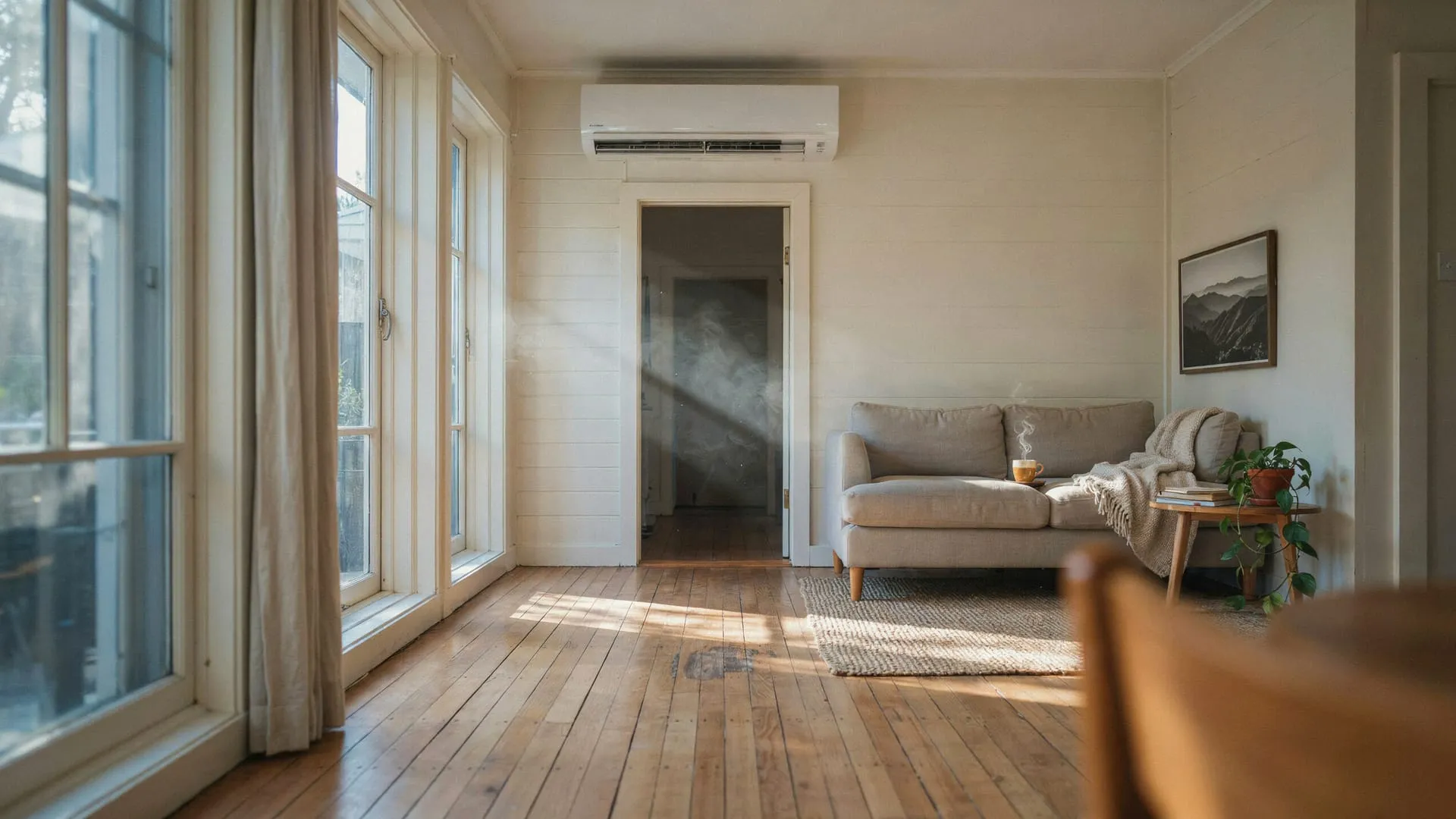
High wall heat pumps
The usual choice where there's clear wall space up high.
See high wall heat pumps →Get a free heat pump quote
Free quotes, no obligation. We call or email you back the same working day. Monday to Friday, 8am to 5pm.
Call 03 242 1023Request a call back