
The carbon footprint of a heat pump in New Zealand
We fit heat pumps and recover the refrigerant from every old one we take out. Here's where a heat pump's carbon footprint comes from in New Zealand.
Prefer to talk? Call 03 242 1023
Where a heat pump’s carbon footprint comes from
A heat pump burns nothing in your house. Its carbon footprint comes from three places.
- The power it uses over its working life. How much carbon that carries depends on how clean the grid is and how efficient the heat pump is.
- The refrigerant. The gases in heat pumps are greenhouse gases if they escape. A sealed, well fitted system keeps them in. A leaking one doesn’t.
- Making, shipping and disposal. The metal, plastic and energy that go into the unit, and what happens to it at the end.

New Zealand’s renewable electricity and heat pump emissions
Most of our power comes from hydro, geothermal, wind and solar. From October to December 2025, a record 96.4% of power generation came from renewable sources. Good hydro conditions drove it.
Strong hydro and new solar cut the need for natural gas that quarter. Emissions from power generation fell to their lowest quarterly level since records began in 1990. Keep in mind that’s one quarter, with good rain into the lakes. The share moves with rainfall and lake levels. In a dry spell, more gas and coal goes on the grid. Then every kWh carries more carbon.
Get a free quote. Installs, servicing and repairs on all major brands.
Efficiency multiplies the benefit
A heat pump doesn’t create heat. It shifts it in from outside. So it puts out more heat than the power it uses. A one star heat pump on the energy label has a seasonal performance factor of 2.5 to 3. Units with more stars do better. Less power for each bit of heat means lower emissions too.
So a well rated unit, fitted right and run well, shrinks the power side of the footprint. Our energy efficient heat pump guide covers both.
Refrigerant leaks and a heat pump’s environmental impact
Refrigerant only counts as an emission if it leaks out. Or if it’s let out when the unit comes out. So the install and upkeep matter.
- Tight, tested joints when it’s fitted keep the gas in from the start.
- Servicing that checks pressures. It spots a slow leak before the gas runs low. See leak detection and repair.
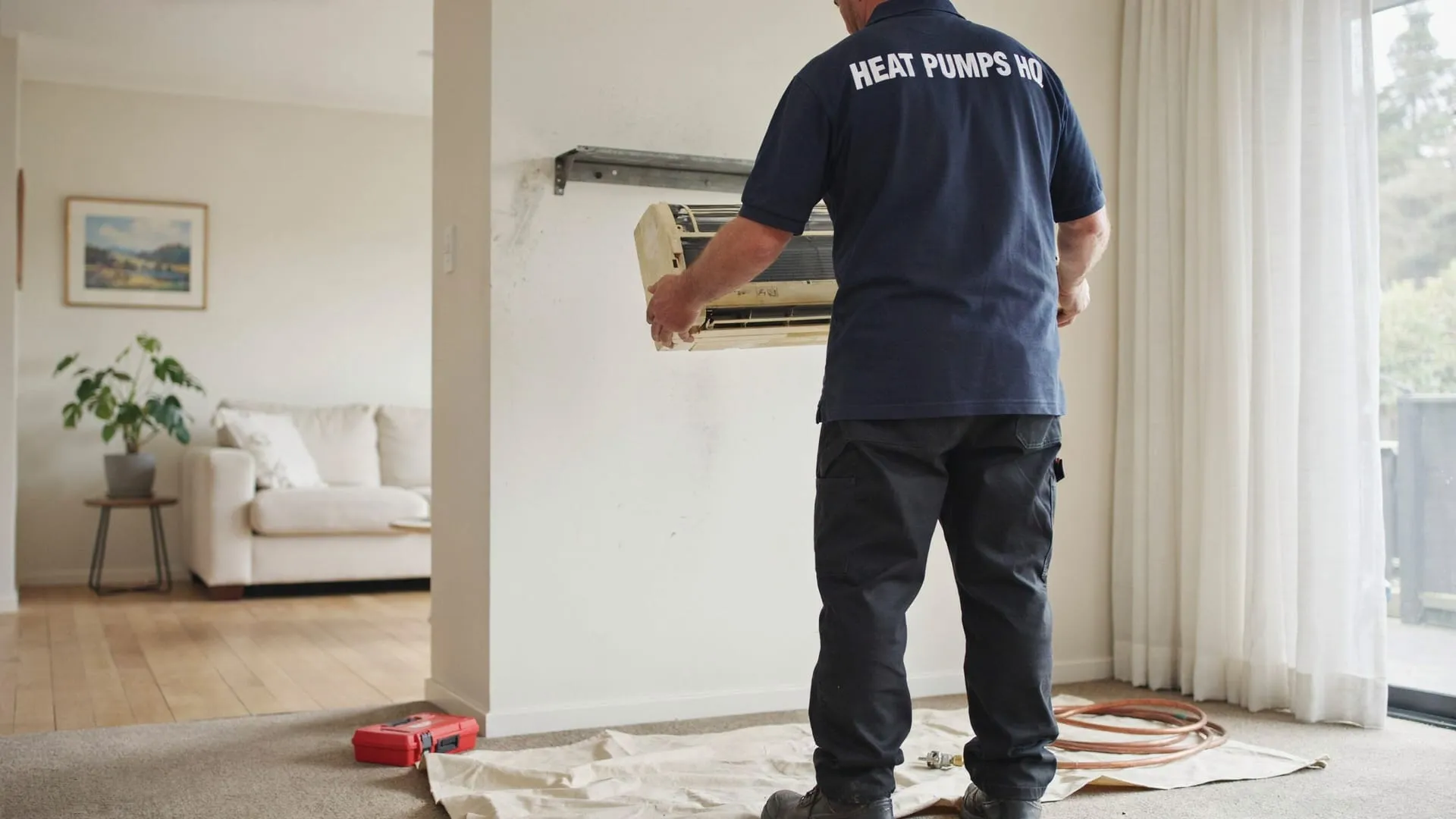
- Recovery at the end. When an old unit comes out, the installer should recover the refrigerant, not vent it. We always recover it when we take out an old heat pump.
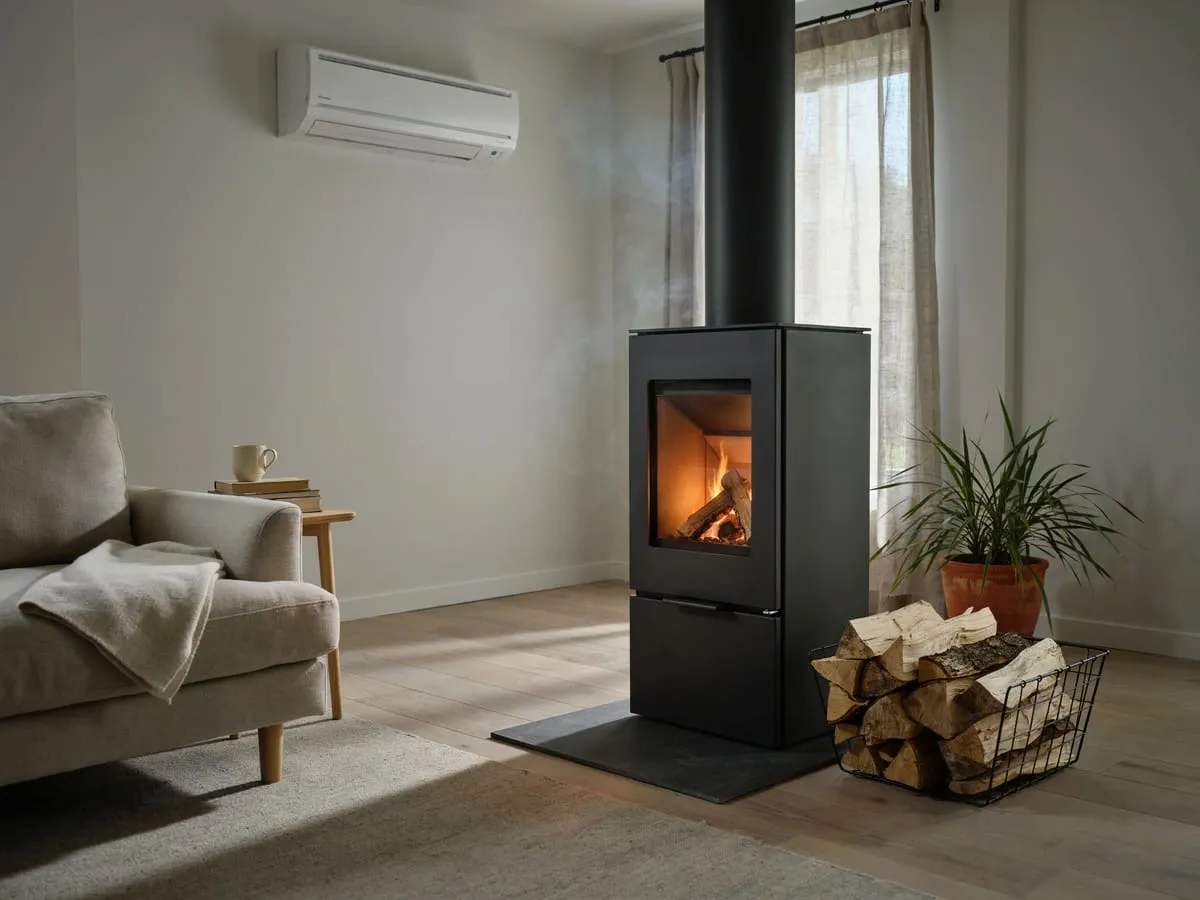
Heat pump vs wood burner
Air quality. A wood burner gives off smoke. Outside, and inside when you open the door to load it. A newer burner fed dry, well seasoned wood burns cleaner, but it still makes some smoke. A heat pump burns nothing in the room, so it adds no smoke or fumes to the air you breathe.
Rules in Christchurch. In Christchurch you need building consent before you put in or move a solid fuel heater. Any new burner fitted since 1 January 2019 must be an ultra-low emission burner. Fixed electric heaters, heat pumps included, don’t need building consent. A registered electrician must still connect them.
Carbon. People often call wood carbon neutral, because trees take up carbon as they grow. How true that is depends. Where’s the wood from? Is it replanted? How far does it travel? How well is it burned? We don’t put one number on it. It changes from one load of firewood to the next.
Convenience. A heat pump starts from a remote or a timer. It heats and cools. There’s no wood to stack and no ash. A burner keeps going in a power cut.
Some homes have both. They use the heat pump day to day and the burner on the coldest nights. For more on the rules for heat pumps, see our heat pump regulations guide.
Heat pump carbon footprint in Christchurch homes
A few local things change how much a heat pump cuts your footprint.
- Moving off a log burner. Lots of Lincoln lifestyle block owners want to move off a log burner and have the whole house warm. If the burner has been the main heat, as in many Marshland farmhouses, the heat pump takes over the whole job. We size it for the volume of the living area, high ceiling included.
- Units fitted during earthquake repairs. Many heat pumps in Avondale went in during earthquake repairs and may not have been serviced since. A service that checks the pressures catches a slow refrigerant leak before the gas runs low.
- Salt on the coast. In Clifton, wind off the sea drives salt onto the coil. A yearly service with a corrosion check, and a gentle rinse between services, helps the unit last longer before it has to be replaced.
How to cut your heat pump’s footprint
Mostly, choose it well and look after it.
- Get the size right. Then it runs gently, not flat out.
- Pick a model with good Cold zone heating stars. More stars means less power for the same heat.
- Run it at a steady temperature and use the timers. It doesn’t have to work flat out to warm a cold house.
- Get it serviced every year. Leaks get caught early.
- If the unit is sound, repair it. Replacing it adds the carbon of making and shipping a new unit, and disposing of the old one.
Want a heat pump that suits your house and runs efficiently? Give us a call on 03 242 1023, or ask for a free quote.
Heat pump carbon footprint questions
Does a heat pump have a low carbon footprint in New Zealand?
It's low next to heating that burns fuel in the home. That's because most of our power comes from renewable sources. A record 96.4% of generation came from renewables in the October to December 2025 quarter. The share moves with hydro conditions. So it's lower at some times.
Is a heat pump better than a wood burner for the environment?
For local air, a heat pump makes no smoke at the house. On carbon, there's no single answer. It depends where the firewood comes from and how it's burned. In Christchurch, any new burner must be an ultra-low emission model. It also needs building consent. A heat pump needs neither consent nor a flue.
What are heat pump emissions made up of?
The power it uses over its life. The refrigerant, if any leaks out. And the energy used to make it, ship it and one day get rid of it. You control two of those. Run it efficiently. Keep the refrigerant sealed in.
How can I reduce my heat pump's environmental impact?
Pick a well rated unit that's the right size. Run it at a steady, sensible temperature. Keep it serviced so leaks get caught early. And repair it rather than replace it, when a repair makes sense.
More on heat pump efficiency and running costs

Get a free heat pump quote
Free quotes, no obligation. We call or email you back the same working day. Monday to Friday, 8am to 5pm.
Call 03 242 1023Request a call back