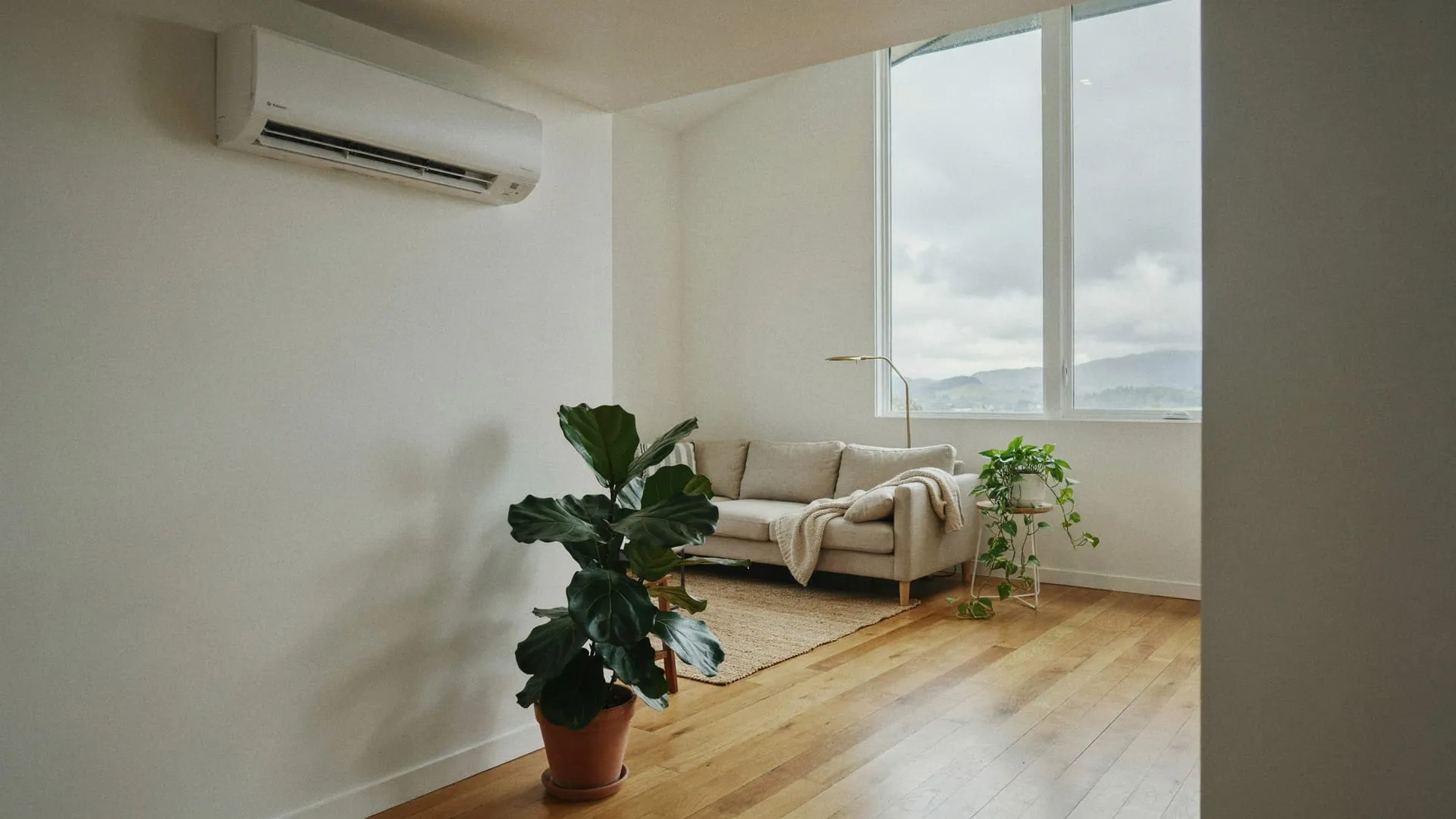
Using your heat pump as a dehumidifier
We fit and service heat pumps across Christchurch, dry mode included. Dry mode runs the indoor fan slowly over a cold coil so moisture drains away outside, and it suits warm, muggy rooms rather than a cold Christchurch winter. We check dry mode, the drain and the coil on a service.
Prefer to talk? Call 03 242 1023
How heat pump dry mode works
A heat pump moves heat with a refrigerant loop. When it cools, the indoor coil gets cold. Warm room air passes over the cold fins. The moisture in it turns to water. It’s like a cold drink bottle getting wet on the outside. That water runs into the drain tray and out the drain line.
Dry mode uses that on purpose. The indoor fan runs slowly, so the air spends longer on the cold coil. The unit turns its cooling on and off to stop the room getting too cold. You end up with drier air, and less of a temperature drop than full cooling.
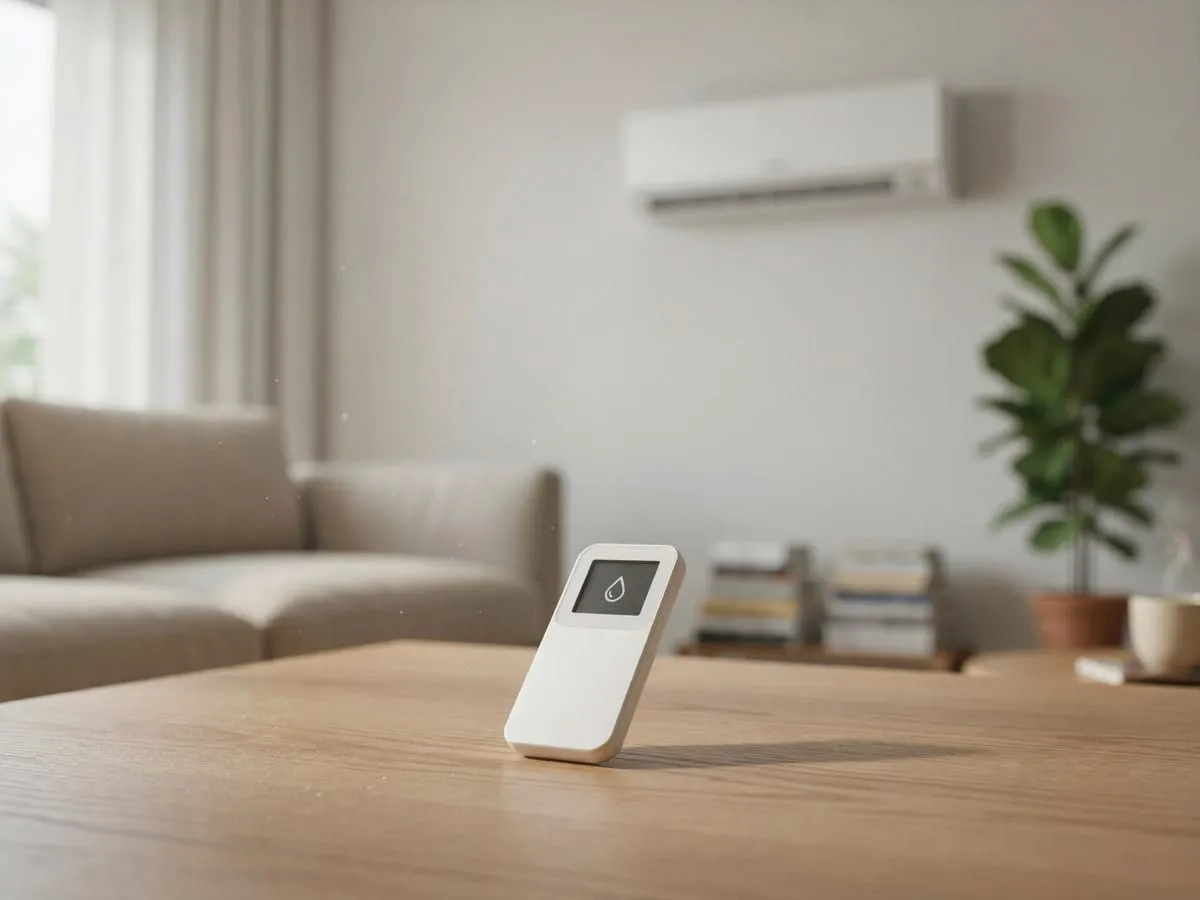
It’s on the mode button. Usually it says “Dry” or shows a water droplet.
When to dehumidify with your heat pump
Use dry mode when the air is warm and damp.
- Muggy summer days. Warm, humid weather after rain. The room feels sticky more than hot.
- Shut-up rooms in warm weather. A spare room or sleepout that smells stale in summer.
- After cooking or showers in the warmer months. As a short boost. Open windows and run extractor fans too.
Get a free quote. Installs, servicing and repairs on all major brands.
When dry mode doesn’t help
- Cold winter days. Dry mode can’t heat. In a cold room it makes things cooler. The coil may also struggle to pull much water from cold air.
- Damp from the building. A wet subfloor, a leaking roof or a bathroom with no fan will keep putting moisture back. No heat pump setting fixes the source.
- Rooms away from the unit. It only treats the air in the space the indoor unit serves.
Heat pump dry mode in damp Christchurch homes
Where the damp comes from changes what helps.
- Near the river. Homes close to the Avon in Dallington can feel damp in winter. Dry mode helps on mild, damp days. It won’t replace good ventilation or fixing a leak.
- Low ground and big trees. In Beckenham, houses near the river or under big trees get less winter sun and run colder and damper. Run the heat pump at a steady, middling setting. Set the timer to warm the house before you get up, when condensation is often worst.
- Beside the estuary. On the estuary side of South New Brighton, the air off the water is often damp. A low, constant setting through winter usually works better than an hour of hard heating in the evening. A small unit in the main bedroom stops the back of the house turning cold and wet overnight.
- Rooms against a retaining wall. In Moncks Bay, rooms backing onto a retaining wall get little sun and can feel damp. They often need their own small unit, and dry mode helps on a mild, damp day.
Heat pump or dehumidifier?
Dry mode suits a warm, humid room the heat pump serves. A portable dehumidifier suits washing dried inside (put it near the washing) and rooms with no heat pump. For a cold, damp bedroom in winter, heat the room and let air through first. Add a portable dehumidifier if it stays damp.
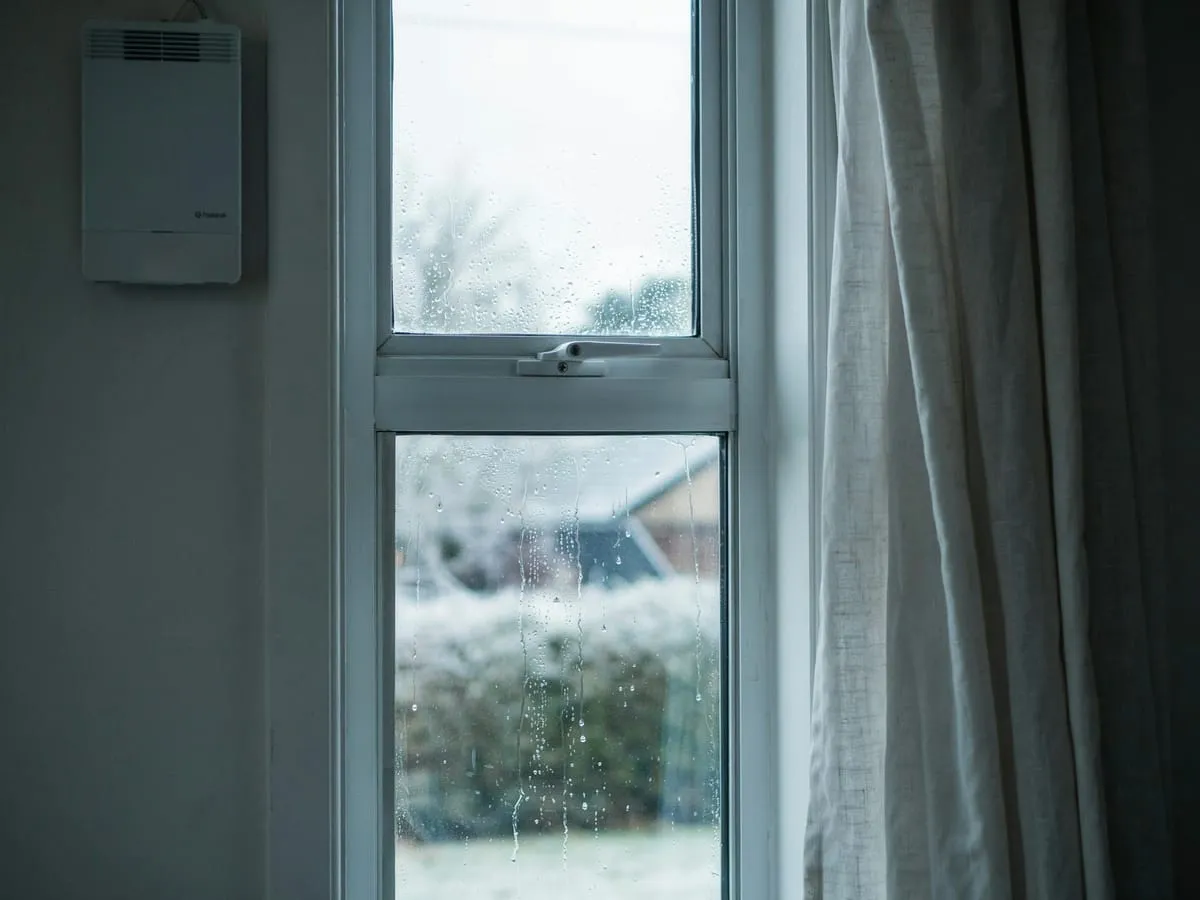
In winter, warm rooms and letting damp air out keep condensation down. A dry, well aired home is easier to heat and healthier. Open windows, use extractor fans and wipe condensation off windows.
Dry mode and musty smells
Dry mode leaves the indoor coil wet. If the coil and fan are dirty, that’s when mould grows and smells start. After dry mode, let the unit dry itself if it has that setting. If not, run it on fan for a short while. Already smells musty? It needs a deodorising clean.
What we do to keep dry mode working
On a service, or a visit just for this, we:
- Check dry mode works. We run it on dry. We make sure the coil gets cold and water collects in the tray.
- Check the drain. Dry mode sends water through the drain for hours. We flush the tray and line. We make sure the outlet is clear and running to the right place.
- Clean the coil if it needs it. A clean coil pulls out more moisture. It doesn’t add smells.
- Show you the settings. We go through which mode suits which weather, how the timer helps, and whether your model has a coil-drying setting.
Home stays damp whatever you do? We can talk you through what a heat pump can and can’t do there. And whether air quality testing would help. If someone at home has breathing problems, read about heat pumps for allergies and asthma.
Dry mode on different heat pump brands
Most split systems we work on have dry mode. That includes Mitsubishi Electric, Daikin, Fujitsu, Toshiba, Rinnai and Panasonic. It works a bit differently from model to model. Your owner’s manual has the final word on your unit.
Call 03 242 1023 to get your heat pump’s dry mode checked and set up, or ask for a quote.
Heat pump dehumidifier questions
Does a heat pump dehumidify?
Yes. In cooling and dry mode, the indoor coil is cold. Moisture in the air turns to water on it and drains away outside. Dry mode is set up to take out moisture while cooling the room as little as it can.
Is heat pump dry mode good in winter?
Not usually in a Christchurch winter. Dry mode cools the coil. It doesn't heat the room. On a cold day, the room just gets cooler. In winter, heat the room in heat mode. Let damp air out with good airflow.
Is a heat pump better than a dehumidifier?
They do different jobs. Heat pump dry mode suits a warm, muggy room. A portable dehumidifier keeps pulling moisture in cool rooms. You can also move it to the room with the damp.
Where does the water go in dry mode?
Down the same drain line it uses for cooling. That's usually to the outside wall or a drain. Water dripping inside instead? The drain is blocked, or the unit isn't level.


Get a free heat pump quote
Free quotes, no obligation. We call or email you back the same working day. Monday to Friday, 8am to 5pm.
Call 03 242 1023Request a call back