Heat pump covers in NZ, types compared
We help you pick a heat pump cover when we fit or service your unit. Here's how roof shelters, timber screens and louvred cabinets compare, and how much air each leaves.
Prefer to talk? Call 03 242 1023
Decide what the heat pump cover is for
Start with why you want a cover, because each reason points to a different type.
- To hide the unit on a deck, patio or front path. Go with a louvred cabinet or slatted screen.
- To keep off sun, roof run-off or falling branches. Go with a roof shelter or top cover.
- To protect it while it’s switched off for a long stretch, say at a bach. Go with a fitted storage cover.
- To tidy the indoor side. Go with an indoor unit cover or pipe trunking.
A running outdoor unit doesn’t need covering against normal rain or frost. It’s built to live outside. People cover one for looks, or to keep sun and falling debris off it. Heat pump covers explains why airflow matters, and what a cover can’t fix.
Heat pump covers for Christchurch sections
Where you live in Christchurch changes which cover makes sense, and whether you need one at all.
- Salt and sand at the beach. In New Brighton and South New Brighton, the outdoor coil needs a gentle rinse every few months to keep the salt off. Pick a cover that lifts off easily, in aluminium with stainless steel fixings, so the rinsing still gets done.
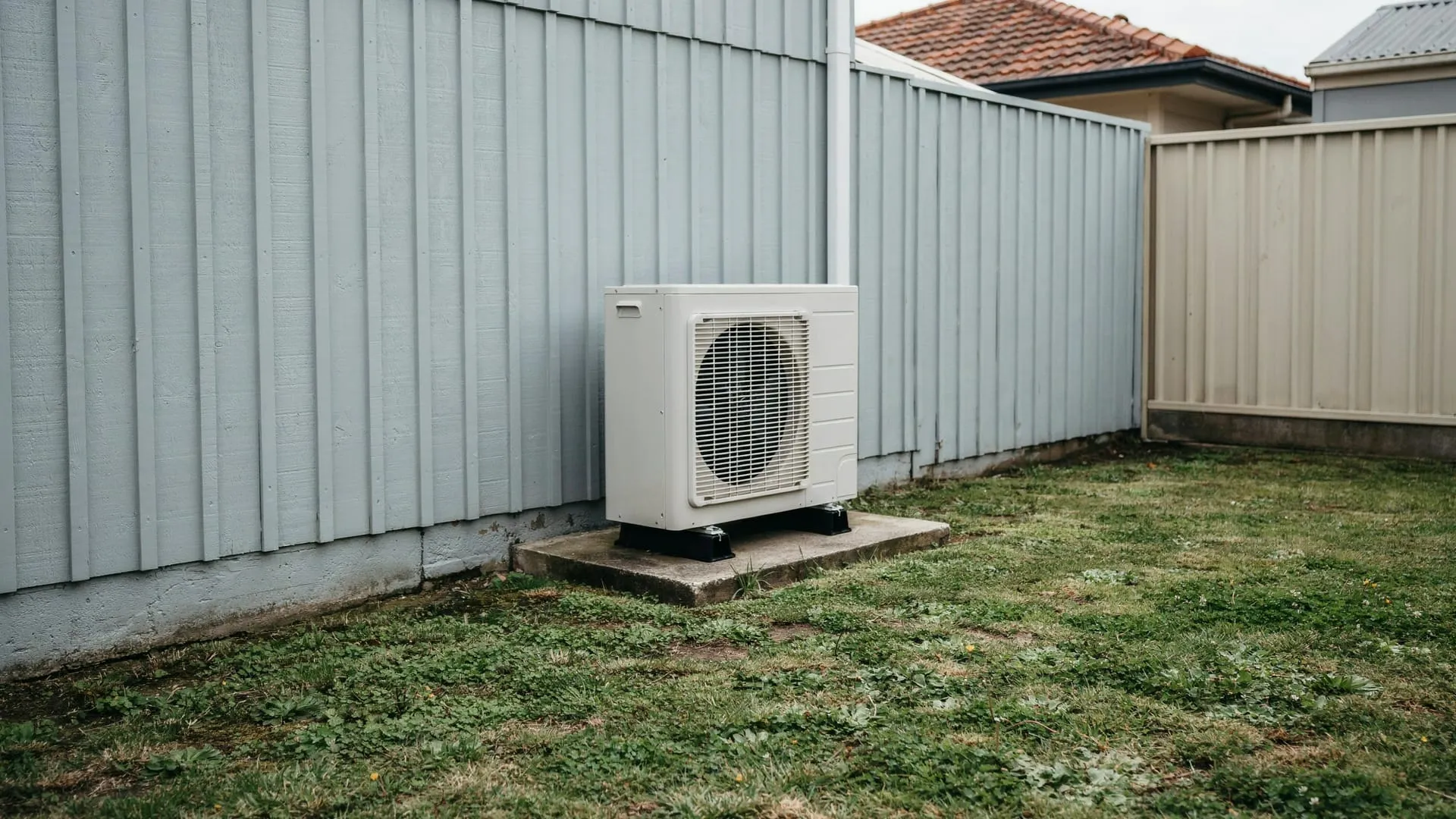
- Narrow side yards. On small sections in Sumner, the outdoor unit often sits in a narrow side yard, close to the house next door. There may be no room for a cabinet that keeps the clearances. A roof shelter, or no cover, is often the better choice.
- Pine needles and bark. Around Bottle Lake, the air brings pine needles, pollen and bark dust onto the fins. A roof shelter keeps falling needles off the top. Leave the sides open so the coil can still breathe and be cleaned.
- Stock and machinery. On a rural McLeans Island property, a small fence or a wall bracket keeps the unit out of harm’s way. Keep the fence clear of the front of the fan.
Get a free quote. Installs, servicing and repairs on all major brands.
The main types of heat pump cover
Louvred cabinets
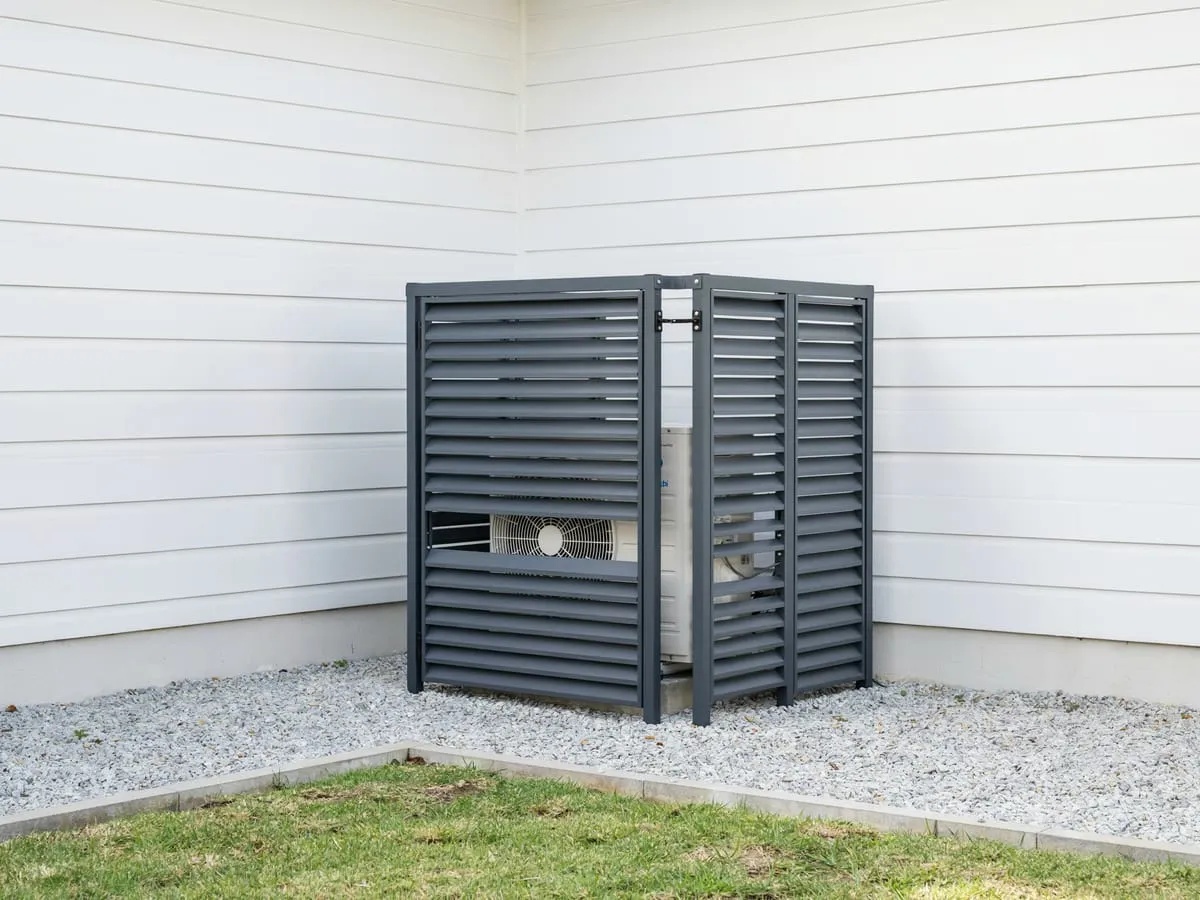
A box with louvred sides and front that sits over the outdoor unit. It’s usually powder-coated aluminium or steel.
- Good for: hiding the unit completely. It gives a tidy look that matches your joinery.
- Watch for: louvres right in front of the fan. A closed top traps warm air in summer. So does a solid back. The front should be open, or have wide slats angled to let the air out.
- Check: the inside measurements against your unit. Add the clearances in its install manual.
Slatted timber screens
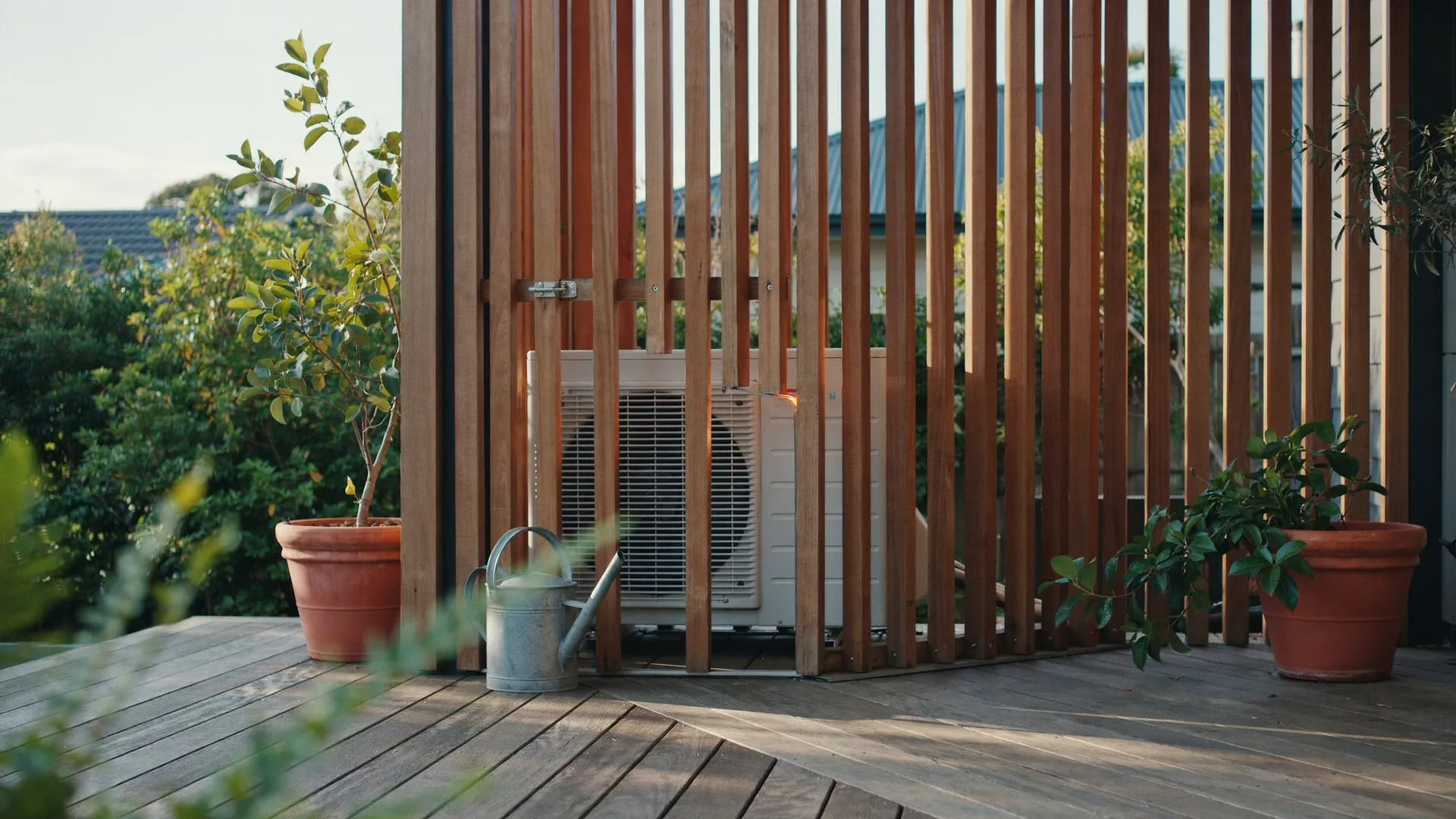
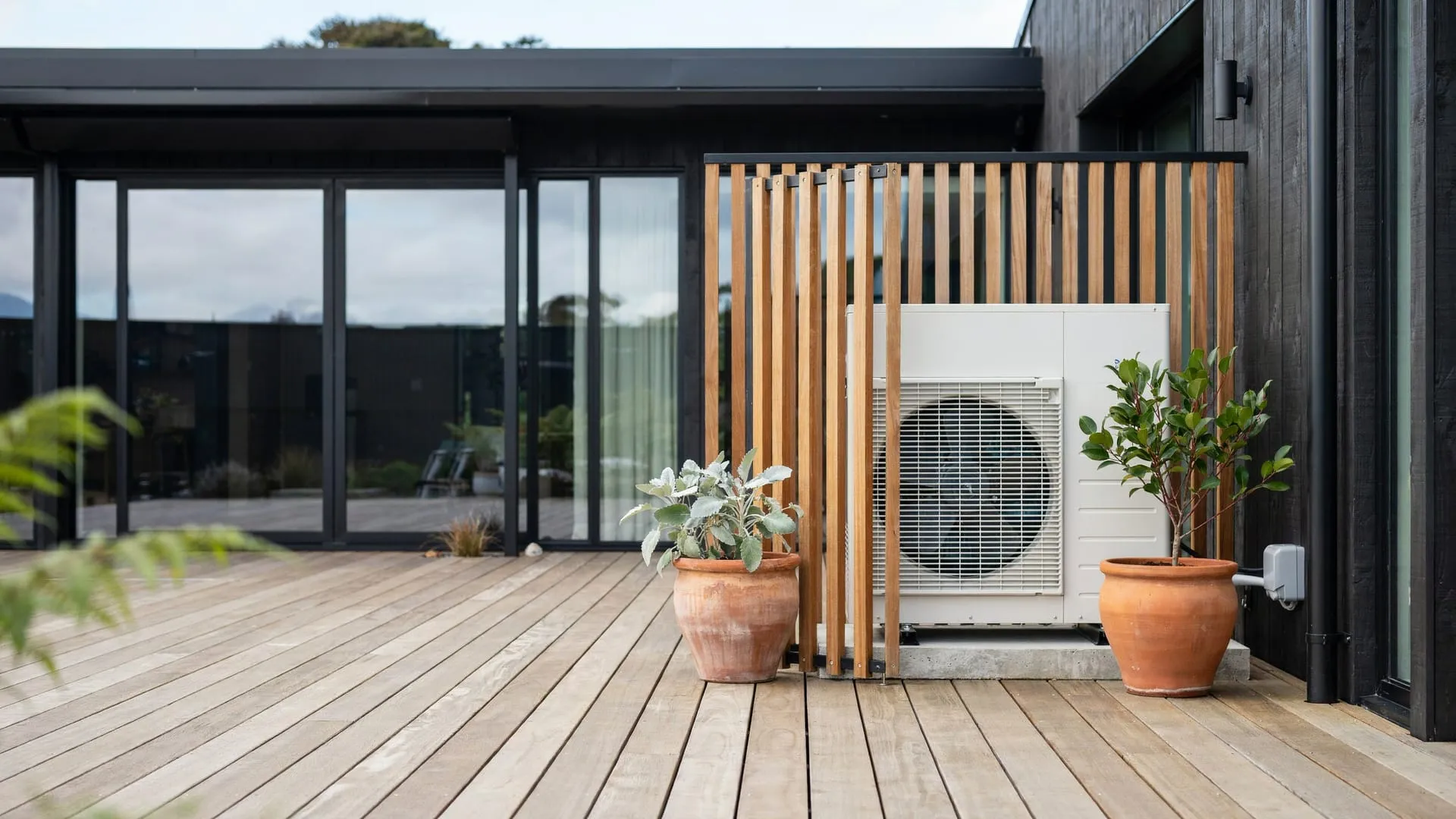
A screen in front of or around the unit. It can stand on its own or fix to a wall. It’s often built to match a fence or deck.
- Good for: blending in with timber decks and fences. It’s easy to size to the space.
- Watch for: slats too close together. Also, a screen so close to the fan that air bounces straight back into the coil.
- Check: it’s fixed firmly enough not to rattle in a strong wind. And you can lift or swing it away for servicing.
Roof shelters and top covers
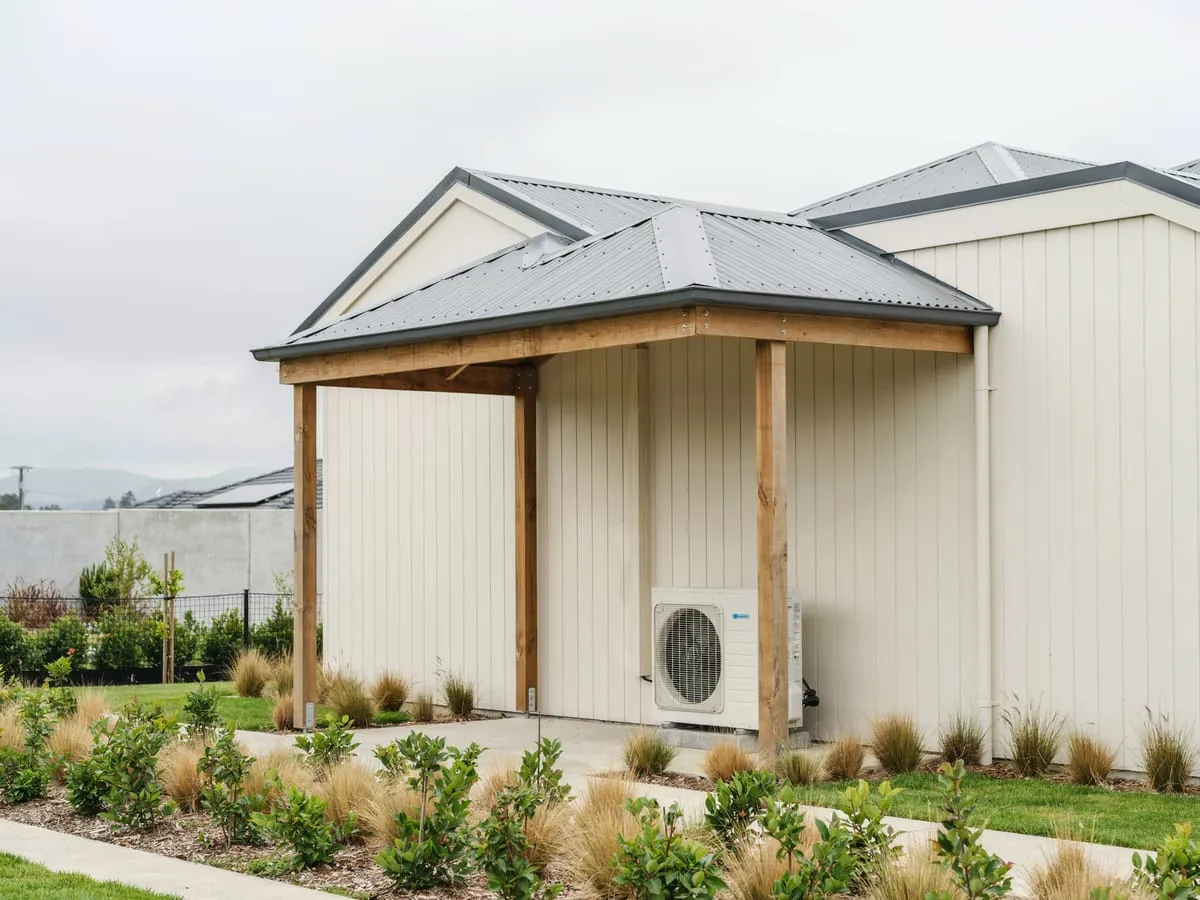
A flat or sloped lid held above the unit, open on all sides.
- Good for: keeping off hot afternoon sun, drips from a roof with no spouting, or sliding snow. They’re open on all sides, so they hardly touch the airflow.
- Watch for: a lid set too low over the unit. Also, fixings into the unit’s own casing.
- Check: the shelter is fixed to the wall or its own frame, not screwed into the heat pump.
Storage or off-season covers
Fabric or PVC covers that wrap the outdoor unit.
- Good for: a unit that won’t run for months, like a holiday home over winter.
- Watch for: leaving it on by mistake. A wrapped unit must never run. A cover that traps moisture against the casing can also do more harm than good.
- Check: it has a clear “remove before use” reminder. Or switch the unit off at the isolating switch while the cover’s on.
Indoor unit and pipe covers
Decorative panels for the indoor unit. Also plastic or metal trunking that hides the pipes and cable down the outside wall.
- Good for: a neater outside wall. Trunking also protects the pipe insulation from sun and knocks.
- Watch for: indoor covers that block the air intake on top of a wall unit, or the outlet at the bottom. Those cut output. They can also confuse the unit’s temperature sensor.
Cover materials compared
The material decides how much upkeep a cover needs and how well it copes near the sea.
| Material | Strengths | Watch for |
|---|---|---|
| Powder-coated aluminium | Light, doesn’t rust, low maintenance, suits coastal sites | Thin sheet can dent and rattle |
| Powder-coated steel | Strong and rigid | Rust once the coating is chipped, especially near the sea |
| Timber | Matches decks and fences, easy to build to size | Needs sealing or staining, can warp or rot at ground level |
| PVC or fabric | Cheap, light, easy to fit | Storage only, not for a running unit |
Near the coast, use stainless steel fixings, whatever the material.
Airflow checks for any air conditioner cover
Whatever the type, any heat pump or air conditioner cover has to pass five checks.
- Nothing solid right in front of the fan. Otherwise the air bounces straight back into the coil.
- Clearance at the back and sides. Leave at least what the install manual asks for, so the unit can draw air in.
- An open base. Defrost water has to drain away.
- Easy to lift off or open. A technician needs to get at the unit.
- Sized for your actual unit. Measure it. Don’t guess from the brand.
A cover that blocks airflow costs you heat in winter. Heat pump covers explains why.
Thinking of a cover at install time
Getting a new heat pump? The answer may be a better spot for the outdoor unit. A unit tucked beside a garage or behind some planting may not need a cover at all. When we plan an installation, we can pick a spot that works for looks, airflow and noise at the boundary.
For advice on a cover for your outdoor unit, call 03 242 1023 or request a quote online.
Questions about the best heat pump cover
What is the best heat pump cover?
The one that does the job you want and still lets the unit breathe. For looks, go with a louvred or slatted screen that's open at the front and base. For sun or falling debris, a simple roof shelter. For a unit switched off for months, a fitted storage cover. Take it off before the unit runs.
What material is best for a heat pump cover in a coastal area?
Pick materials and fixings that stand up to salt air. Powder-coated aluminium with stainless steel screws works. So does a durable timber with a good finish. Plain steel and cheap fixings rust fast near the sea.
Is an air conditioner cover the same as a heat pump cover?
Yes. In New Zealand, the same outdoor unit heats and cools. So covers sold for air conditioners and for heat pumps are the same products. What matters is the size and the airflow, not the name.
Can I build my own heat pump cover?
Yes. Leave the fan outlet open. Give the unit the clearances in its install manual. Keep the base open. And make sure it lifts off for servicing. The full airflow rules are under heat pump covers.
More on heat pump covers and outdoor units
Get a free heat pump quote
Free quotes, no obligation. We call or email you back the same working day. Monday to Friday, 8am to 5pm.
Call 03 242 1023Request a call back