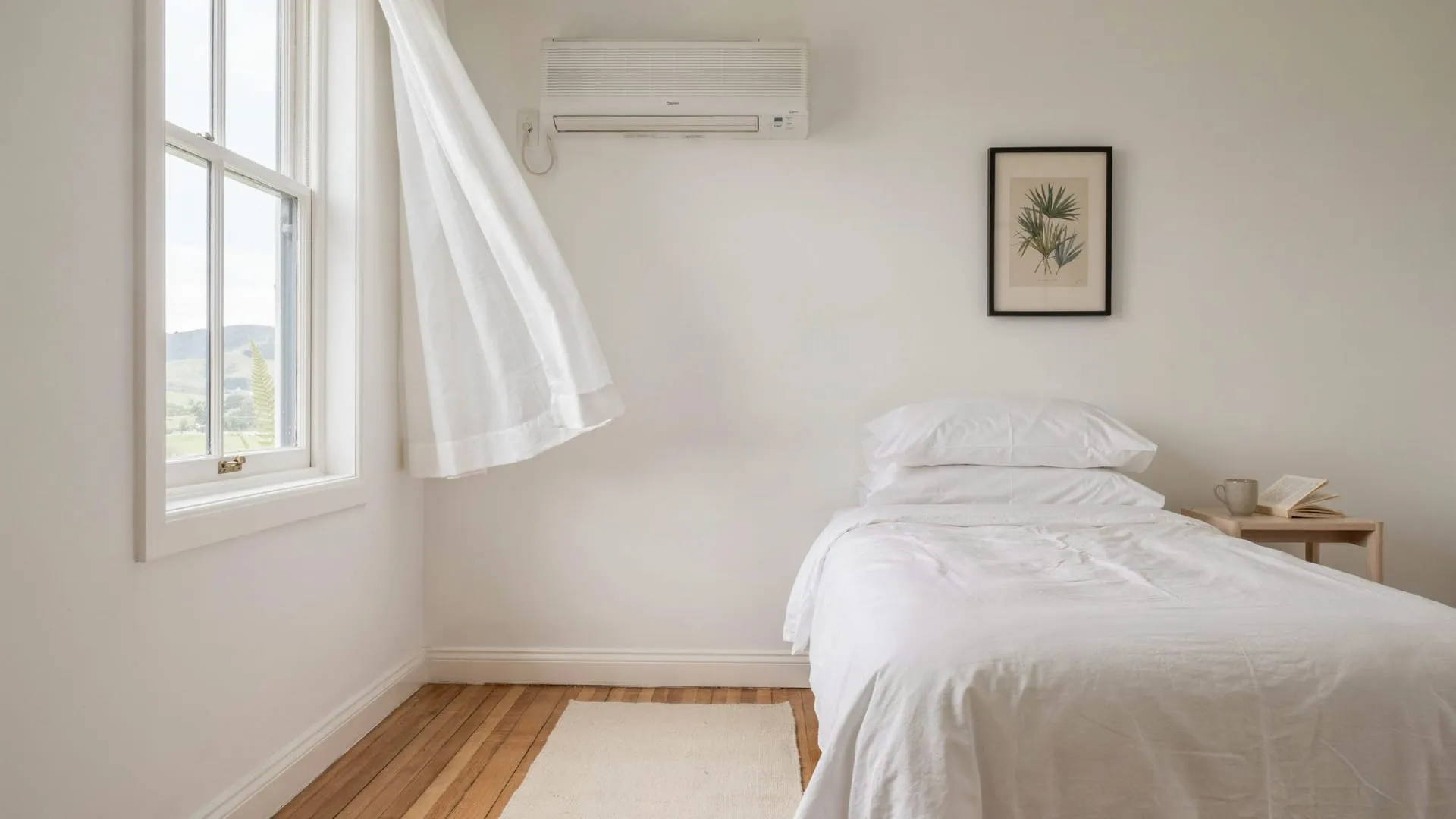
Heat pump smell, and how we get rid of it
We get rid of heat pump smells across Christchurch by cleaning out the source, not covering it up. Musty, damp or old socks smells point to mould and bacteria on the coil, fan wheel or drain tray, and an electrical burning smell means turn it off at the isolator and call us.
Prefer to talk? Call 03 242 1023
What a heat pump smell is telling you
Each smell points to a different cause. An electrical burning smell means turn it off at the isolator.
| Smell | Likely cause | What to do |
|---|---|---|
| Musty, damp, old socks | Mould and bacteria on the coil, fan wheel or drain tray | Book a clean |
| Dusty, a bit scorched, on the first cold day | Dust burning off after months unused | Run it, open a window, see if it fades |
| Hot plastic, electrical burning | Wiring or a part overheating | Turn off at the isolator and call us |
| Sour or vinegary | Bacteria, often in the drain tray | Book a clean |
| Sewage or rotten | Drain line or nearby plumbing vent letting air back | Book a check |
| Cigarette smoke, cooking | Smells soaked into dirty filters and coil | Clean the filters, then book a clean if it stays |
A strange, sharp chemical smell round the indoor or outdoor unit is worth a call too. Don’t open the unit to hunt for it.
Why heat pumps start to smell
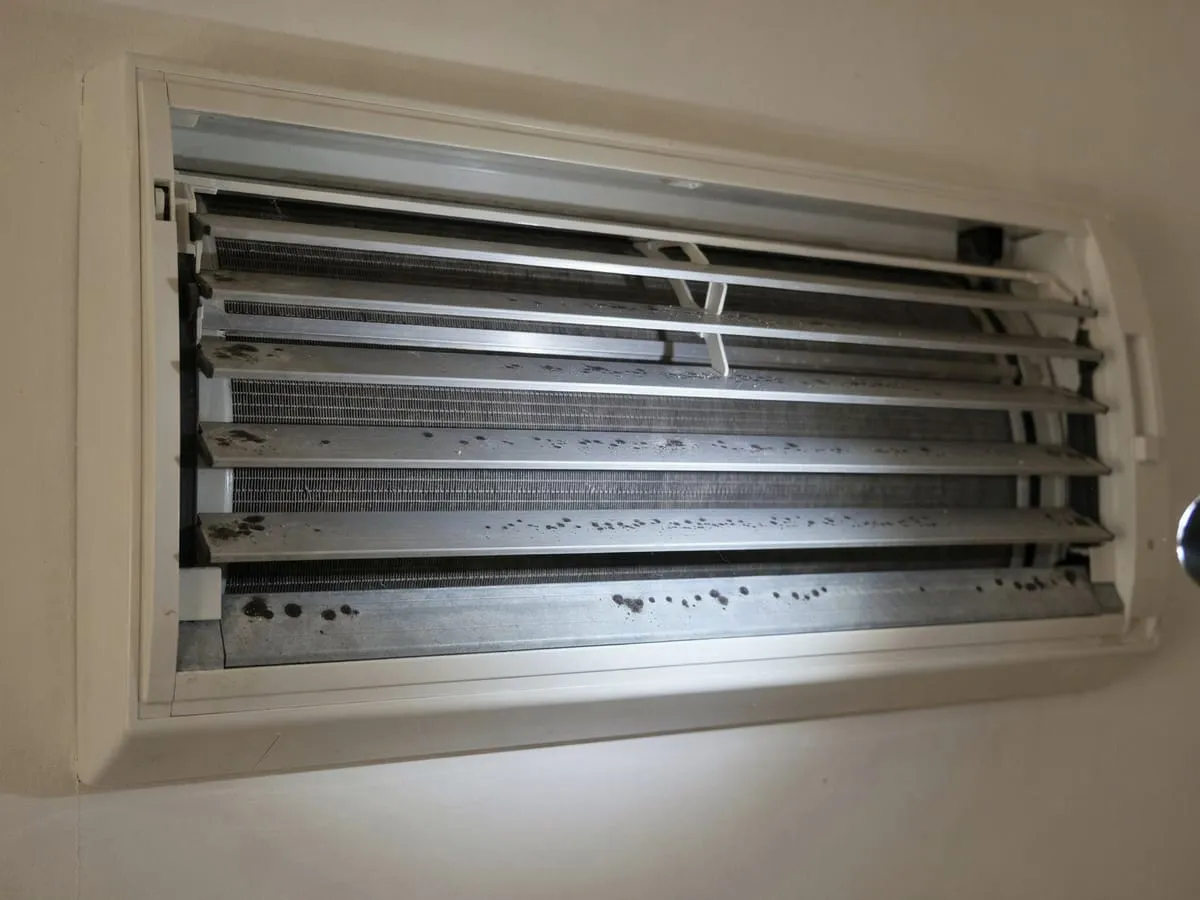
The indoor coil gets cold and wet whenever the unit cools or dries the air. Dust that gets past the filters sticks to the wet fins. Warmth, water and dust. That’s all mould needs. When the unit starts, the fan blows air straight over that growth and into the room.
Smells are often worst in spring and early summer. That’s when the unit swaps from heating to cooling, and the coil gets wet again. A unit that’s sat unused for months can smell stale on its first run, too.
Get a free quote. Installs, servicing and repairs on all major brands.
Heat pump smell in Christchurch homes
Where your house sits in Christchurch changes how fast a heat pump starts to smell, and what we check first.
- Damp near the estuary and the rivers. Estuary-side homes in South New Brighton and houses on low ground by the river in Beckenham can feel damp all winter. A damp house can smell musty even with a clean heat pump. We check the room as well as the unit, so you don’t pay for a clean that won’t fix it.
- Dust from busy roads and industry. In Bromley, homes near trucks, busy roads and yards get more fine dust. The filters fill faster, and dust that gets past them feeds the mould on a wet coil. Wash the filters more often than you would elsewhere.
- Dust and pollen on rural sections. Units on rural properties around Spencerville pick up dust, pollen and grass seed. A yearly service clears it out, along with the dust on the indoor coil that mould grows on.
- Shut, unheated bedrooms. In Shirley, damp usually starts in closed-off bedrooms. A small bedroom unit on low overnight keeps the room drier, and a dry room gives mould less of a start.
How we remove a heat pump odour
We get rid of the cause.
- Find the source. We open the unit. We look at the filters, coil, fan wheel and drain tray. If the unit looks clean, we look further, at the drain outlet, the room and the ceiling space.
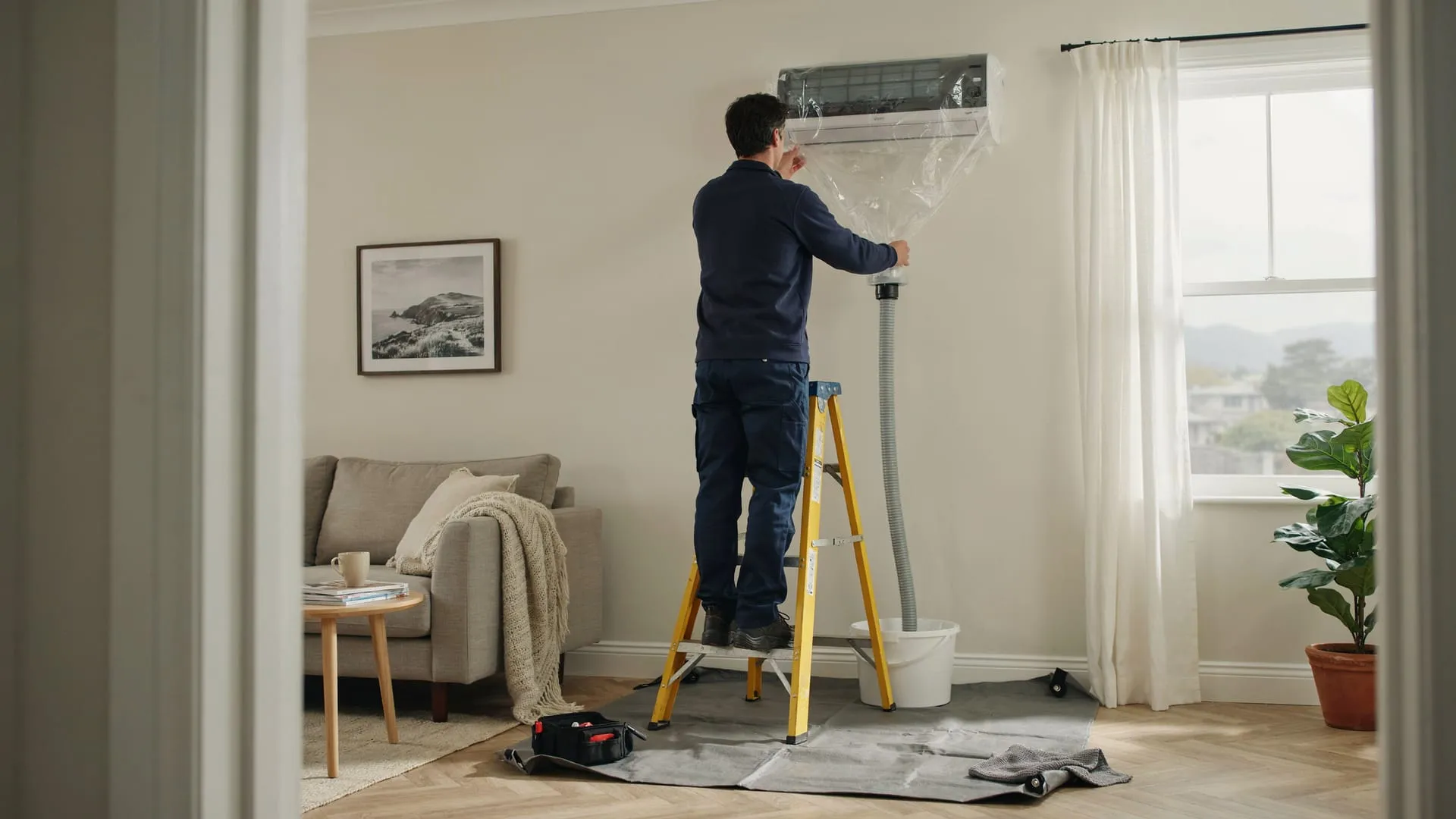
- Clean the coil and fan wheel. Most of the growth is here. We bag the unit, clean it and rinse it. It’s the same as a full heat pump clean.
- Clear the drain. We flush the tray and line, so water doesn’t sit there and go sour.
- Replace worn filters. Torn mesh filters let dust through to the coil. Deodorising filters wear out too, if your model uses them.
- Dry it out. We run it on fan or heat after the clean. The coil isn’t left wet.
An electrical smell is a fault, not a cleaning job. We handle it as a repair.
Stopping a musty heat pump smell coming back
Once it’s clean, four habits keep the musty smell away.
- Wash the filters often. Less dust on the coil means less food for mould.
- Dry the coil after cooling. Some units have a setting that runs the fan for a bit after cooling or dry mode. If yours doesn’t, run it on fan for a short while before you turn it off.
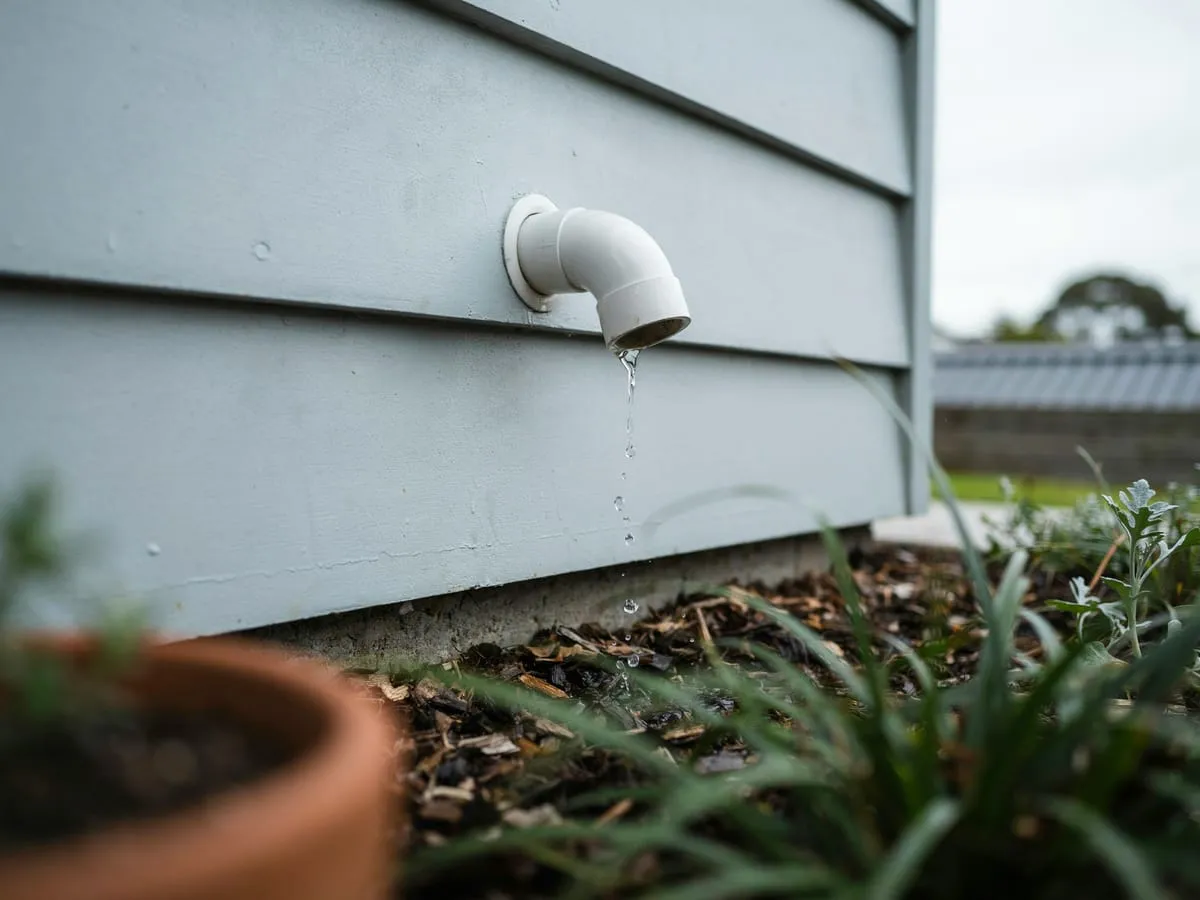
- Keep the drain clear. In cooling mode, the drain outside should drip. If it stops, get it checked.
- Service it every year. A yearly clean stops growth building up to where you can smell it. See heat pump servicing.
When it isn’t the heat pump
Heat pump clean, but the room still smells damp? The damp may be in the house. A wet subfloor, a leak, or not enough fresh air. A heat pump moves air round the room. It can’t get rid of a damp smell coming from the building. Next steps are air quality testing, and running the heat pump in dry mode.
Call 03 242 1023 to book a heat pump deodorise and clean, or ask for a quote.
Heat pump smell questions
Why does my heat pump smell musty?
Mould and bacteria. They grow on the wet coil, the fan wheel or the slime in the drain tray. It's worst when the unit first starts. And after you've used it for cooling or dry mode.
Why does my heat pump smell like burning when I first turn it on?
The first heating run after months off often burns off a layer of dust on the coil. The smell fades after a short while. Hot plastic or an electrical burning smell that doesn't fade is different. Turn it off at the isolator and call us.
Will an air freshener or deodorising spray fix it?
It hides the smell for a while. The mould on the coil and fan keeps growing, though. The smell comes back. Cleaning those parts is the fix.
Can a heat pump bring in smells from outside?
A standard split system moves the room's own air around. It doesn't pull air from outside. Smell cigarette smoke, cooking or damp? It's usually coming from the room. Or it's soaked into a dirty coil and filters.
More on keeping a heat pump fresh

Get a free heat pump quote
Free quotes, no obligation. We call or email you back the same working day. Monday to Friday, 8am to 5pm.
Call 03 242 1023Request a call back